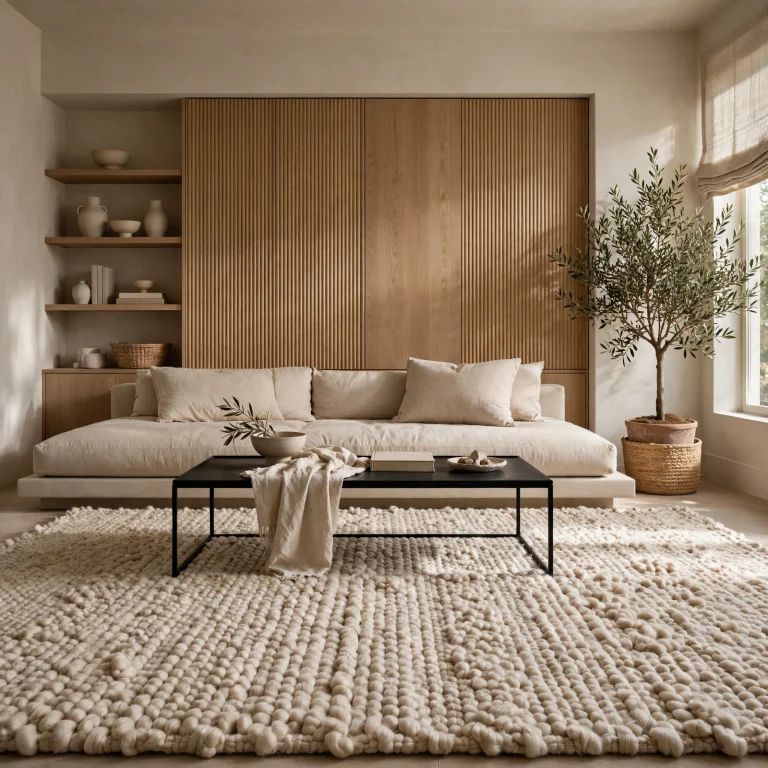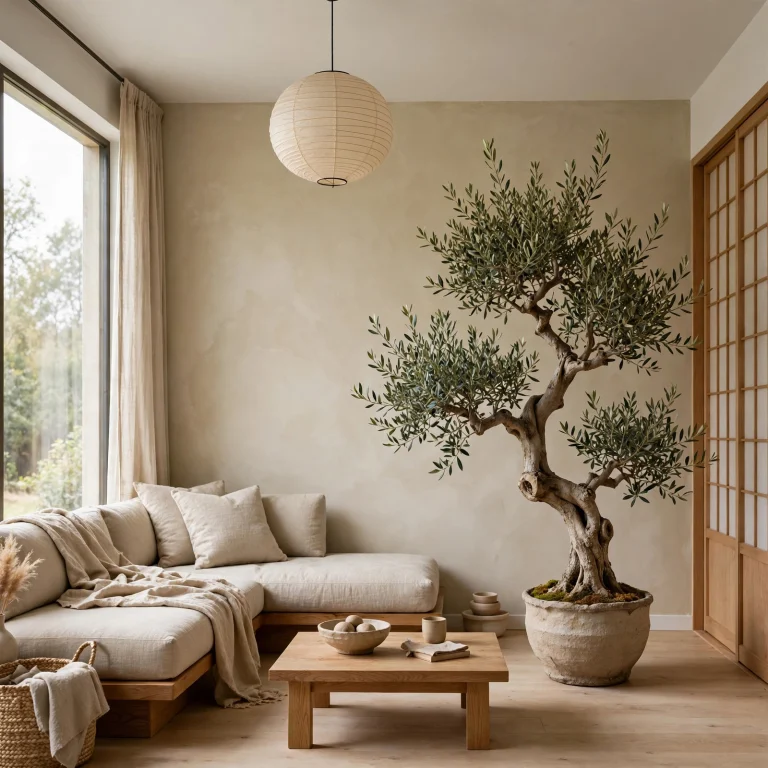
15 Stunning Boho Living Room Ideas With Real Warmth and Texture
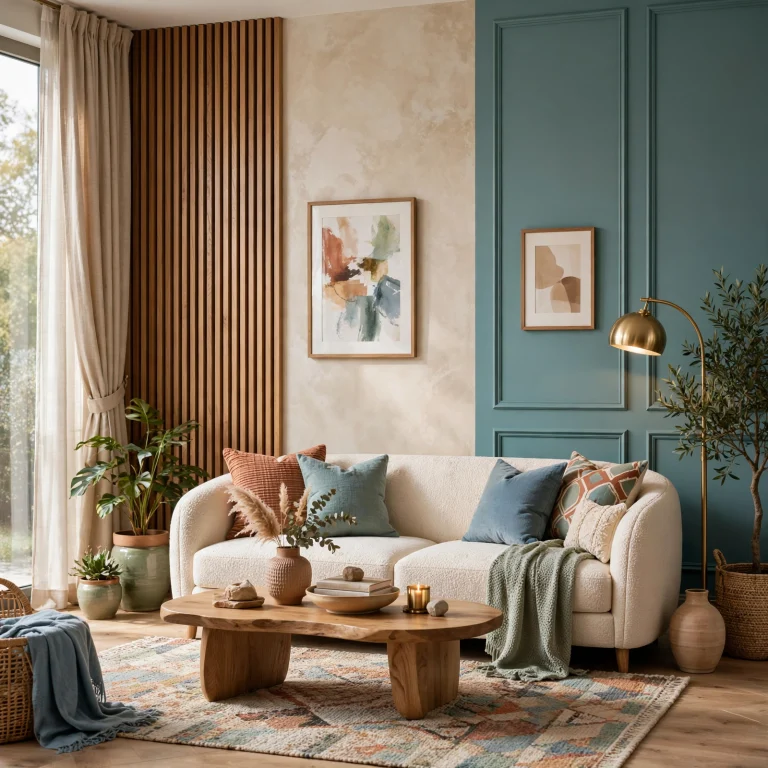
A boho living room is built on layers, of texture, pattern, and collected objects, rather than a single defined color scheme or furniture set. This guide covers fifteen ideas for achieving that layered warmth without the room tipping into visual clutter, from macrame wall hangings to vintage rug layering. Each idea includes real material and sourcing guidance so the result feels intentional rather than like a random assortment of trend pieces.
Trend & Background
Boho living room design has moved away from the heavily saturated, maximalist version of the style popular several years ago, settling into a calmer interpretation that leans on natural materials and muted, earthy tones rather than bright jewel colors. Rattan, jute, and unbleached cotton have become the connective materials tying a boho room together, replacing some of the more saturated ikat and Suzani patterns that once defined the look. Sustainability and vintage sourcing also play a larger role now, with secondhand and handmade pieces increasingly preferred over new mass-produced boho-labeled decor.
Key Takeaways
- A boho living room relies on layered natural textures like rattan, jute, and macrame rather than a single defined color palette.
- Mixing patterns works best when at least one color repeats consistently across textiles, rugs, and accessories.
- Plants play a structural role in boho design, not just a decorative one, filling corners and adding vertical interest.
- Vintage and handmade pieces are central to the style, since a fully new, matched room rarely reads as authentically boho.
1. Macrame Wall Hanging
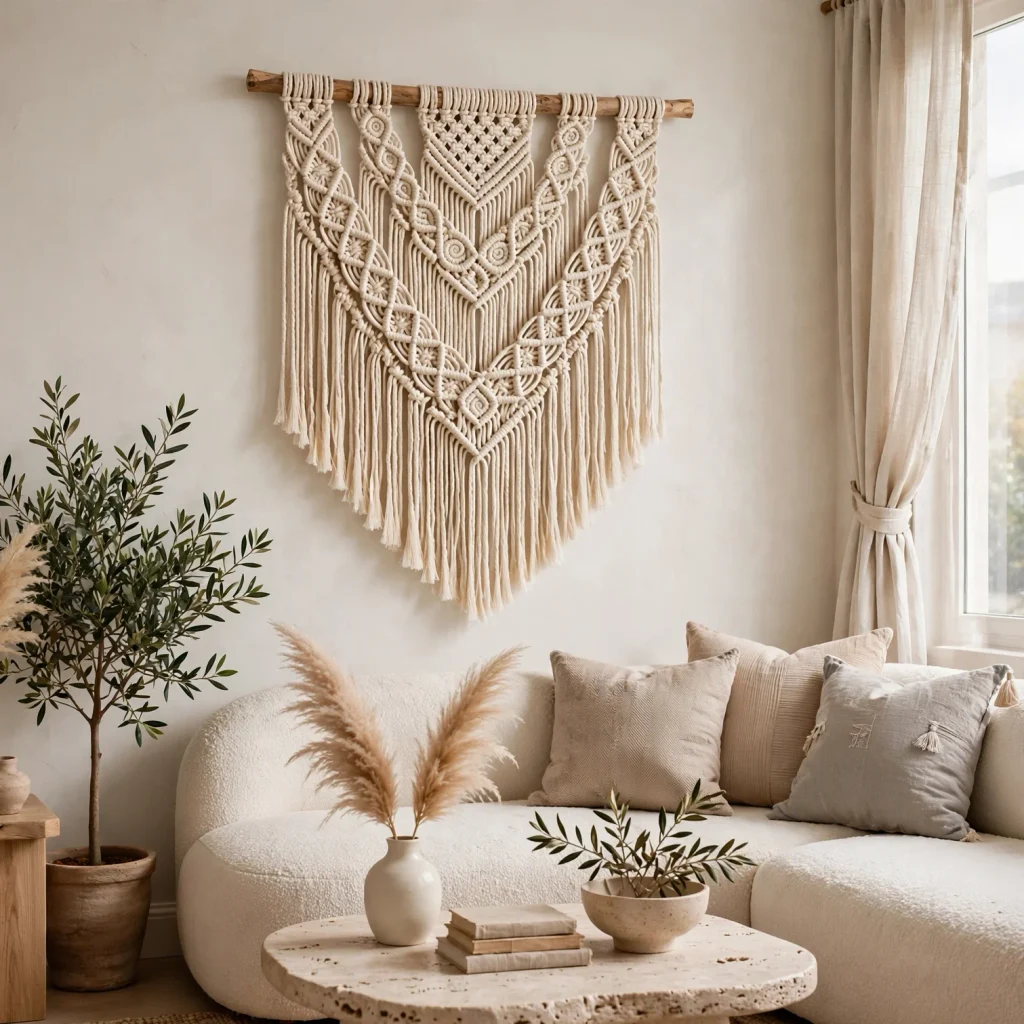
A large macrame wall hanging, in natural undyed cotton rope, gives a boho living room a handmade focal point above a sofa or in an otherwise empty corner. Choosing a piece with varied knot patterns and fringe length adds texture and visual movement that a flat piece of art can’t replicate. Hanging it slightly higher than eye level, with the fringe allowed to cascade freely, keeps the piece from feeling cramped against the wall below it.
2. Layered Vintage Rugs
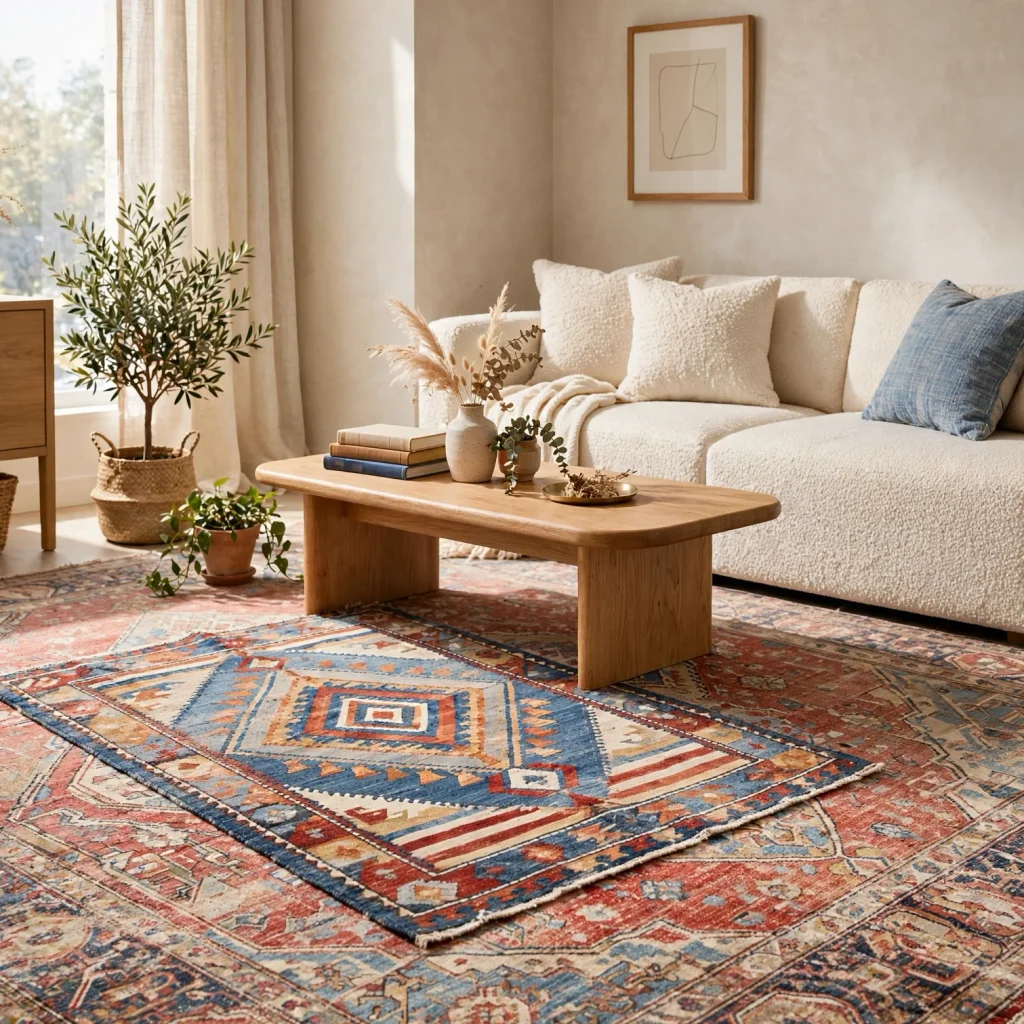
Layering two or more vintage or vintage-style rugs, in overlapping patterns and faded, muted colorways, is one of the clearest signature moves in boho living room design. A larger flatweave kilim as the base, topped with a smaller Persian-style rug slightly offset, creates depth without requiring either rug to be in pristine condition. This layering technique also allows a room to use rugs of different sizes that wouldn’t work well individually, extending the life of pieces that might otherwise be too small or worn for standalone use.
| Layer | Style | Placement |
| Base | Flatweave kilim | Full seating area |
| Top | Vintage Persian-style | Centered, slightly offset |
3. Rattan Peacock Chair
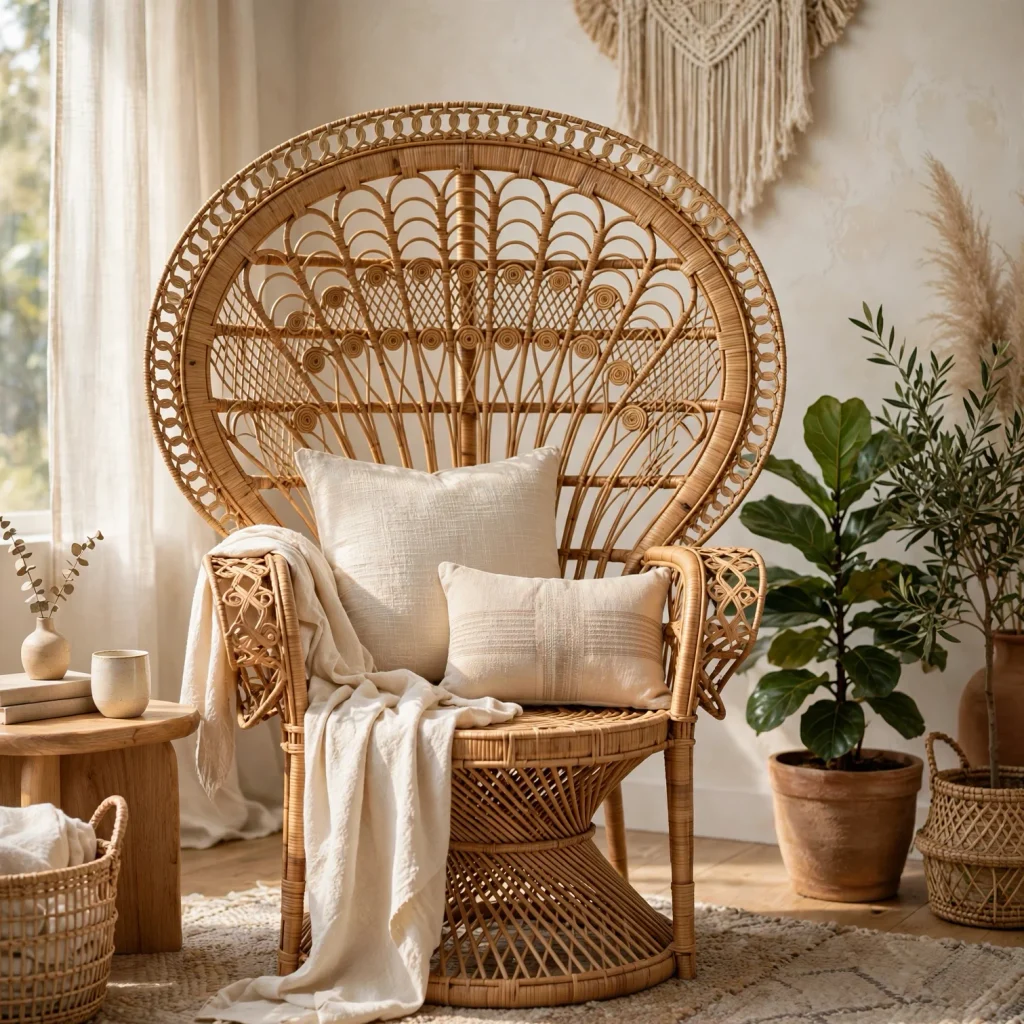
A rattan peacock chair, with its distinctive fan-shaped woven back, serves as a sculptural statement piece in a boho living room, often positioned as an accent chair rather than primary seating. Pairing it with a floor cushion or a sheepskin throw softens the chair’s structural, open weave and adds a layer of comfort. This piece works particularly well near a window, where natural light passes through the open rattan pattern and creates shadow play across the floor.
4. Mixed Global Textile Pillows
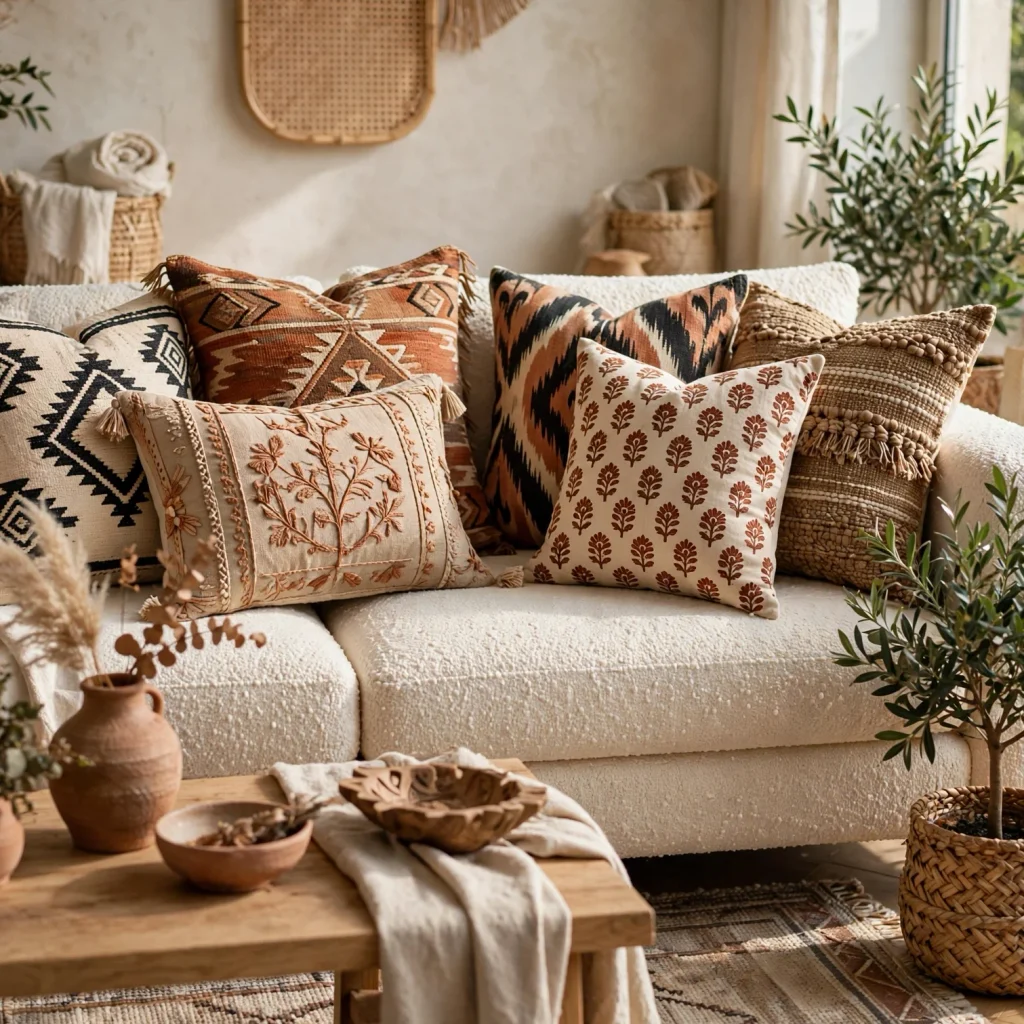
Mixing throw pillows sourced from different global textile traditions, such as block-printed cotton, ikat weave, and embroidered wool, gives a boho living room’s sofa a collected, well-traveled feel. Repeating one or two colors across the otherwise varied patterns, such as rust or indigo, keeps the mix from looking chaotic despite the pattern variety. Sourcing pillows individually over time, rather than as a matched set, generally produces a more authentic boho result than a single coordinated collection.
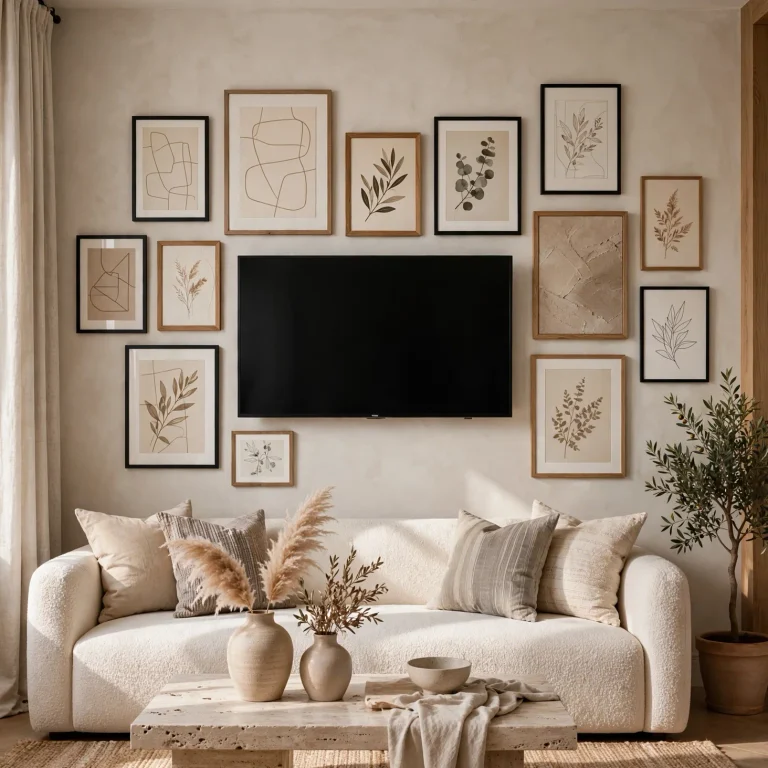
Give your walls a stylish makeover with these living room tv wall ideas for creating an attractive focal point.
5. Hanging Rattan Pendant Light
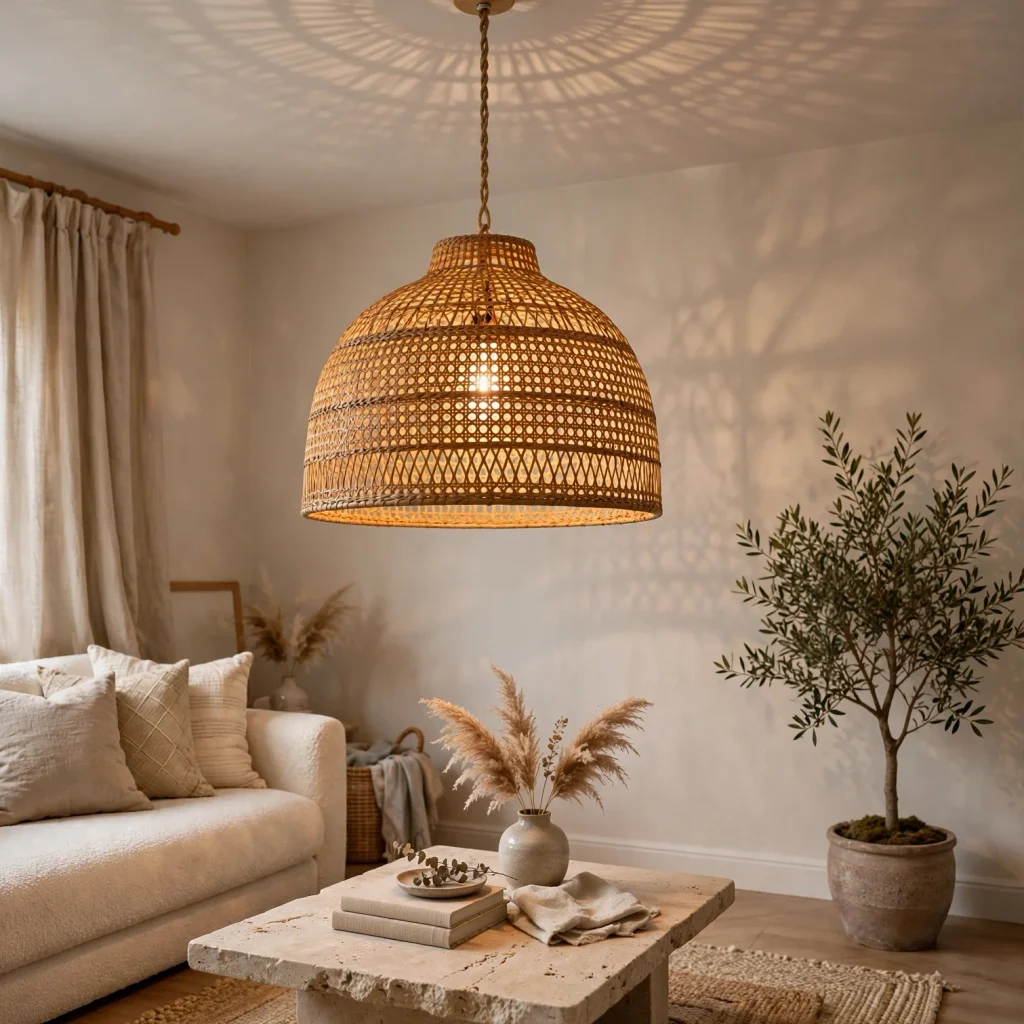
A hanging rattan or woven pendant light casts dappled shadow patterns across a boho living room’s ceiling and walls, adding both function and atmosphere in a single fixture. A dome or bell-shaped woven shade in natural rattan or seagrass suits most boho color palettes better than a metal or glass fixture. Positioning it over a seating area or reading nook, rather than dead center in the room, allows the shadow pattern to interact directly with the space where it’s most visible.
6. Trailing Plant Wall
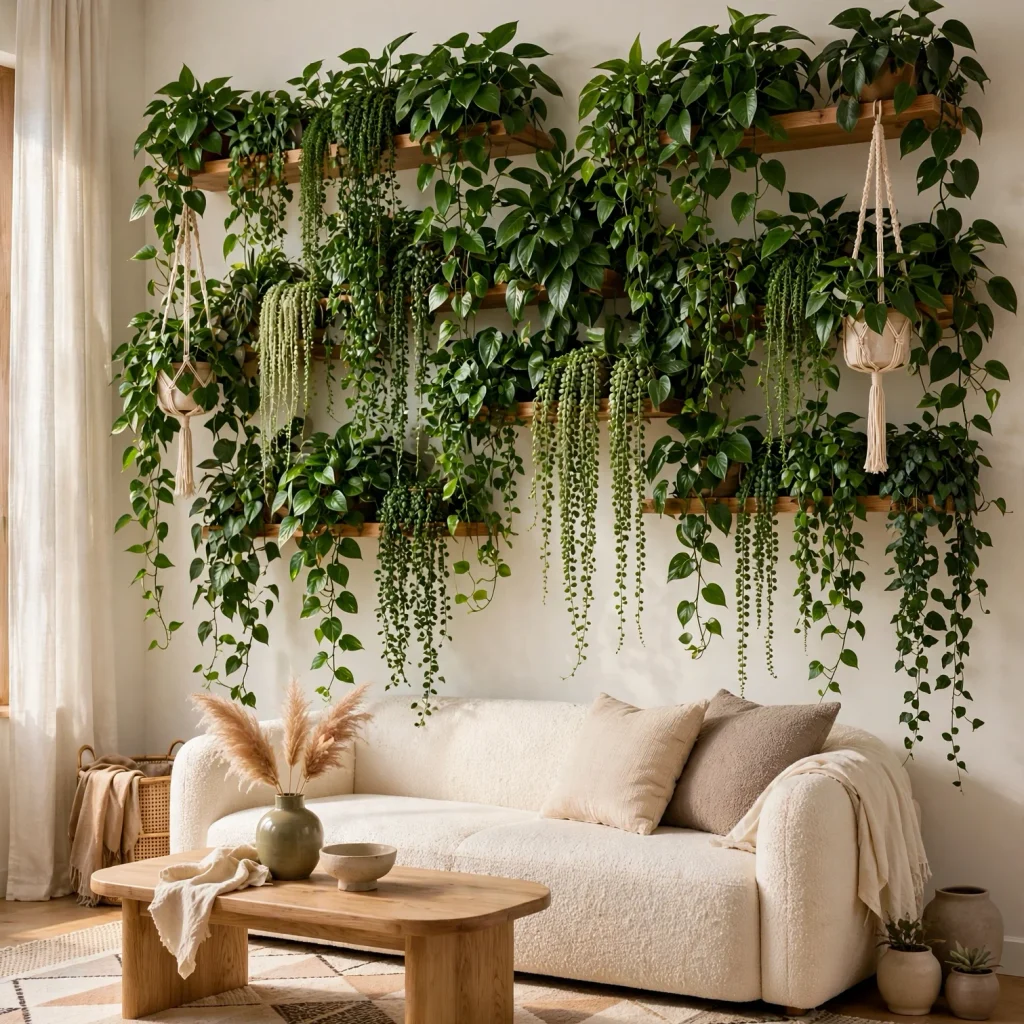
A trailing plant wall, using wall-mounted planters or a macrame plant hanger arrangement, fills vertical space in a boho living room with cascading greenery like pothos or string of hearts. Grouping three or four hangers at varying heights creates a fuller, more layered look than a single plant hung in isolation. This idea works particularly well in a corner that would otherwise remain empty, turning underused space into one of the room’s most visually active areas.
7. Floor Cushion Seating Area
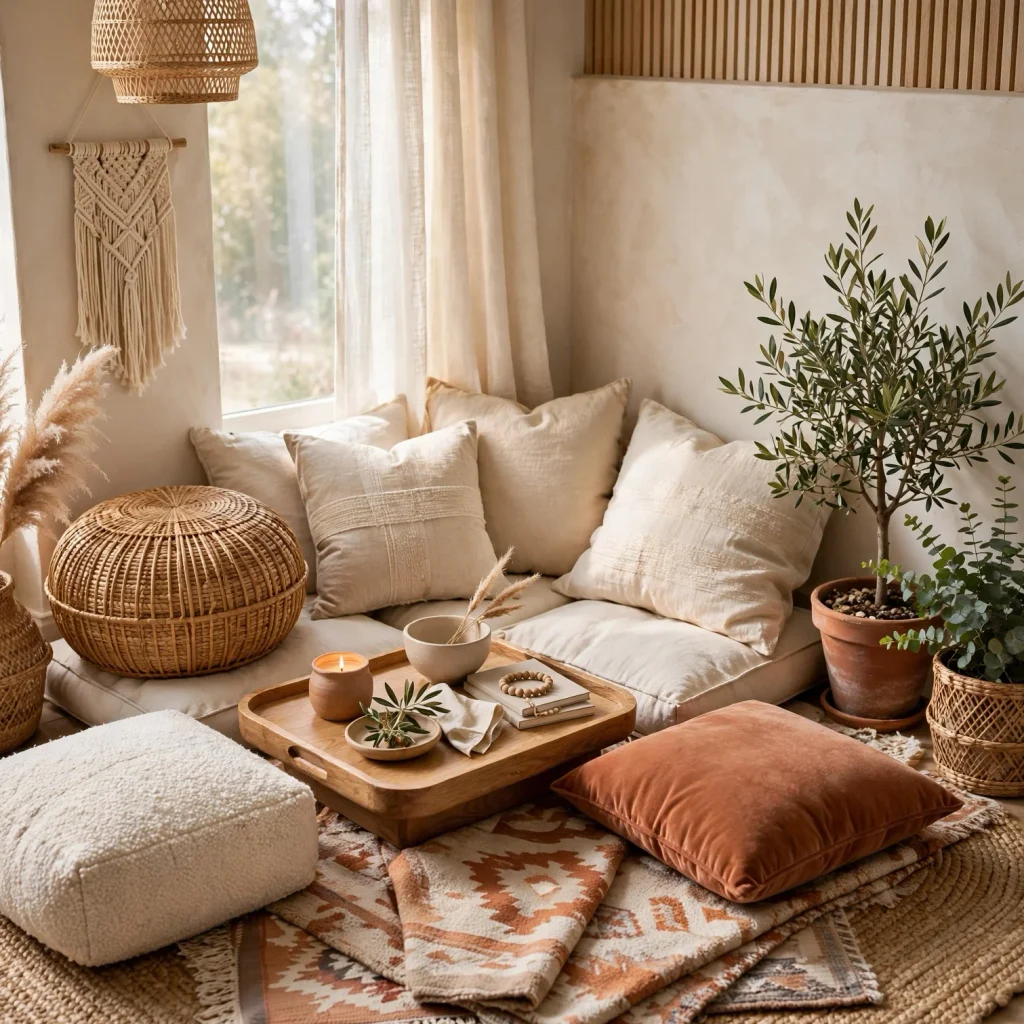
A floor cushion seating area, using several oversized floor pillows in mixed patterns around a low wood table, gives a boho living room an additional, more casual seating zone beyond the main sofa. Kilim-covered or embroidered cushions filled with a dense foam or buckwheat hull filling hold their shape better over repeated use than a loosely stuffed alternative. This layout works especially well for households that frequently host groups larger than the primary sofa can seat.
8. Woven Wall Basket Display
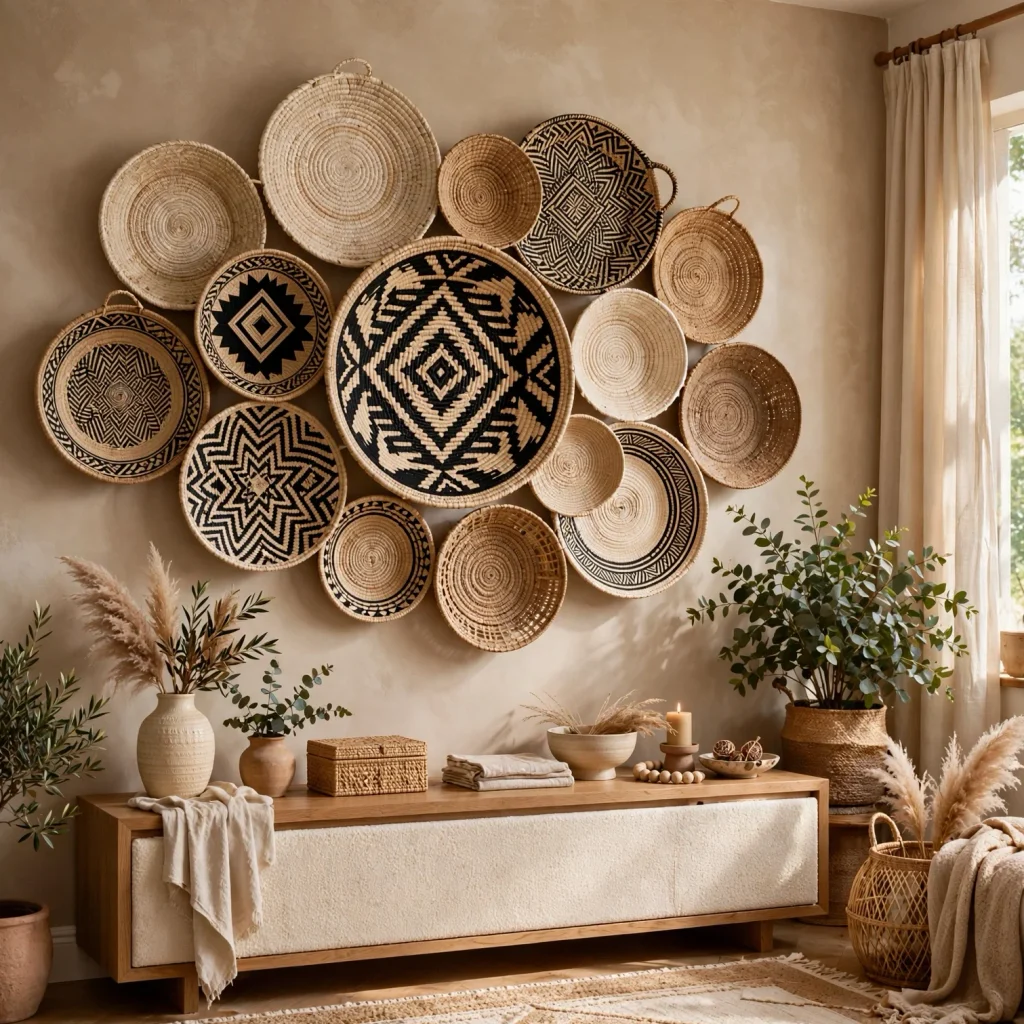
A cluster of flat woven baskets, arranged in an asymmetric grouping on an otherwise plain wall, adds dimensional texture to a boho living room without the cost of a large art piece. Varying the basket sizes and weave patterns within the grouping, while keeping the color palette limited to natural and lightly dyed tones, creates visual interest without looking disorganized. This detail also works as an affordable alternative to a gallery wall, particularly in a rental where hanging fewer, larger items is more practical.
9. Vintage Kilim Ottoman
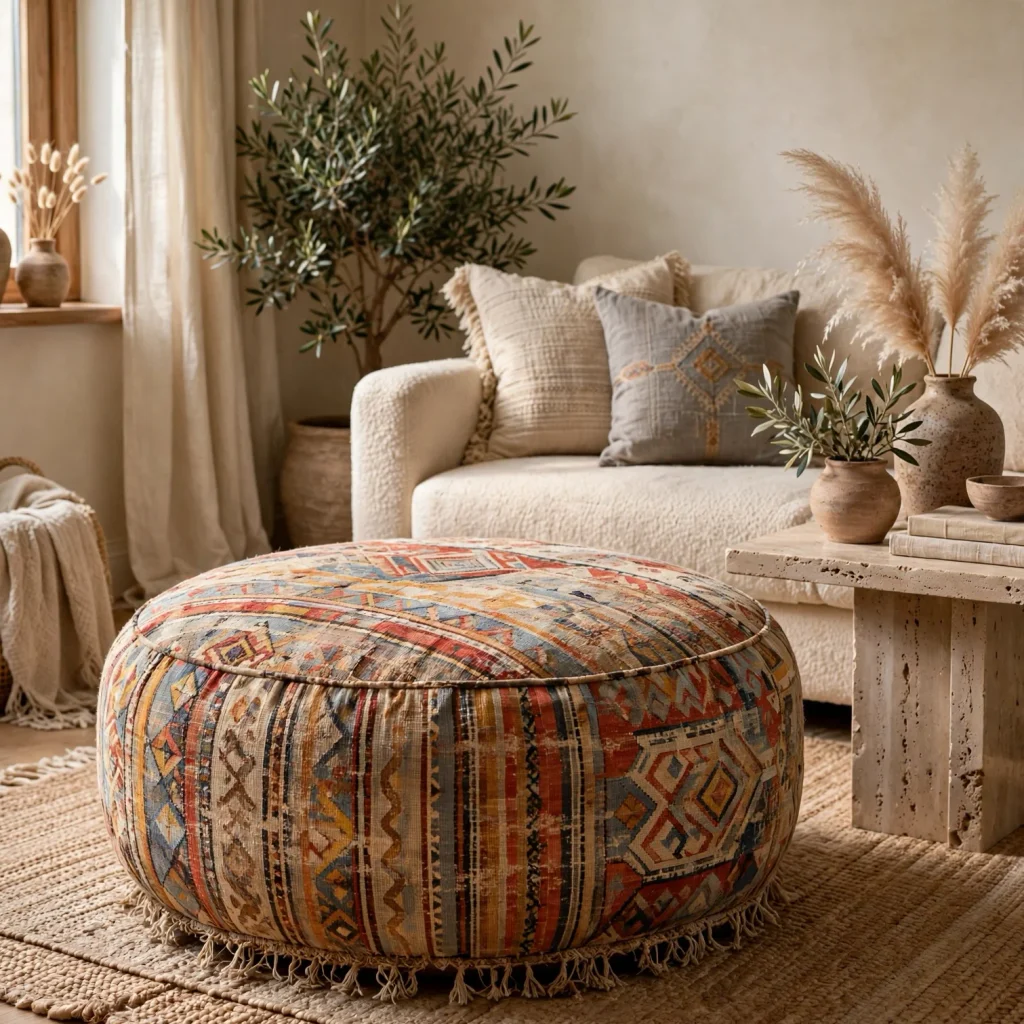
A vintage kilim-upholstered ottoman serves as both a coffee table and extra seating in a boho living room, its flatweave wool pattern adding a strong graphic element to an otherwise neutral seating group. Because each kilim piece is unique, no two ottomans upholstered this way are identical, which suits the style’s emphasis on one-of-a-kind, collected objects. Pairing it with a simple round wood tray on top keeps the ottoman functional as a surface without hiding its patterned upholstery entirely.
10. Fringe and Tassel Textile Details
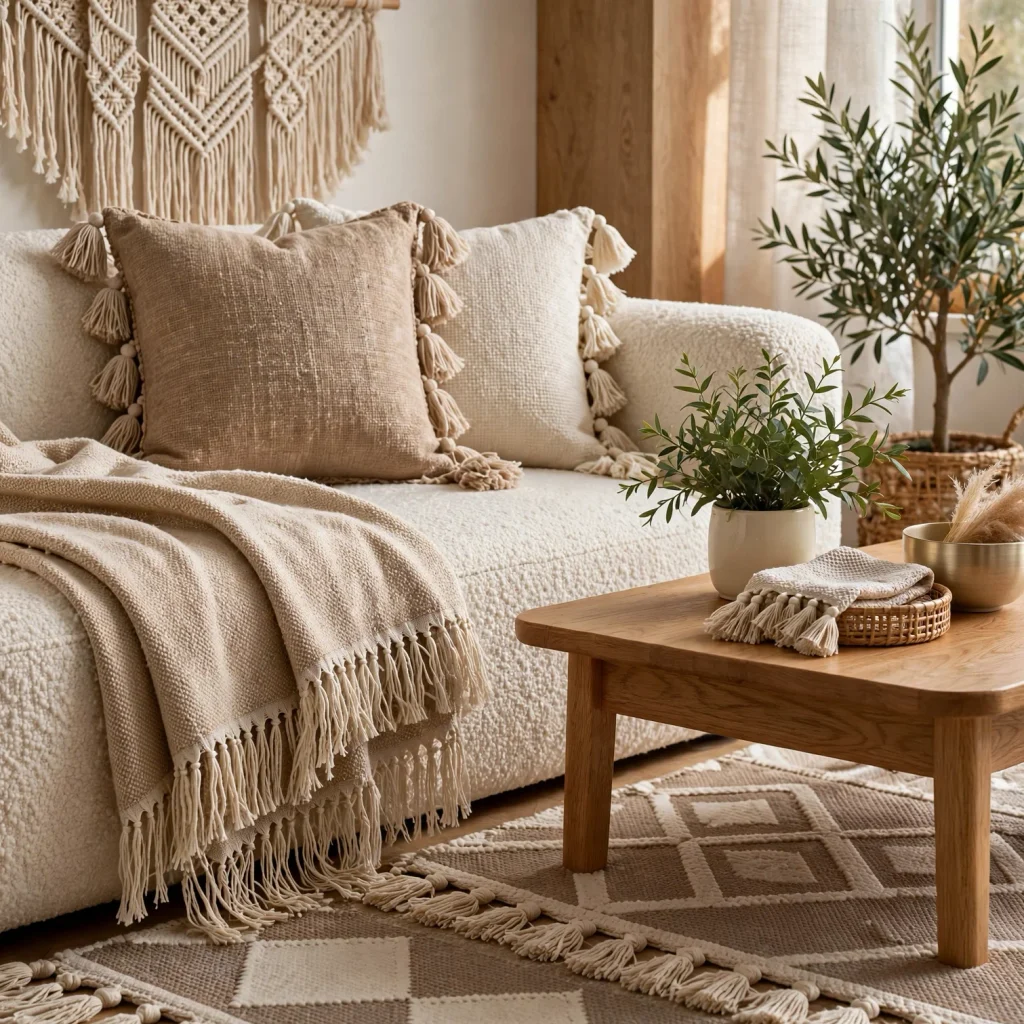
Fringe and tassel details, appearing on throw blankets, curtain tiebacks, or cushion edges, reinforce a boho living room’s handmade, layered aesthetic in small, affordable doses. A chunky cotton fringe on a neutral throw blanket or a tasseled trim along a curtain’s leading edge adds texture without requiring a full pattern commitment. These details work well as a way to tie together an otherwise more neutral or pared-back boho room without introducing additional bold pattern.
11. Natural Wood and Rattan Console
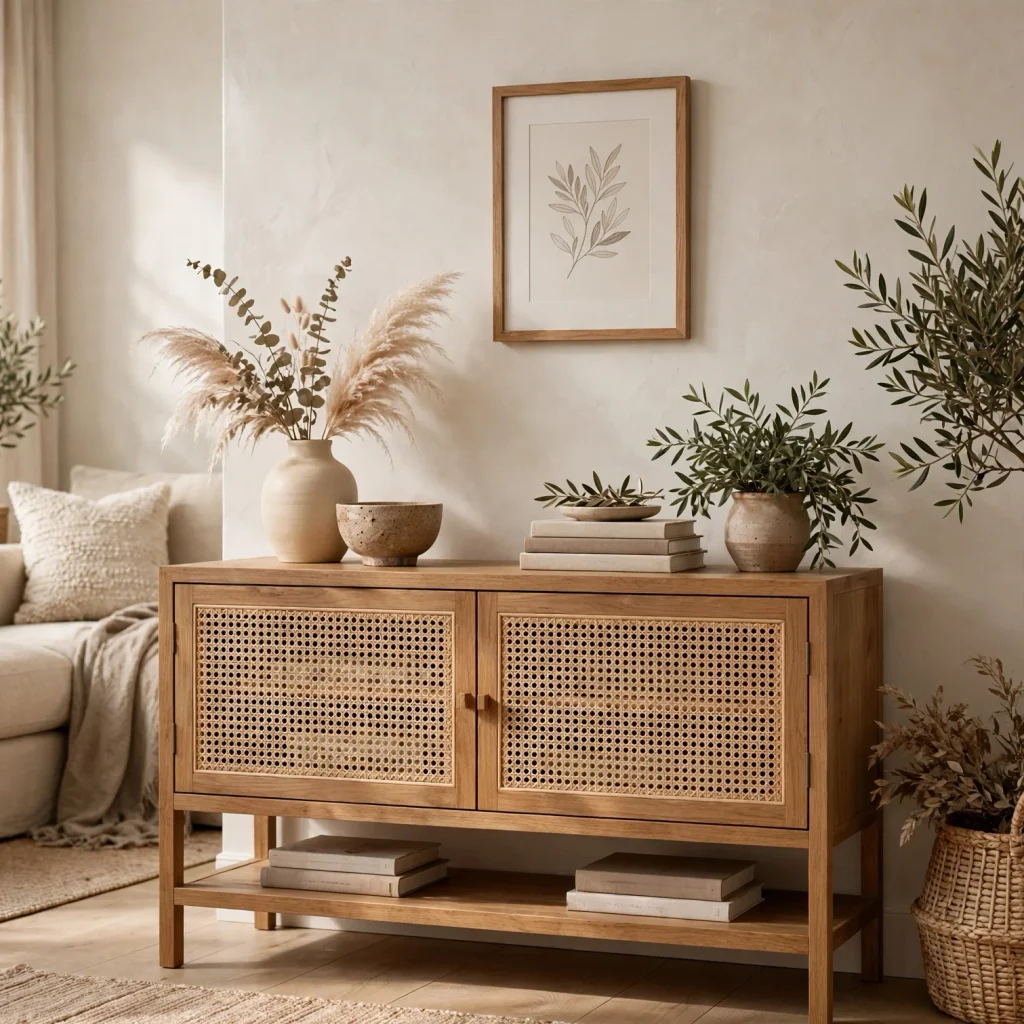
A console table combining natural wood and woven rattan, such as a solid wood top over a rattan-fronted lower shelf, grounds a boho living room’s material palette in the same organic textures used throughout the rest of the space. Styling the top with a mix of ceramics, a small plant, and a woven basket for remotes keeps the surface functional while reinforcing the room’s overall texture story. This piece works well as a media console or an entryway-adjacent surface within an open living space.
12. Layered Ambient String Lighting
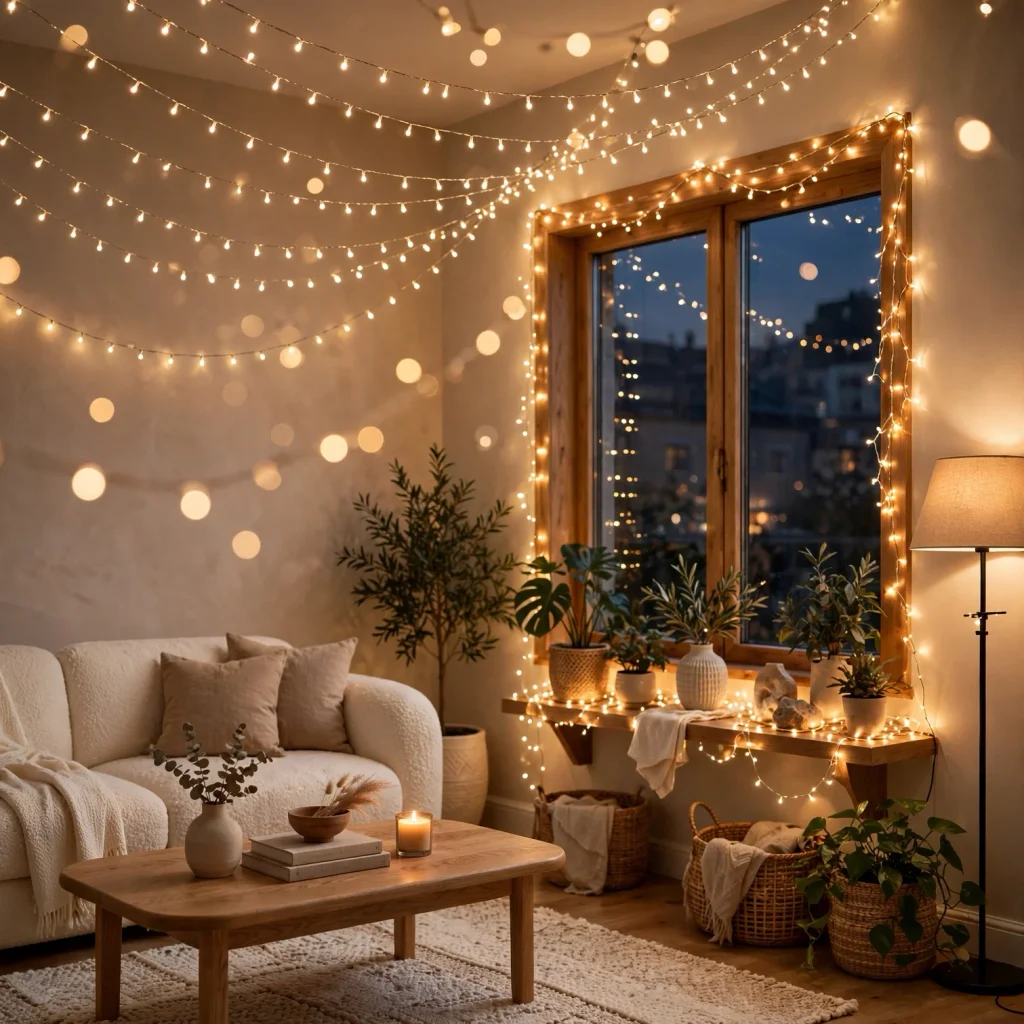
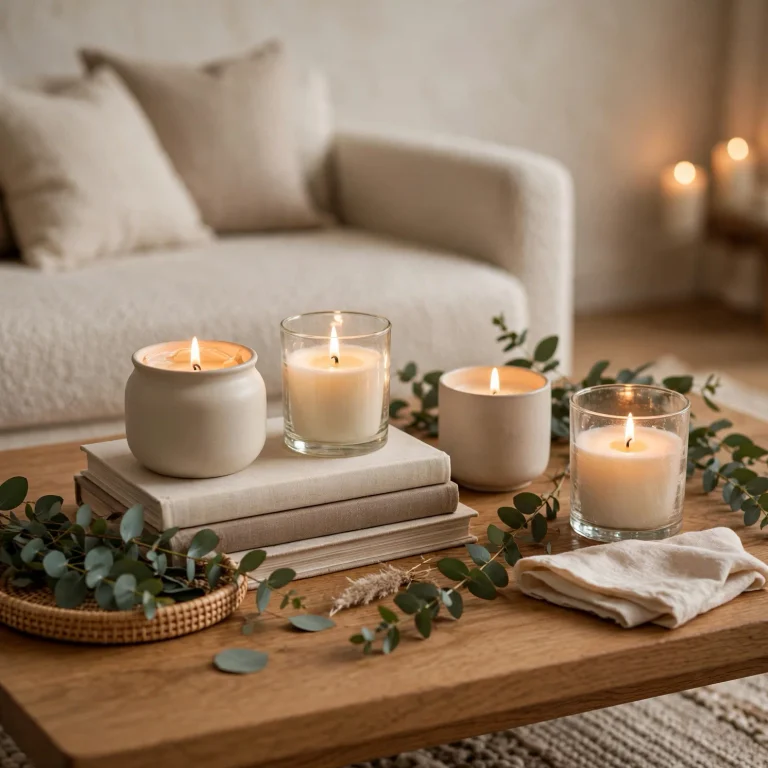
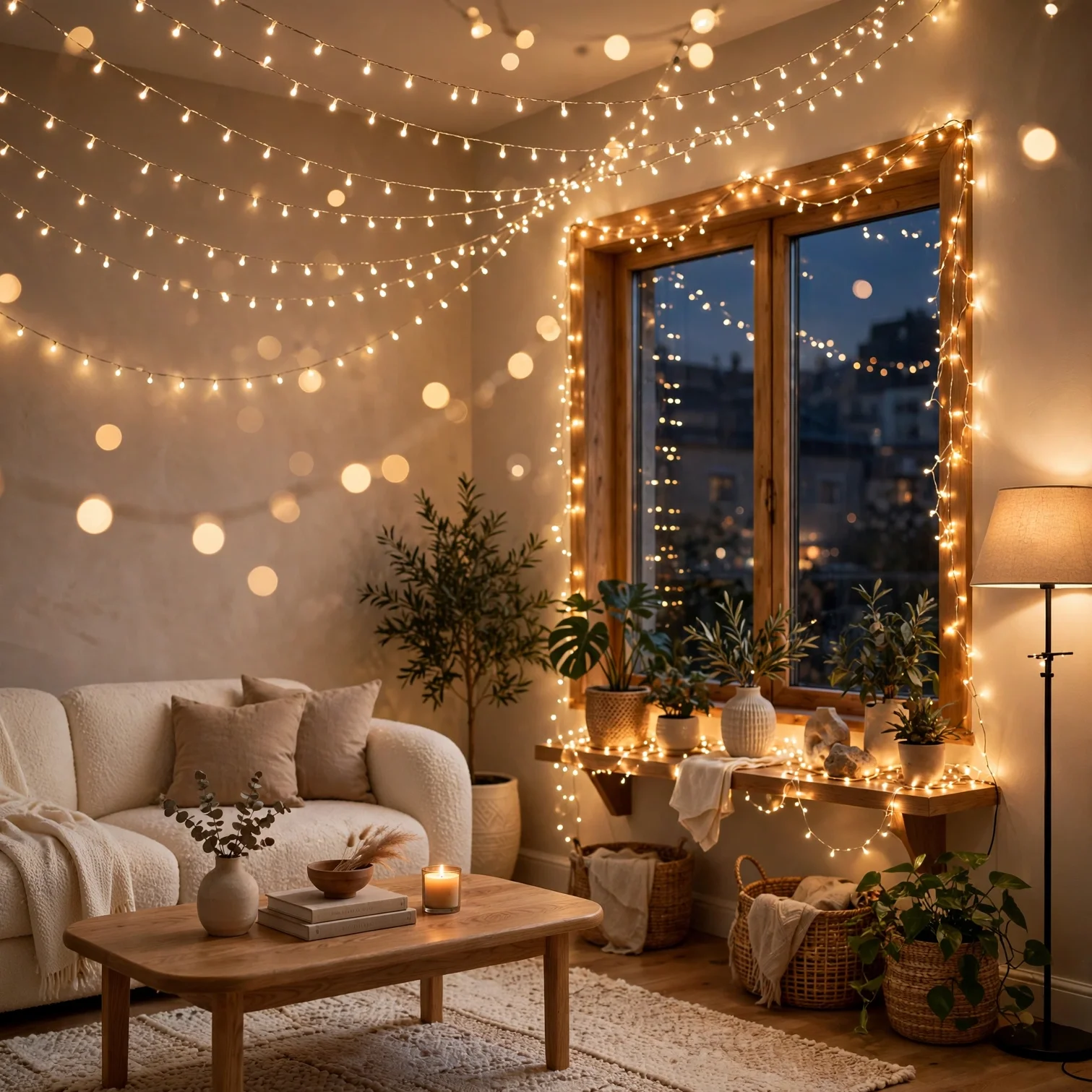
Layered string lighting, draped along a shelf edge or wrapped loosely around a piece of furniture, adds a soft, warm glow to a boho living room during evening hours without requiring additional hardwired fixtures. Warm white LED string lights, rather than cooler-toned or multicolor options, keep the effect subtle and closer to candlelight than decorative novelty lighting. This idea works particularly well layered alongside a floor lamp with a woven shade for a fuller evening lighting scheme.
13. Handwoven Wall Tapestry
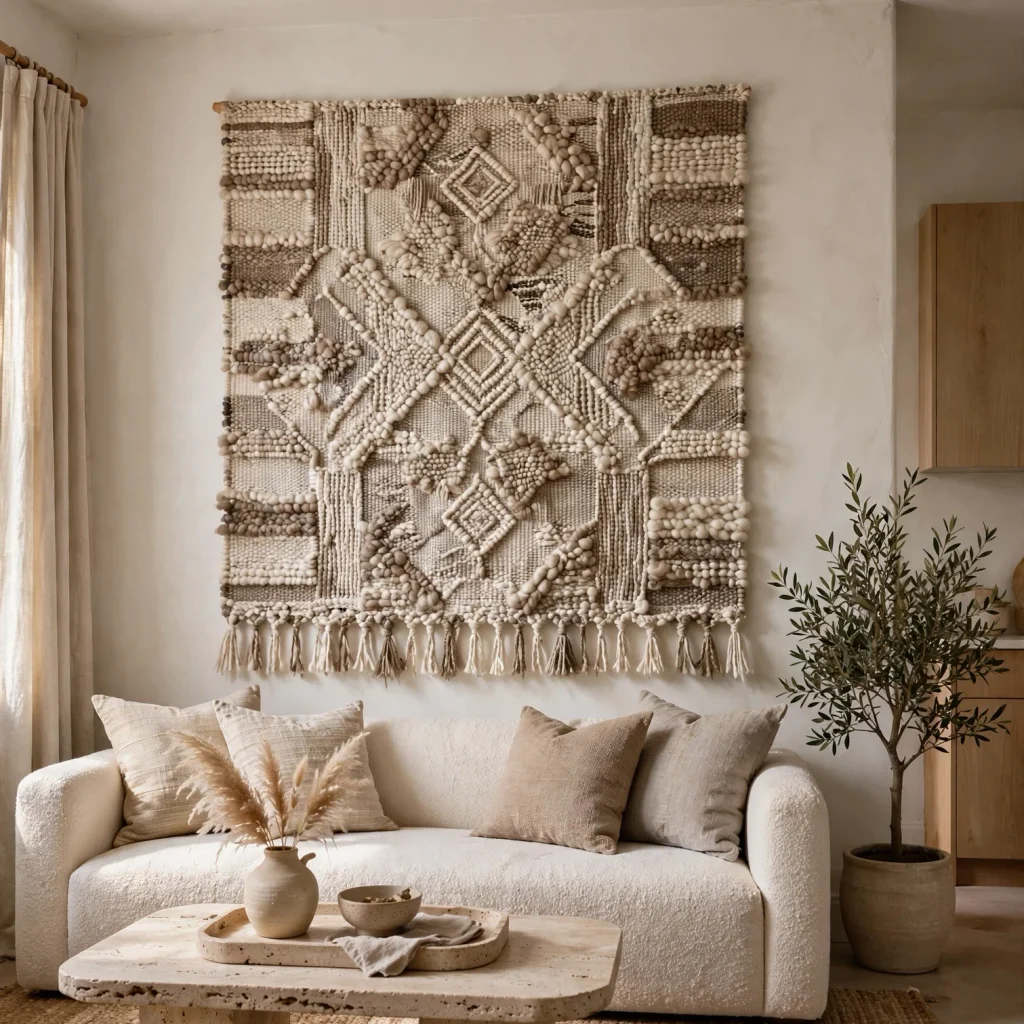
A handwoven wall tapestry, in a large-scale geometric or striped pattern using natural dyes, gives a boho living room a substantial textile focal point as an alternative to framed art. Positioning it behind a sofa or bed-adjacent seating area, spanning close to the full width of the furniture below it, keeps the proportions balanced. Choosing a tapestry with some color overlap to the room’s existing rug or pillows ties the piece into the space rather than letting it stand alone.
14. Mixed Wood Tone Furniture
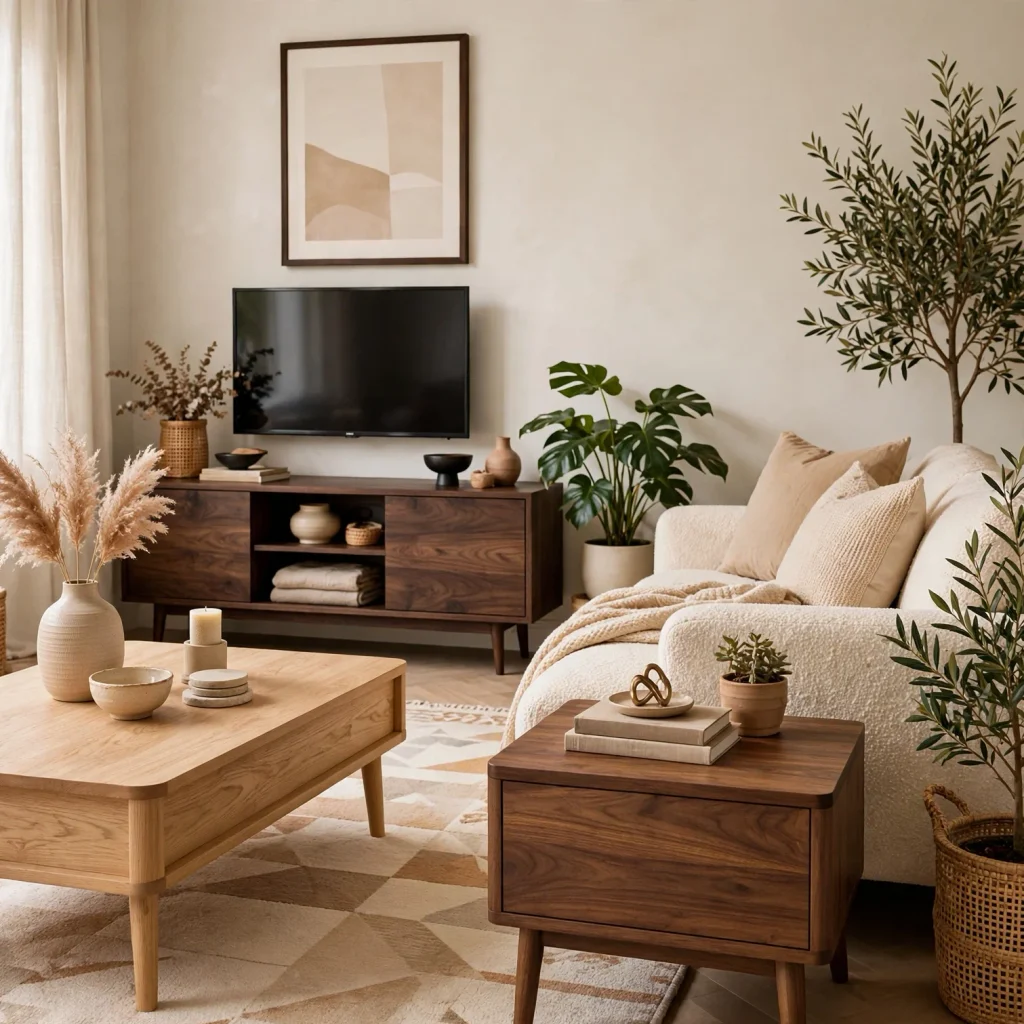
Mixing wood tones across a boho living room’s furniture, rather than matching every piece to a single finish, supports the style’s collected, gathered-over-time feel more effectively than a uniform wood palette. A weathered oak coffee table alongside a darker walnut console and a lighter rattan-and-wood accent chair can coexist successfully when tied together by a repeated secondary material, like brass hardware or a consistent textile color. This approach also makes it easier to incorporate vintage or secondhand furniture finds without needing an exact finish match.
15. Dried Pampas Grass Arrangement
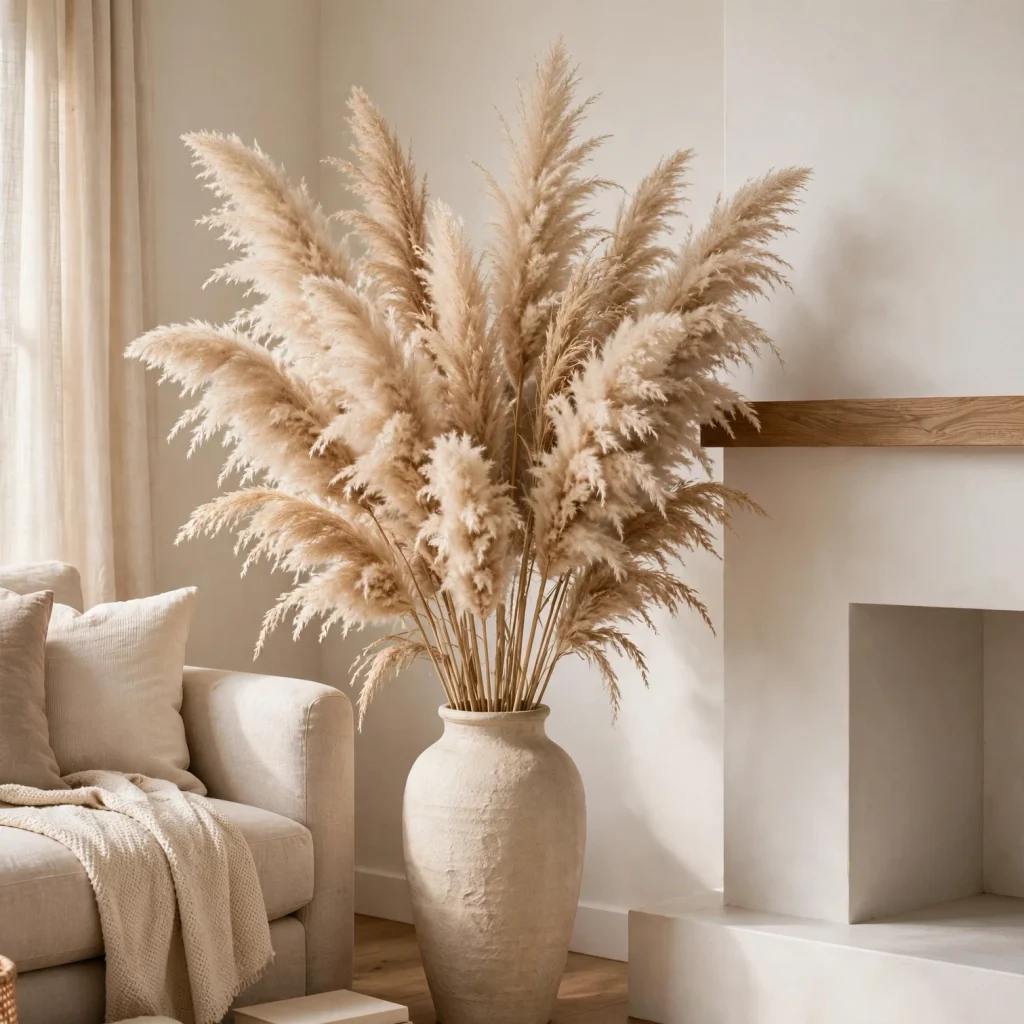
A tall dried pampas grass arrangement, placed in a floor vase in an empty corner, is one of the most recognizable decorative signatures of boho living room styling, adding height and soft texture without any maintenance requirements. Choosing a natural, unbleached pampas variety tends to age better and photograph more true to the style than dyed or brightly colored versions. A woven or ceramic floor vase at the base continues the room’s material story and keeps the arrangement from feeling like an isolated decorative afterthought.
Shop the Look
Start with a rattan peacock accent chair, a layered flatweave kilim and vintage Persian-style rug combination, and a natural wood and rattan console table. Add a macrame wall hanging, a woven rattan pendant light, and a vintage kilim ottoman for extra seating and surface space. Finish with a cluster of trailing plants in macrame hangers and a tall dried pampas grass arrangement in an empty corner.
Common Mistake to Avoid
A common mistake in a boho living room is mixing too many bold patterns without any repeated color or material to anchor them, which results in a visually chaotic space rather than a layered, intentional one. Choosing one or two colors, such as rust and indigo, to repeat consistently across rugs, pillows, and textiles gives the eye a consistent thread to follow even as patterns vary. Without that repetition, a room can quickly shift from richly layered to simply cluttered.
FAQs
How do I make a boho living room look put together instead of cluttered?
Repeating one or two consistent colors or materials across an otherwise varied mix of patterns and textures is the most effective way to keep a boho living room from looking cluttered. Leaving some negative space on shelves and walls, rather than filling every surface, also helps the layered elements read as intentional rather than overwhelming. Grouping similar items, like a cluster of plants or a set of baskets, rather than scattering them individually around the room, adds further cohesion.
What colors work best in a boho living room?
Earthy, muted tones like terracotta, rust, olive, and warm cream form the base of most current boho living room palettes, often layered with natural undyed fibers like jute and rattan. Deeper accents such as indigo or burgundy can be introduced through textiles without overwhelming the room’s overall warmth. Bright, highly saturated jewel tones, once common in earlier boho interpretations, are used more sparingly in the current, calmer version of the style.
Do I need a lot of plants for a boho living room?
Plants are a significant part of boho living room styling, but the room doesn’t require an overwhelming number to achieve the look, since a few well-placed larger plants combined with a hanging trailing variety or two often provide enough greenery. Focusing on a couple of key locations, like an empty corner or a hanging cluster near a window, tends to look more intentional than scattering many small plants throughout the room. Plant health and care realistically also factor into how many a household can reasonably maintain.
Can a boho living room work with modern furniture?
A boho living room can incorporate modern furniture successfully, particularly through simple, clean-lined pieces in natural materials like wood or rattan that provide a neutral base for boho textiles and accessories to layer on top of. The style doesn’t require every piece to be vintage or handmade, and a mix of new foundational furniture with more textural, collected accessories often works well. The key is ensuring the modern pieces don’t compete visually with the room’s textural and pattern-driven elements.
Is boho style still popular for living rooms in 2026?
Boho living room design remains a consistently popular style, though its current interpretation has shifted toward a calmer, more muted version that favors natural materials and earthy tones over the maximalist, brightly patterned look associated with the style several years ago. This evolution reflects broader interior design trends toward warmth and texture over bold color, while still retaining the collected, layered quality that defines boho at its core. The style’s emphasis on vintage and handmade sourcing also aligns well with current sustainability-focused design trends.
Conclusion
A boho living room comes together through layered texture, repeated color threads, and collected objects rather than any single matched furniture set. Save this guide to Pinterest for reference while planning your next update, and check out our related post on living room decor ideas for more ways to layer texture and personality into the space.