15 Elegant Center Table Living Room Ideas to Transform Your Space
The center table Living Room is often the most-used surface in a living room, yet it’s frequently chosen last, after the sofa and rug have already defined the space. This guide covers fifteen center table living room ideas, from marble and reclaimed wood to nesting and lift-top designs, with the sizing and material guidance needed to choose a table that fits both the room’s proportions and daily use. Each idea works as a standalone update or as part of a full room plan.
Trend & Background
Center table choices for living rooms have diversified considerably beyond the standard rectangular wood table, with round, oval, and organically shaped options gaining popularity as furniture makers respond to more curved sofa silhouettes and softer overall room layouts. Material trends have also shifted toward natural stone and reclaimed wood, moving away from the glass-and-chrome combinations that dominated earlier design periods. At the same time, multi-functional tables, those with storage, lift tops, or nesting configurations, have become more common as living rooms are asked to serve more functions within the same footprint.
Center Table Living Room
Explore stylish center table living room ideas featuring modern coffee tables, elegant designs, creative layouts, and practical styling tips to create a beautiful and functional focal point in your living space.
Key Takeaways
- A center table’s shape and size should follow the seating arrangement’s layout, not the other way around.
- Material choice, wood, stone, metal, or glass, does more to set a living room’s tone than the table’s overall silhouette.
- Height matters as much as footprint, since a table that’s mismatched to sofa seat height disrupts everyday use.
- A center table can anchor storage, styling, and function simultaneously when chosen with multiple purposes in mind.
1. Marble-Top Center Table
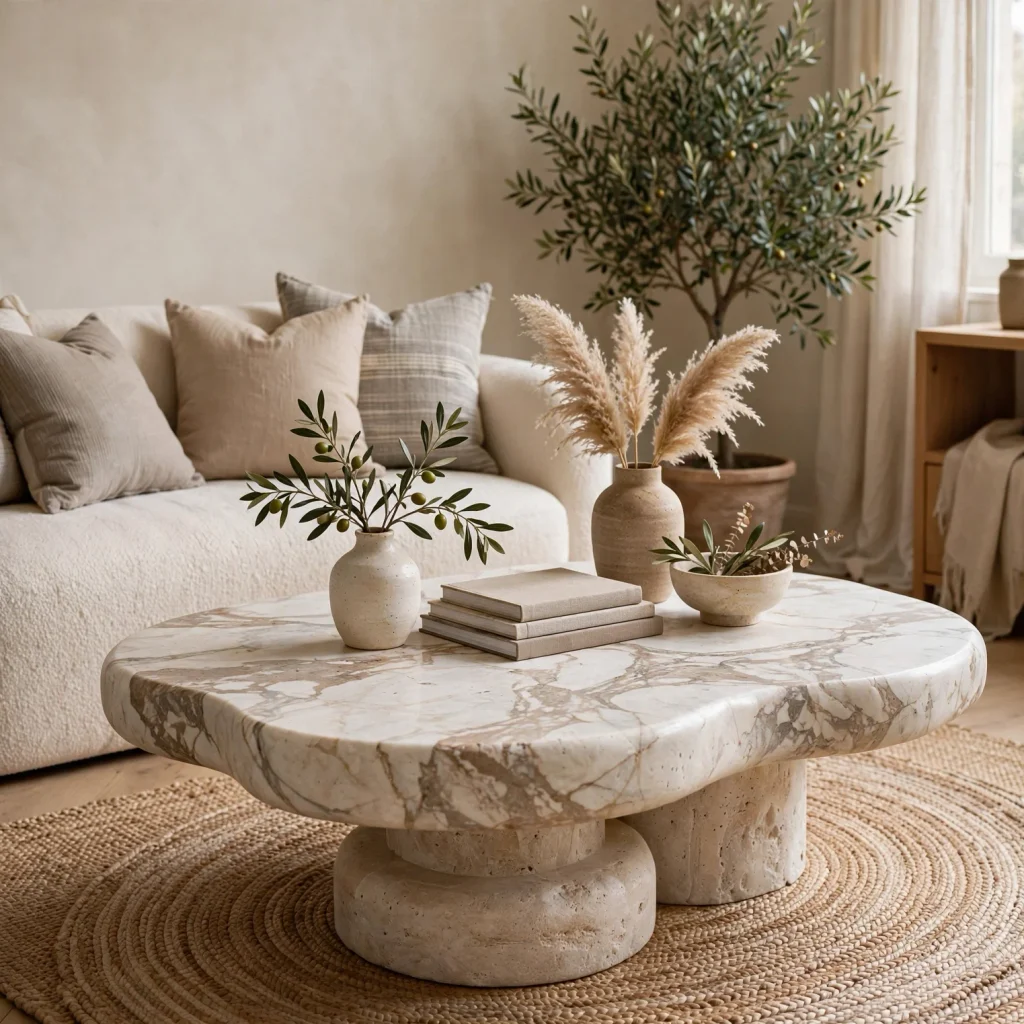
A marble-top center table brings natural veining and a cool, polished surface to a living room, often serving as the room’s most visually striking single piece. Calacatta or Carrara marble in a honed finish shows fewer fingerprints and water marks over daily use than a fully polished surface. Pairing the marble top with a brass or blackened steel base adds contrast and keeps the piece from feeling overly heavy despite the stone’s visual weight.
2. Reclaimed Wood Center Table
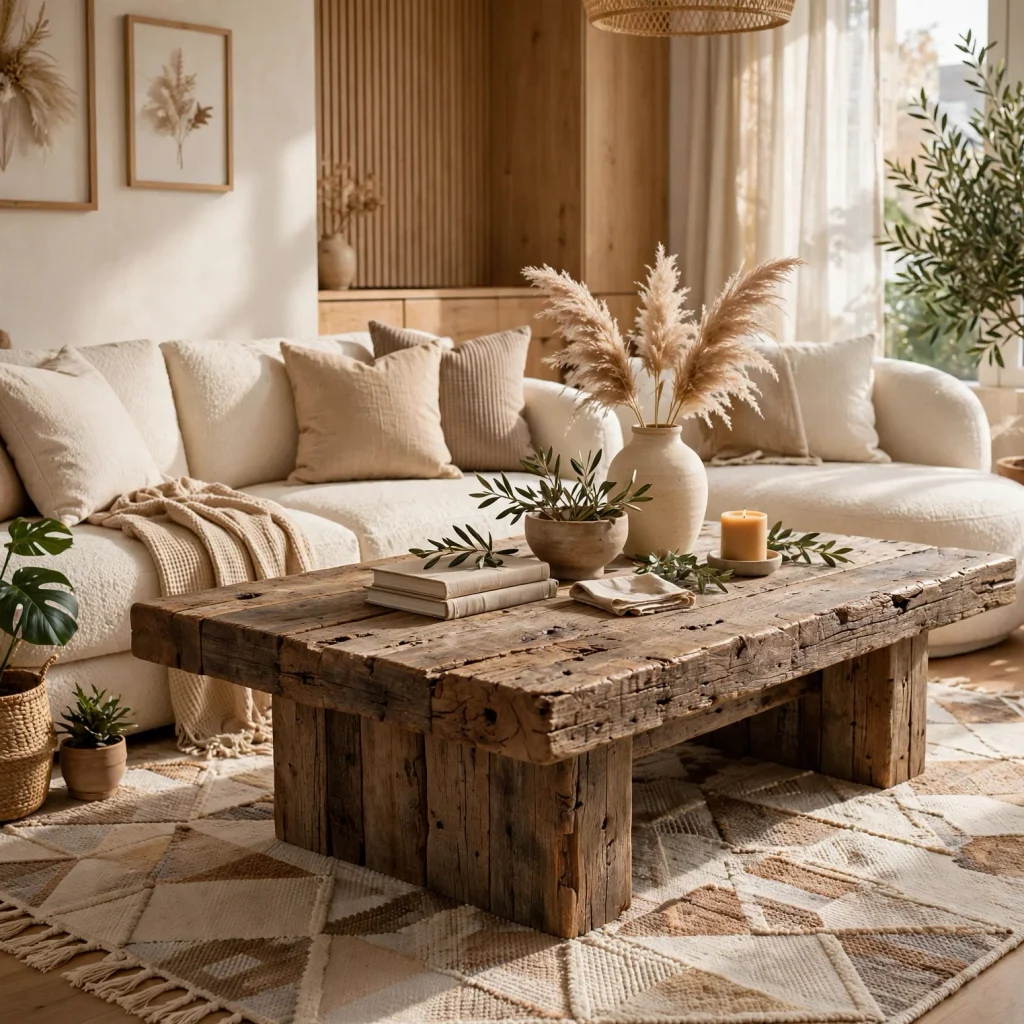
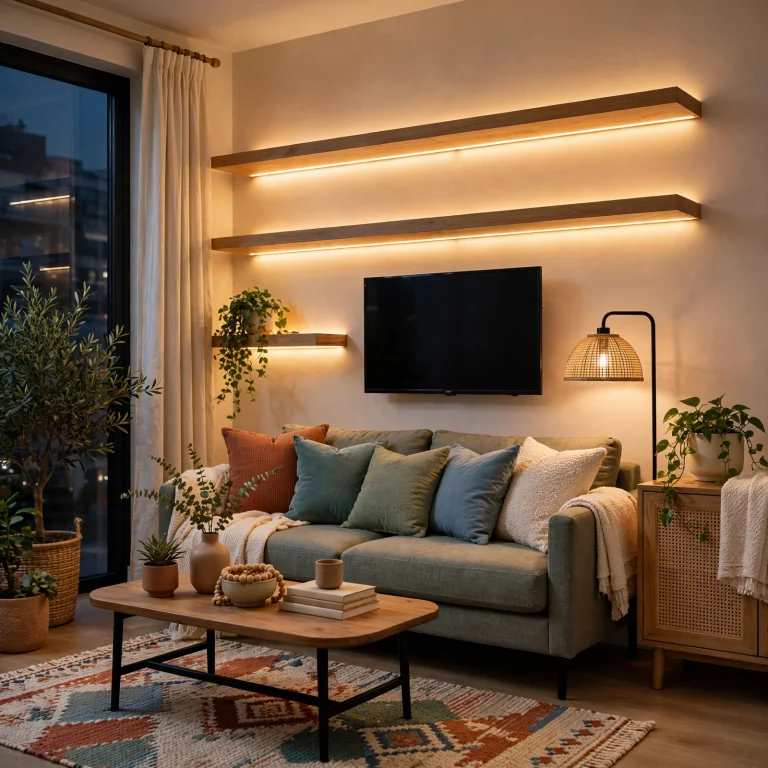
A reclaimed wood center table, built from salvaged barn wood or aged timber, brings warmth and visible material history to a living room that new furniture typically can’t replicate. Visible knots, nail holes, and natural color variation across the surface are part of the material’s appeal rather than flaws to disguise. A simple trestle or turned-leg base in black metal or matching wood keeps the piece grounded and functional rather than overly rustic.
| Wood Type | Character | Best Suited Style |
| Reclaimed barn wood | Visible grain, nail holes | Farmhouse, rustic |
| Walnut | Rich, dark tone | Modern, transitional |
| White oak | Light, clean grain | Scandinavian, japandi |
3. Round Wood Center Table
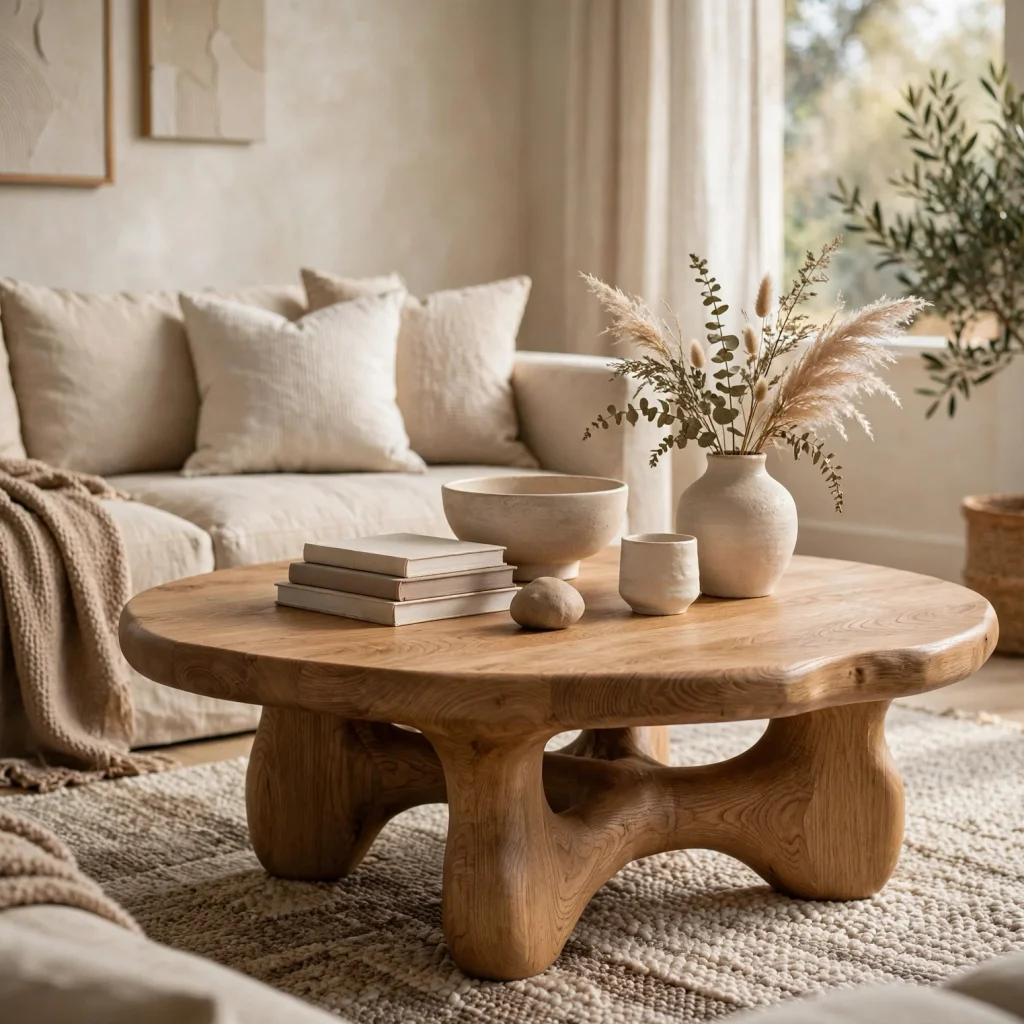
A round wood center table softens a living room’s overall geometry, particularly useful in rooms filled with rectangular sofas and straight-edged furniture. A diameter between 30 and 36 inches suits most standard seating arrangements, providing enough surface space without dominating the room’s center. This shape also improves walkway flow around the table, since there are no sharp corners to navigate in tighter layouts.
4. Nesting Center Tables
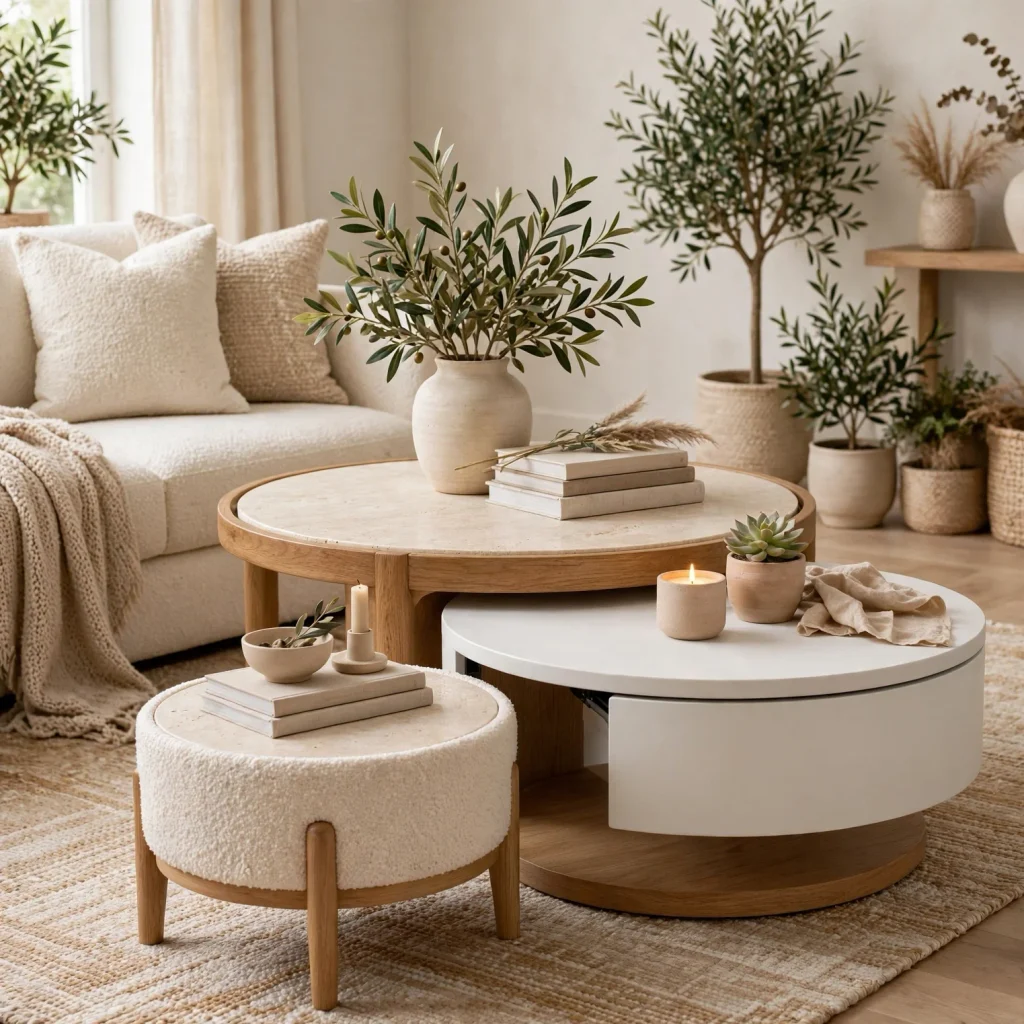
A set of two or three nesting center tables, in graduated sizes that tuck together when not in use, offers flexible surface area for a living room without permanently occupying more floor space than necessary. Pulling the tables apart for a gathering and tucking them back together the rest of the time adapts the room to actual daily use rather than a fixed configuration. Mixing materials slightly between the nested pieces, such as one wood and one stone top, keeps the set from looking like an overly matched trio.
5. Lift-Top Storage Center Table
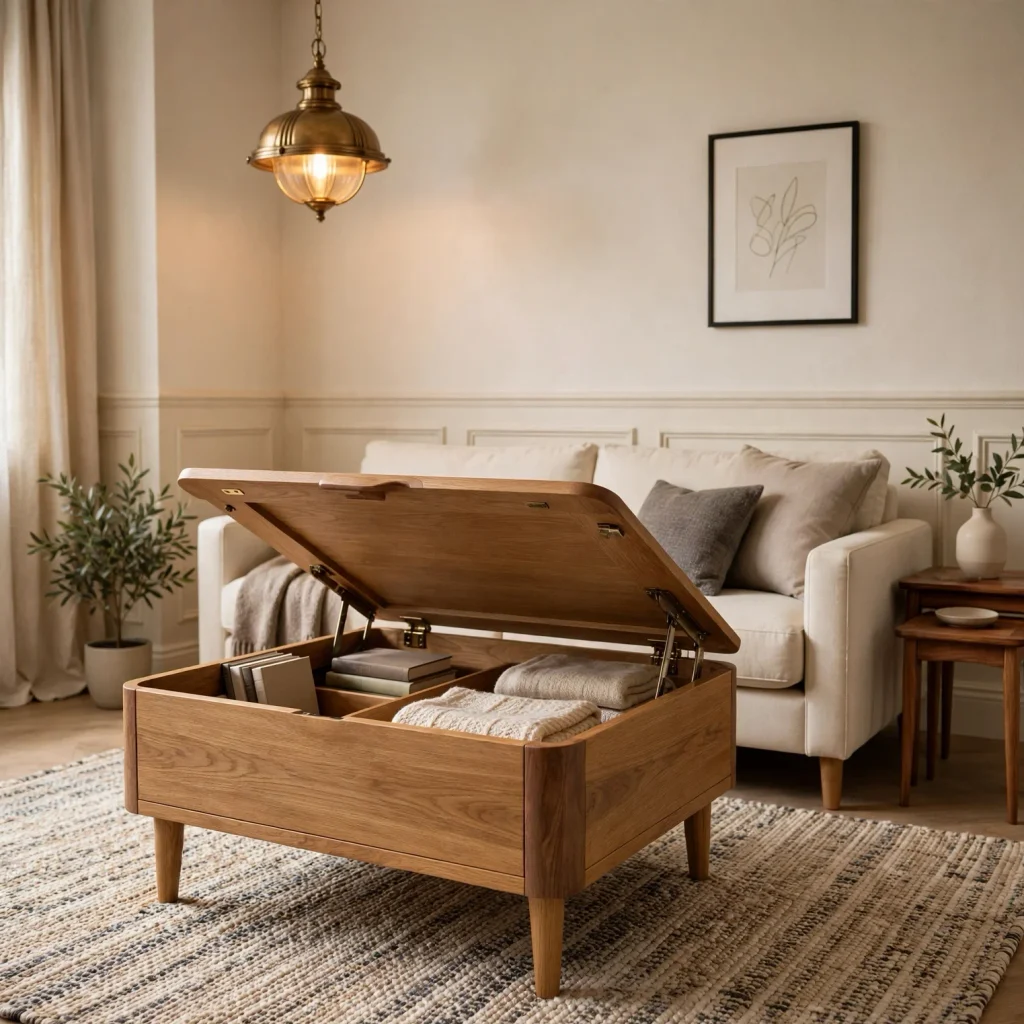
A lift-top center table, with a hinged or sliding surface that raises to reveal storage or a more comfortable working height, adds function to a living room that also serves as a workspace or dining area on occasion. This style works particularly well in smaller living rooms or apartments where a dedicated desk or dining table isn’t practical. Choosing a table with a smooth, well-engineered lift mechanism, rather than a lower-cost version prone to sticking, matters significantly for daily usability.
For a warm and timeless look, explore these farmhouse living room ideas featuring natural textures, wood accents, and comfortable furnishings.
6. Glass-Top Center Table
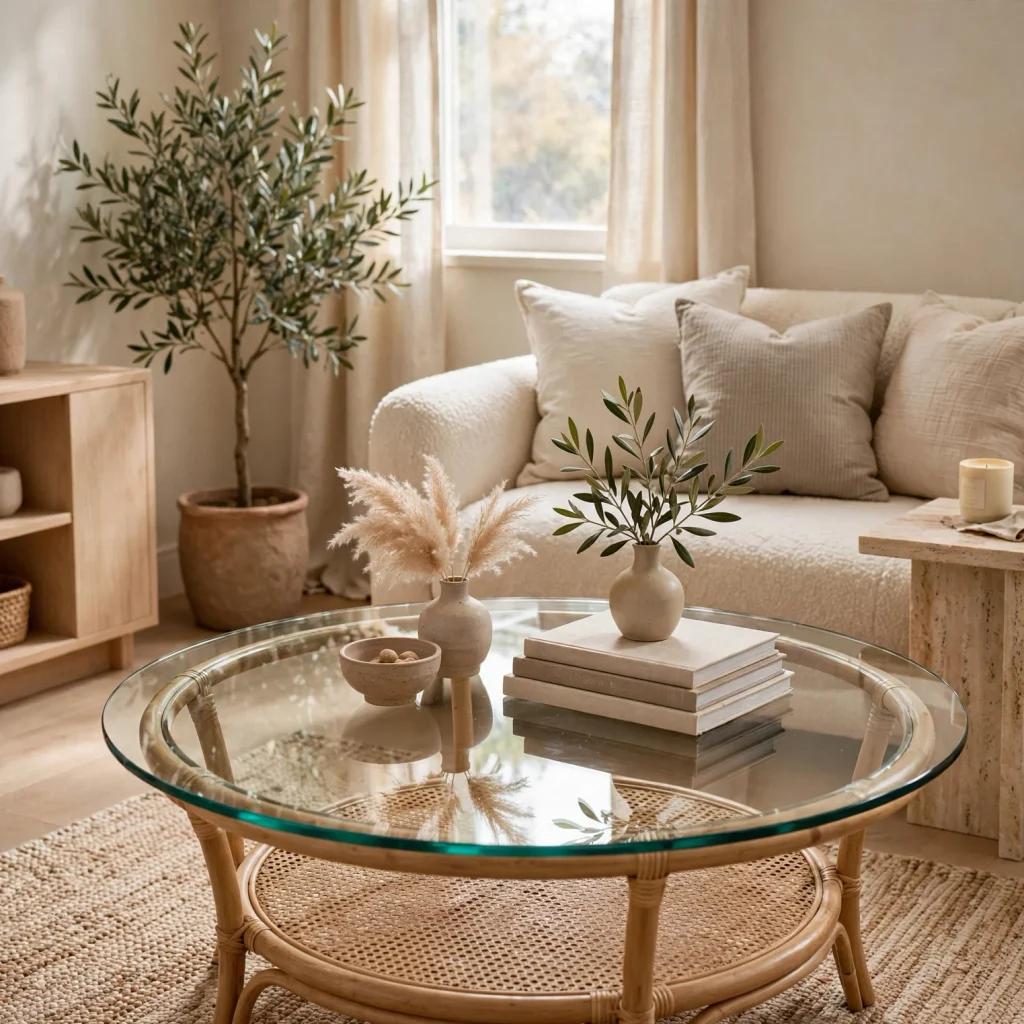
A glass-top center table keeps a living room’s floor space visually open, since sightlines pass through the surface rather than stopping at a solid, opaque top. This works particularly well in smaller rooms where a bulkier stone or wood table would visually crowd the space. Pairing the glass top with a wood or metal base adds warmth and prevents the piece from feeling too cold or sterile on its own.
7. Oval Center Table
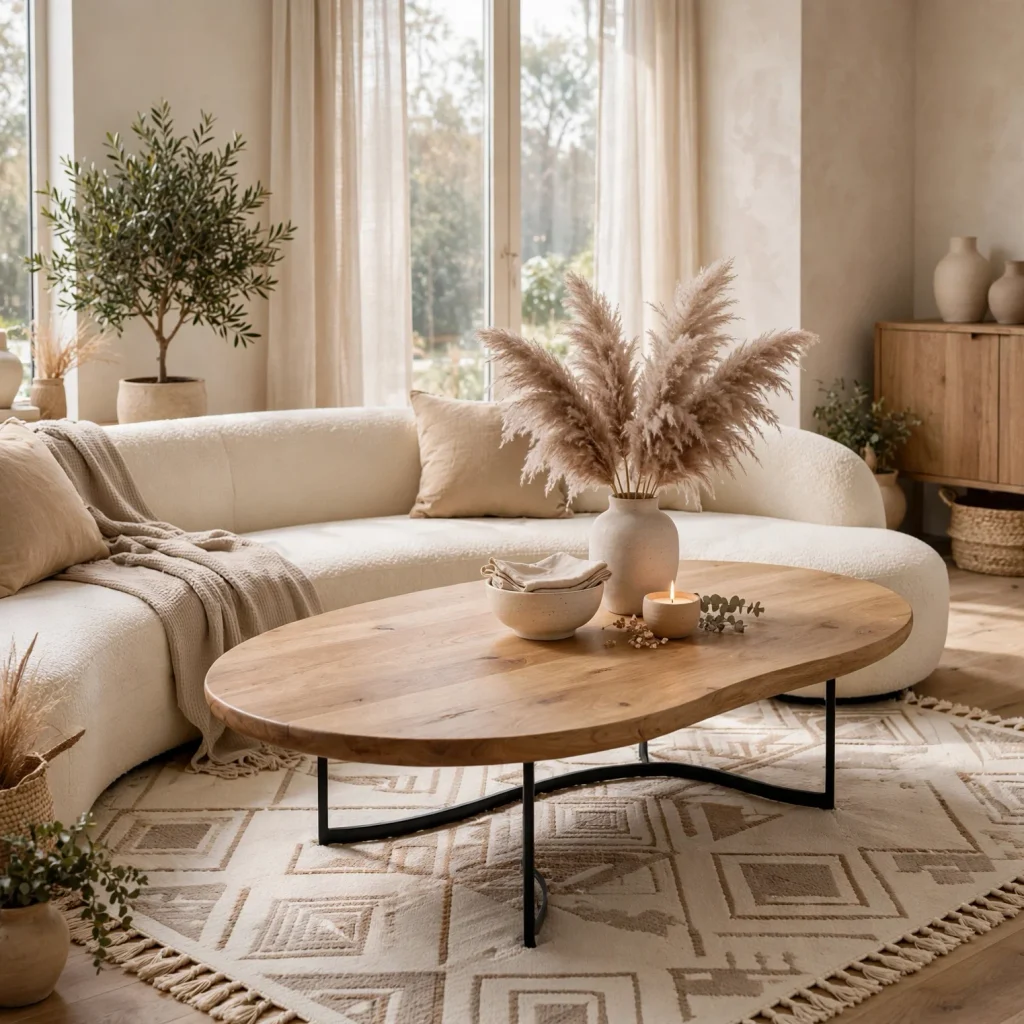
An oval center table offers a middle ground between the softness of a round table and the surface area of a rectangular one, suiting living rooms with a slightly longer, narrower seating arrangement. The elongated shape works particularly well positioned between a sofa and a pair of facing chairs, providing accessible surface space to each seating position. This shape also pairs naturally with a curved sectional, continuing the room’s rounded silhouette throughout the furniture layout.
8. Woven Rattan Center Table
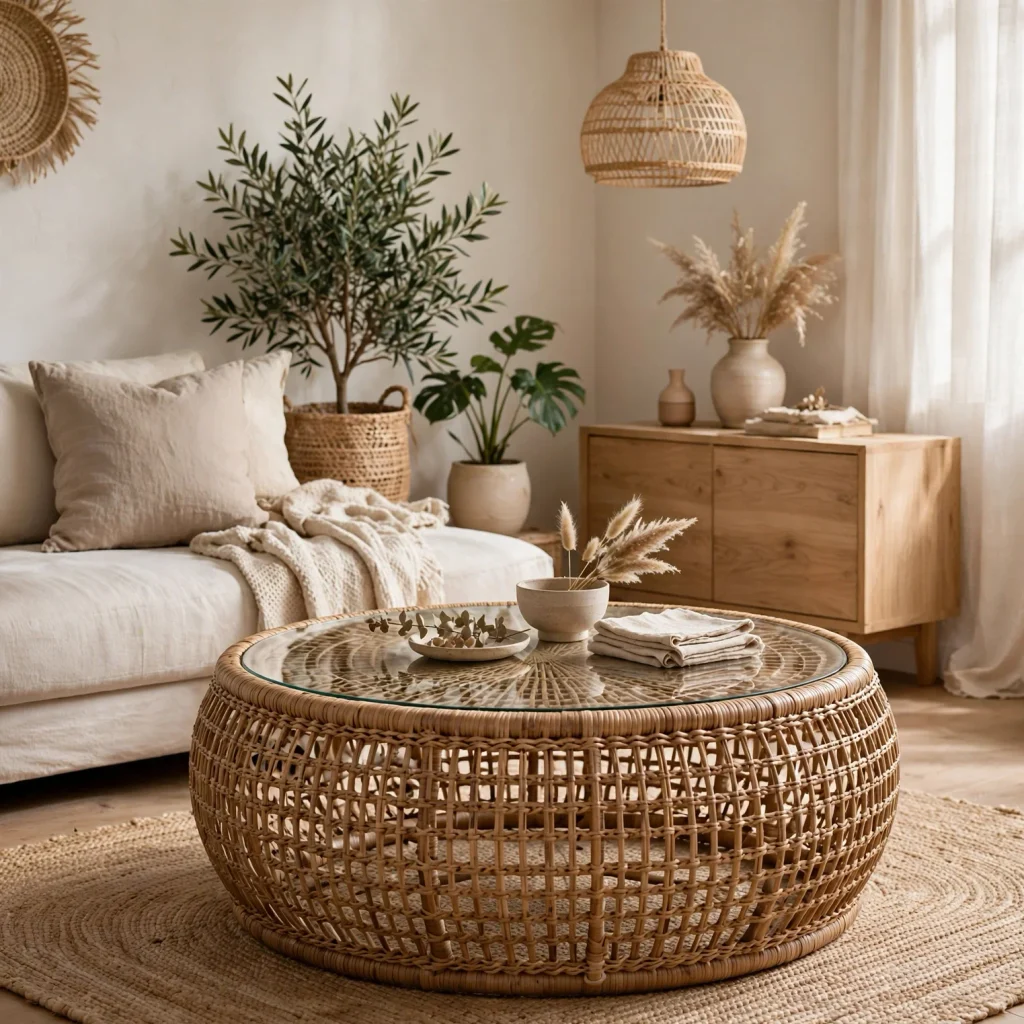
A woven rattan center table introduces natural texture to a living room without the visual heaviness of solid wood or stone. The open weave pattern lets light pass through, keeping the piece feeling light even in a smaller room. This material pairs particularly well with a boho or coastal living room palette, though a simpler rattan silhouette also works in a more pared-back, japandi-influenced space.
9. Two-Tier Center Table
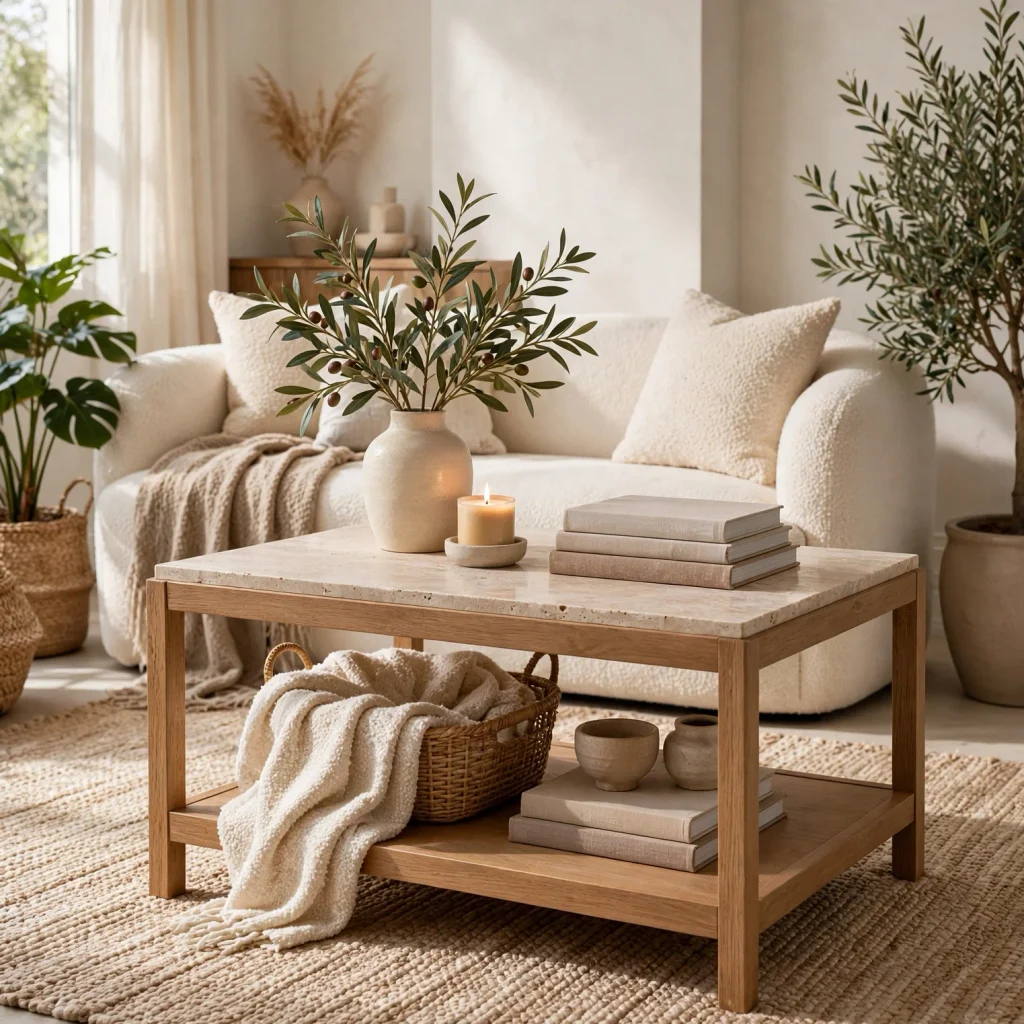
A two-tier center table, with a lower open shelf beneath the main surface, adds storage capacity for books, baskets, or remotes without requiring an additional piece of furniture in the living room. The lower shelf also provides a place to display styling objects, like a stack of magazines or a small plant, that would otherwise need to compete for space on the main tabletop. This design works particularly well in smaller rooms where every piece of furniture needs to serve more than one function.
10. Sculptural Freeform Center Table
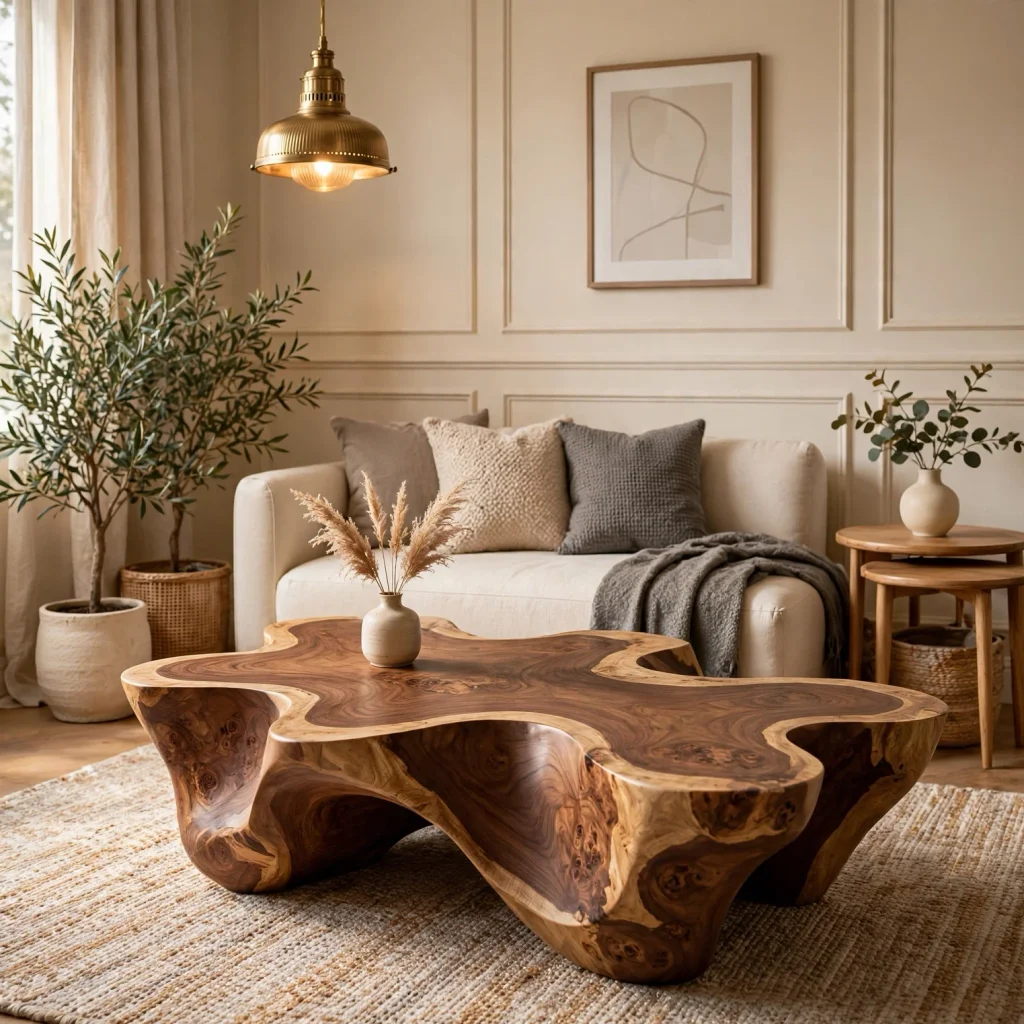
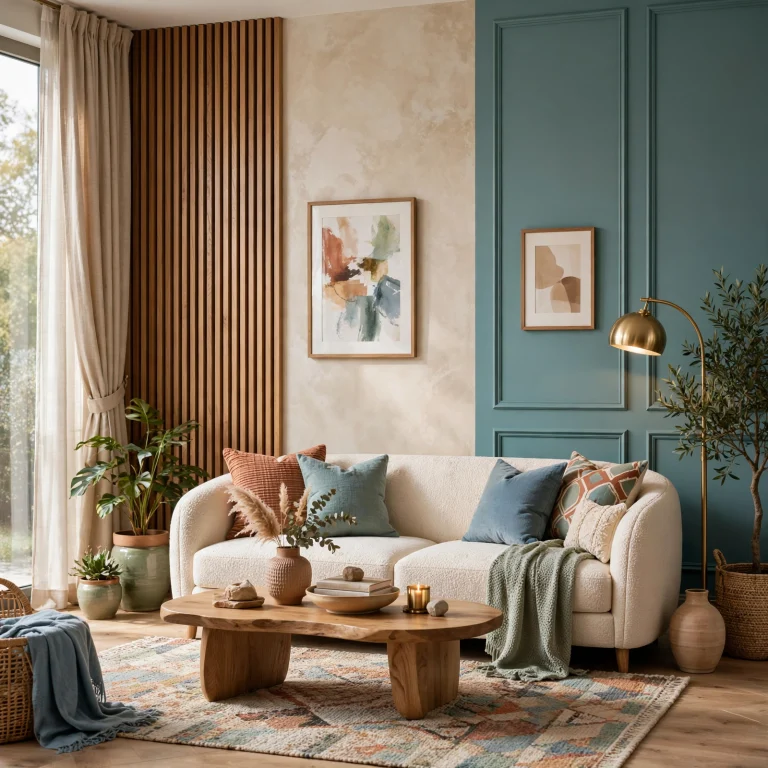
A sculptural freeform center table, with an organic, irregular silhouette rather than a standard geometric shape, functions as a living room’s piece of functional art in addition to its practical role. Materials like hand-carved wood, poured concrete, or a resin composite in an organic shape all suit this style. Positioning the room’s other furniture in simpler, more restrained shapes around the sculptural table allows its form to stand out as the space’s clear focal point.
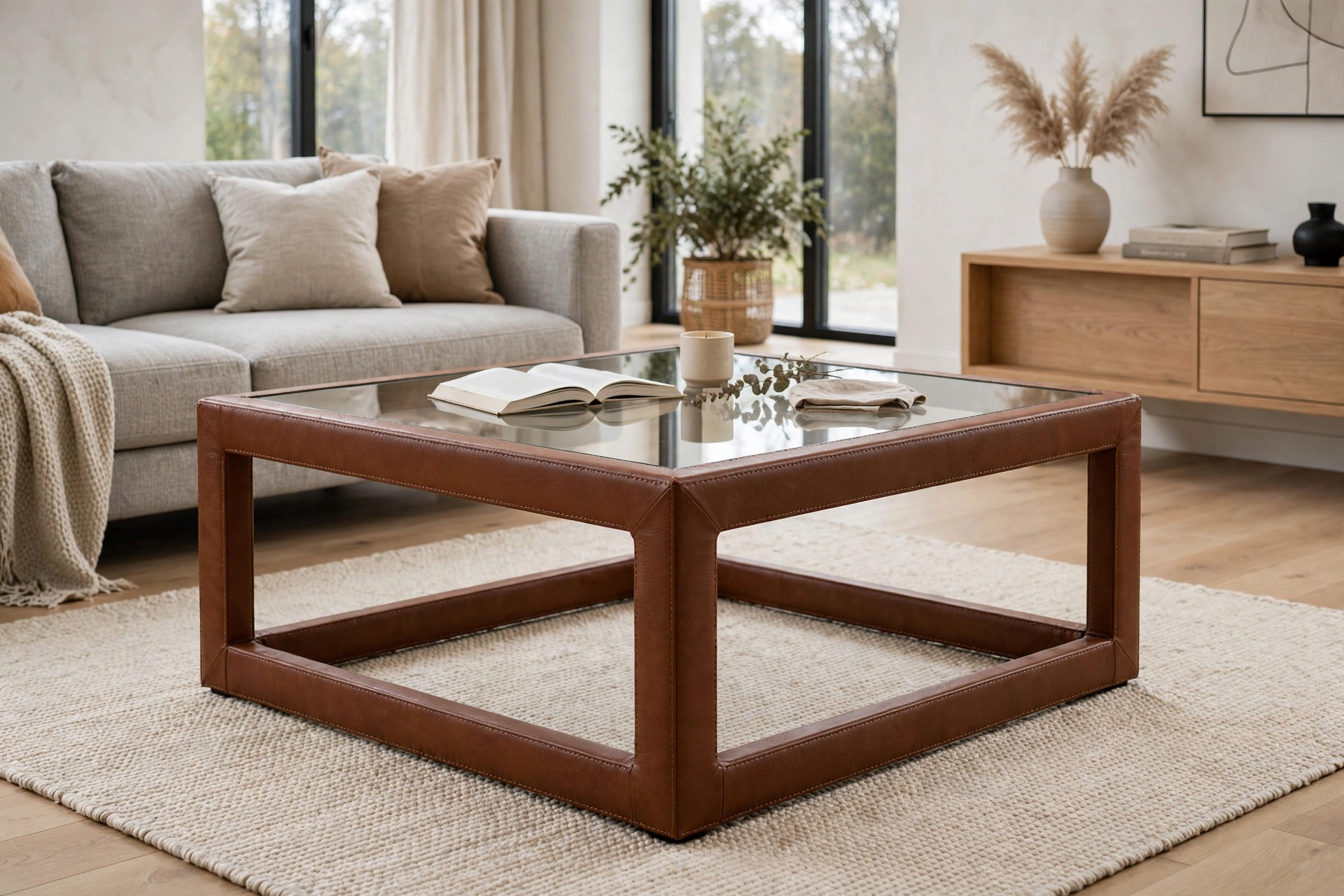
11. Leather-Wrapped Center Table
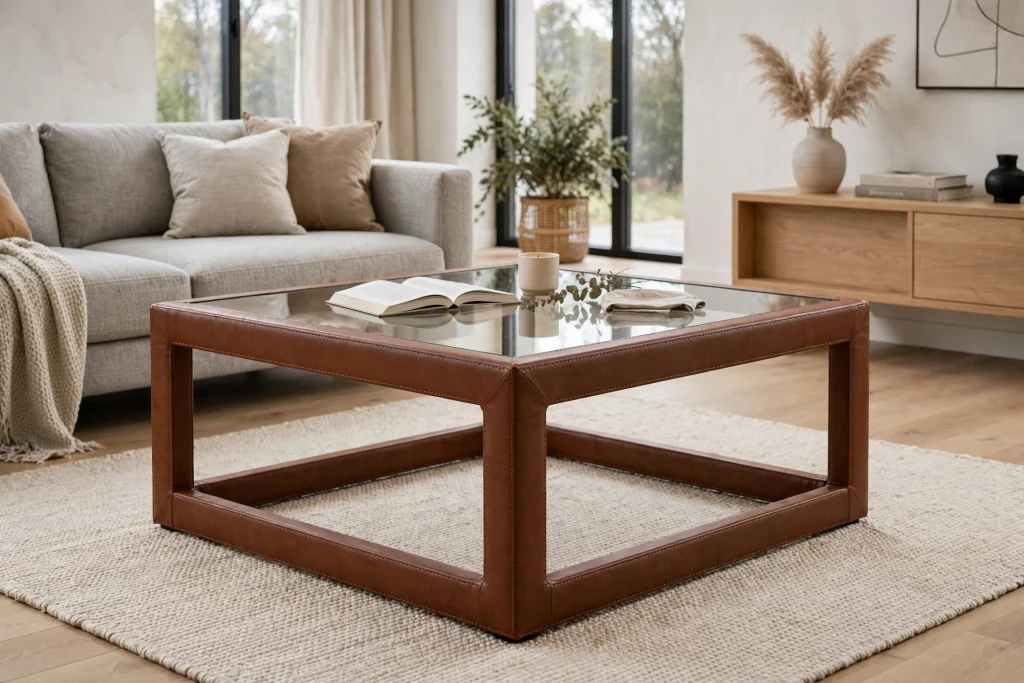
A leather-wrapped center table, with a full or partial leather covering over a wood or metal frame, adds a tactile, tailored material to a living room that suits both traditional and modern interiors depending on the surrounding furniture style. A saddle brown or cognac leather tends to develop an appealing patina with use, aging in a way that suits the material’s inherent durability. This option works particularly well in a living room already incorporating leather through an accent chair or sofa, tying the materials together.
12. Trunk-Style Center Table
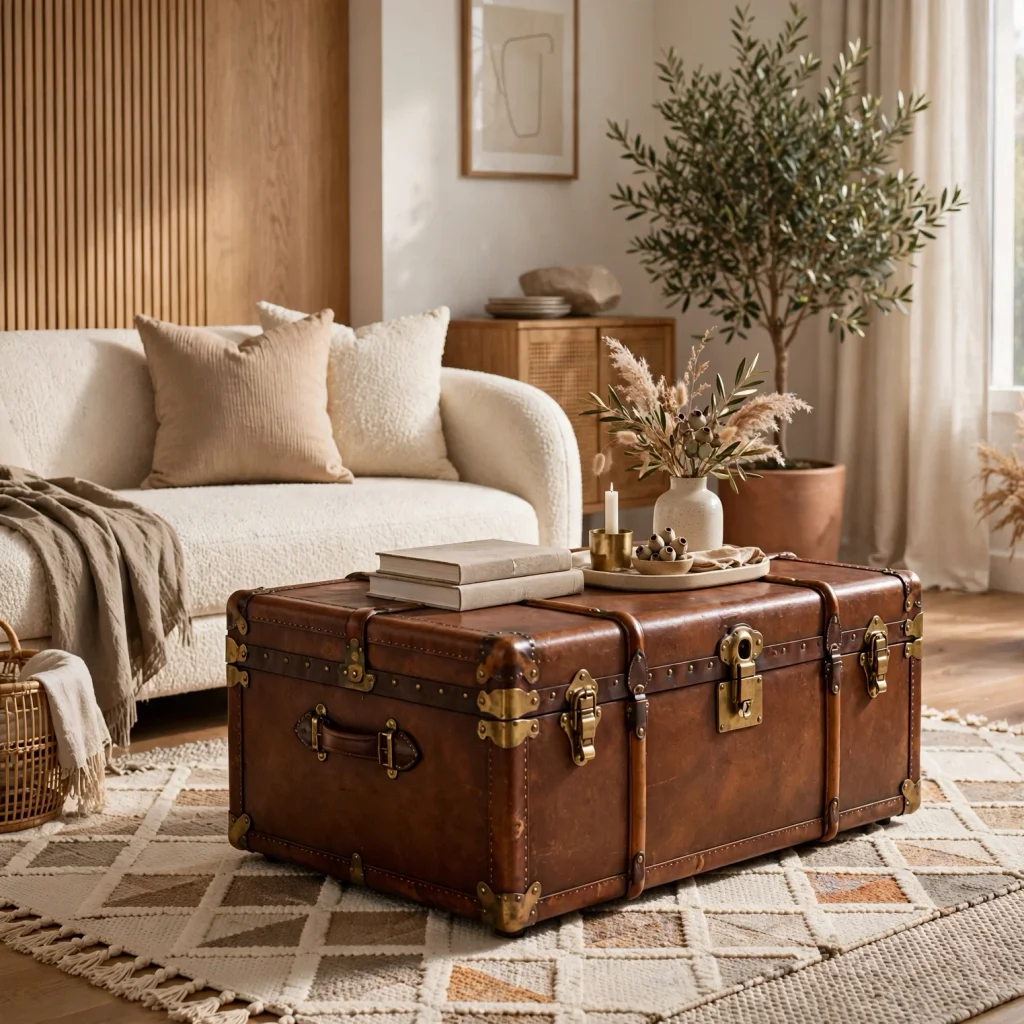
A trunk-style center table, referencing vintage steamer trunks with a hinged lid and internal storage, gives a living room both a decorative focal point and functional hidden storage in a single piece. Leather, canvas, or a wood-and-metal combination all suit this style, and a genuinely vintage or antique trunk often adds more character than a new reproduction. This piece works particularly well in a room that also incorporates other vintage or collected furniture, reinforcing a cohesive, gathered-over-time aesthetic.
13. Modular Cube Center Tables
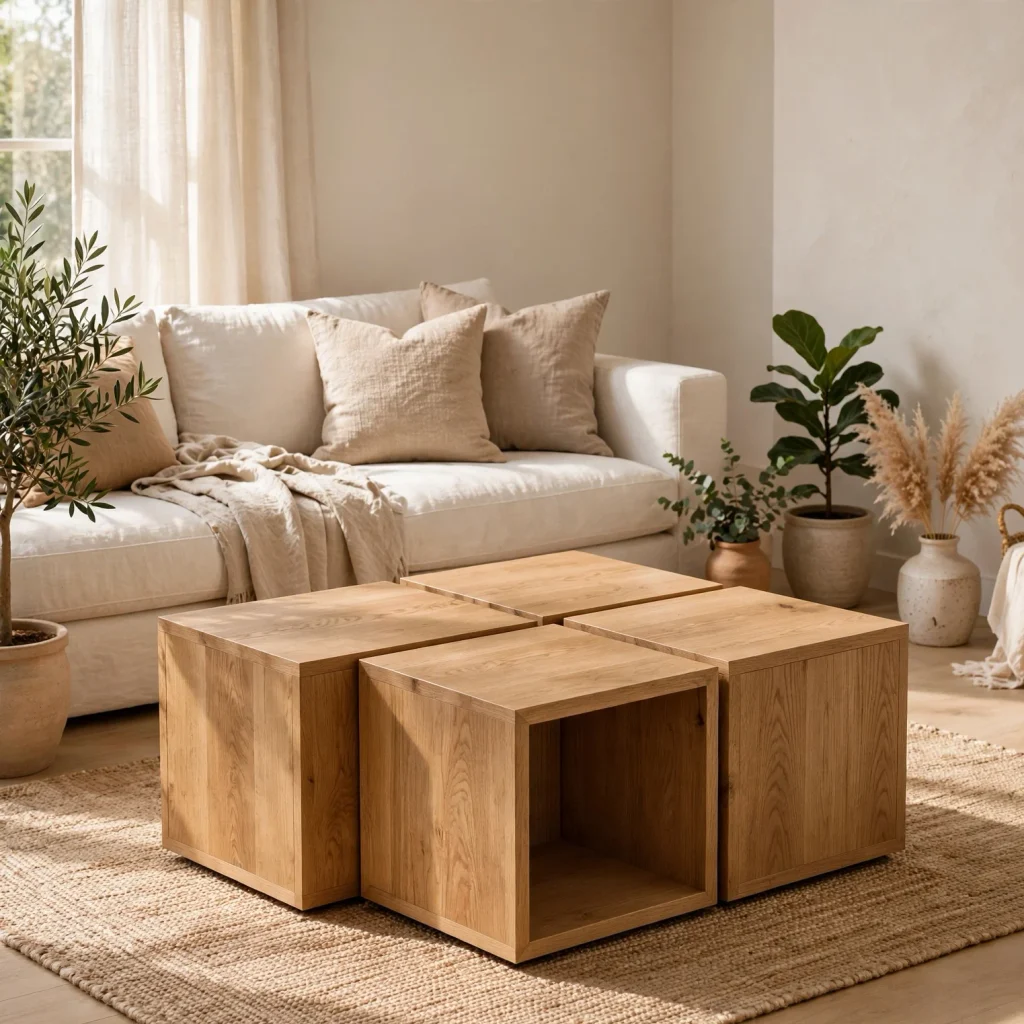
A set of modular cube-shaped tables, which can be arranged together as a single larger surface or separated for flexible seating and side-table use, gives a living room adaptable furniture that responds to different gathering sizes. Upholstered cubes in a durable fabric add the option of extra seating, while a solid wood or stone version keeps the set purely functional as a table. This idea works especially well in smaller apartments or multi-purpose living rooms where furniture flexibility matters more than a fixed, single-use piece.
14. Low-Profile Minimalist Center Table
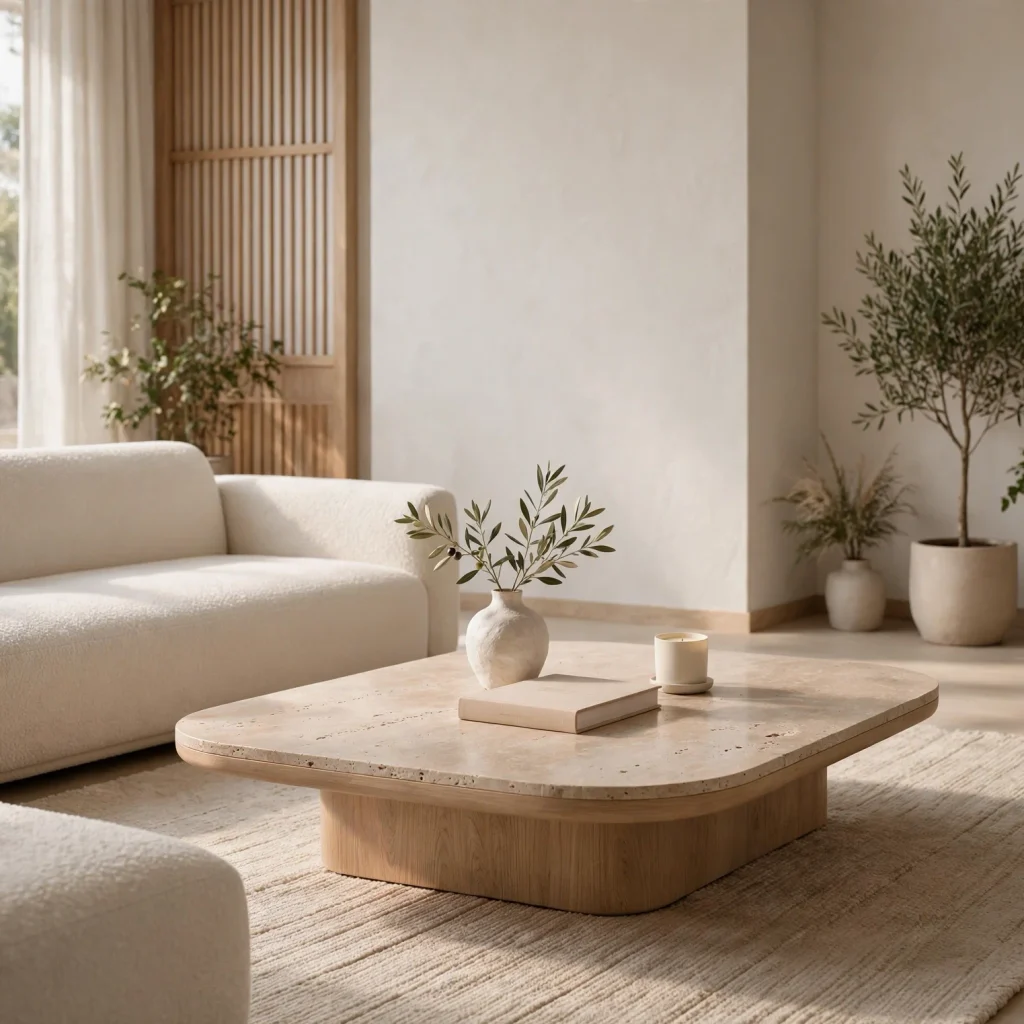
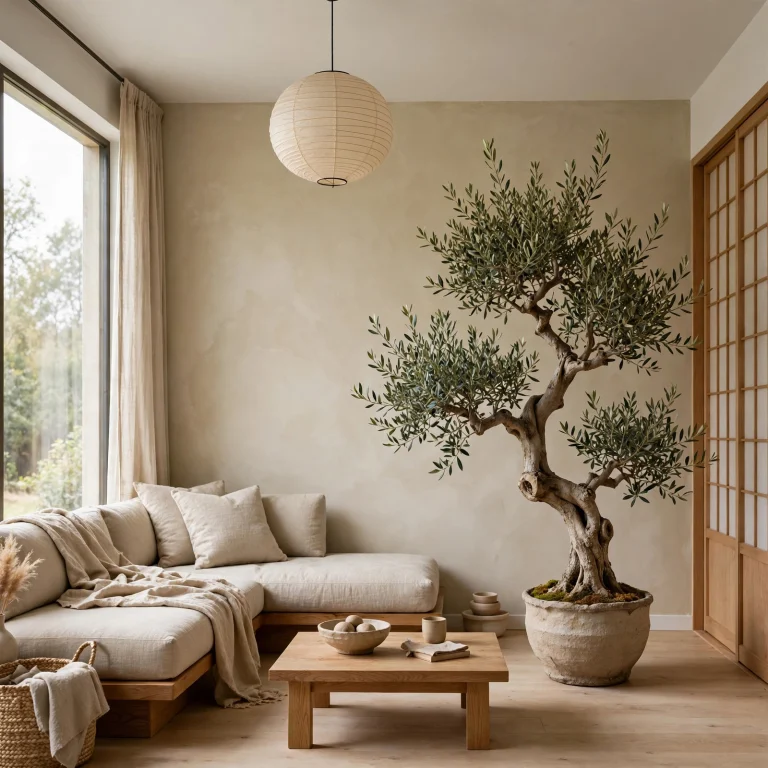
A low-profile center table, typically under 16 inches tall with clean, unornamented lines, suits a minimalist or japandi-influenced living room’s overall grounded, horizontal proportions. A simple rectangular or circular shape in raw or lightly oiled oak keeps the piece consistent with the room’s restrained material palette. This lower height also encourages a more relaxed, floor-adjacent use pattern that fits naturally within a pared-back, low-furniture room.
15. Stone Pedestal Center Table
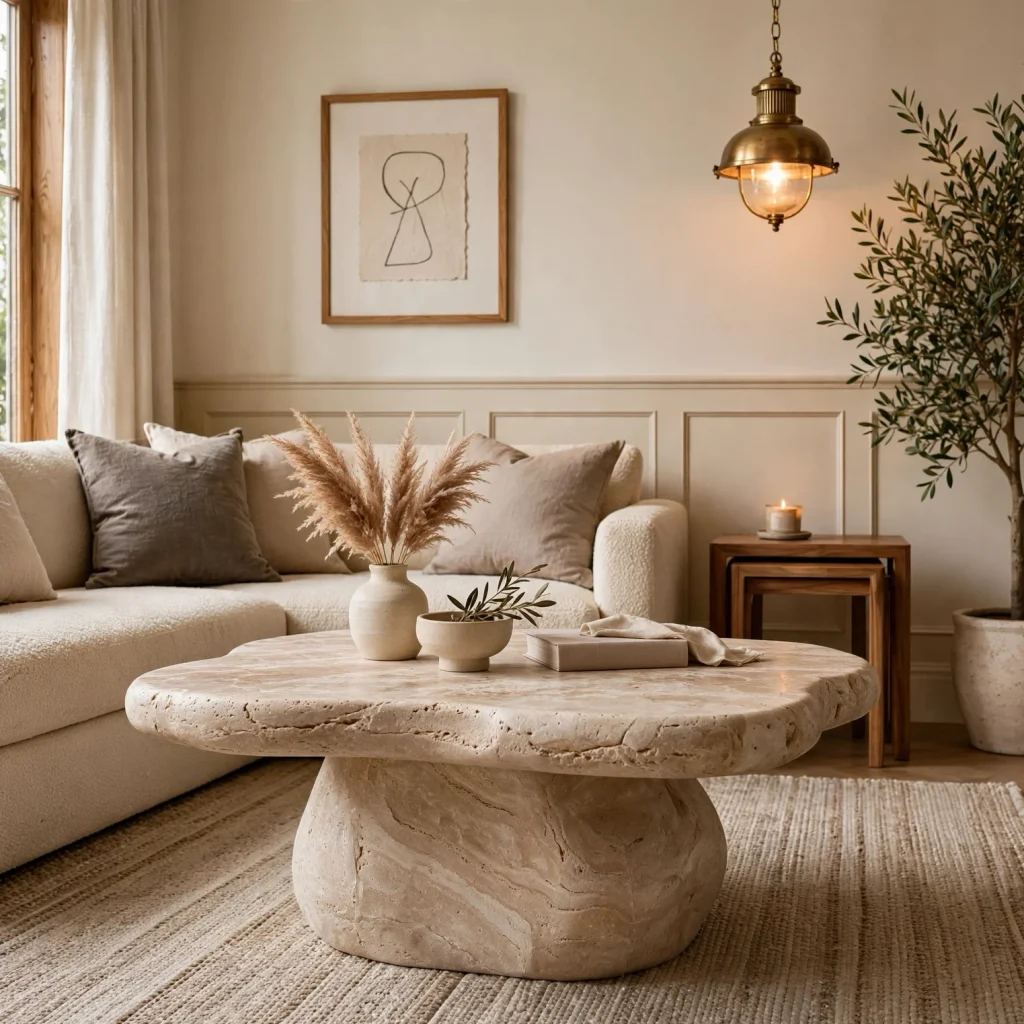
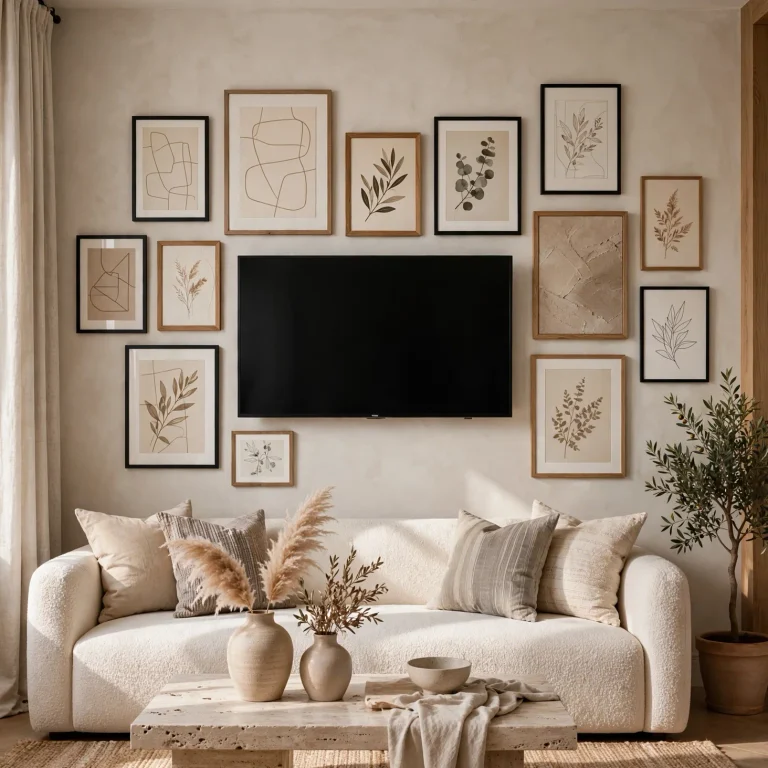
A stone pedestal center table, with a solid cylindrical or geometric base supporting a stone or wood top, adds substantial visual weight and material presence to a living room’s seating area. Travertine or a honed marble pedestal in particular gives the piece a sculptural quality that functions as more than just a surface. This style works especially well as a room’s singular bold statement piece, paired with simpler, more restrained seating so the table remains the clear focal point.
Shop the Look
Start with a honed marble-top center table with a brass base, or, for a warmer alternative, a reclaimed wood table with a black metal trestle frame. Add a set of nesting side tables in a complementary material for flexible extra surface space, and consider a two-tier design if additional storage is needed. Finish with a woven rattan or leather-wrapped ottoman nearby if the room calls for a softer, more casual secondary surface.
Common Mistake to Avoid
A common mistake when choosing a center table for a living room is prioritizing the table’s shape and material over its height relative to the surrounding seating, which results in a table that’s uncomfortable to actually use despite looking well-chosen. The table’s height should generally sit within an inch or two of the sofa’s seat height, close enough to reach comfortably without requiring an awkward lean. Measuring the sofa’s actual seat height before finalizing a table selection prevents this common and easily avoidable mismatch.
FAQs
What size center table is right for my living room?
A center table should generally leave 14 to 18 inches of clearance between it and surrounding seating, which for most standard living rooms means a table roughly two-thirds the length of the sofa it’s paired with. A round or oval table between 30 and 42 inches in diameter typically suits most seating arrangements, while a rectangular table’s length should be measured against the specific sofa and room layout. Oversized or undersized tables both disrupt the room’s proportions, so measuring before shopping is worth the extra step.
How high should a center table be compared to the sofa?
A center table’s height should sit close to the sofa’s seat height, typically within an inch or two, to remain comfortable for everyday use like resting drinks or propping up feet. Coffee tables mismatched significantly in height, either too low or too tall relative to the seating, tend to feel awkward despite looking fine visually. Measuring the sofa’s actual seat height, rather than relying on a table’s listed dimensions alone, gives a more accurate sense of whether the pairing will work well.
What material center table is most durable for a living room with kids or pets?
A solid wood or stone center table generally holds up better to daily wear from kids or pets than a glass-top table, which is more prone to scratching, fingerprints, and safety concerns around sharp edges. Rounded or oval shapes also reduce the risk of injury from bumped corners compared to a sharply rectangular table. A lift-top or two-tier table with enclosed or lower storage can also help keep toys, remotes, or pet items contained rather than scattered across the room.
Can a center table be smaller than the standard recommended size?
A smaller center table can work well in a compact living room, particularly when paired with nesting tables or a side table to provide additional surface area when needed without permanently occupying more floor space. In these cases, prioritizing a table that fits the room’s actual proportions over one sized to a generic standard produces a better overall result. The same height and clearance guidelines still apply regardless of the table’s overall footprint.
Should a center table match the other wood tones in my living room?
A center table doesn’t need to match every other wood tone in a living room exactly, and a slightly varied palette, particularly when unified by a repeated material like black metal hardware or a consistent tone family, often reads as more considered than a fully matched set. Mixing materials, such as a stone table with wood shelving elsewhere in the room, can also work well as long as one connecting element ties the pieces together. A close match works fine too, particularly in more traditional or formal rooms where cohesion is prioritized.
Conclusion
A center table for a living room deserves as much thought as the sofa it sits beside, since its size, height, and material affect both the room’s daily function and its overall visual balance. Save this guide to Pinterest for reference while planning your next update, and check out our related post on living room decor ideas for more ways to style the space once the right table is in place.