15 Effective Bathroom Ideas for a Fresh, Functional Update
A bathroom Ideas update touches some of a home’s most frequently used and most moisture-sensitive square footage, making material choice and function just as important as style. This guide covers fifteen bathroom ideas, from statement tile work to smart storage solutions, with practical guidance for balancing durability and design. Each idea works independently or as part of a fuller renovation.
Trend & Background
Bathroom design has moved toward a more spa-inspired, calming aesthetic in recent years, with natural materials like stone and wood-look tile replacing some of the starker, more clinical white-tile bathrooms common in previous decades. This shift reflects a broader interest in the bathroom as a genuine retreat space rather than a purely functional room, alongside continued attention to practical concerns like storage and ventilation. Warmer metal finishes, matte black and brushed brass in particular, have also become standard fixtures in current bathroom hardware and lighting choices, replacing the chrome that dominated for years.
Key Takeaways
- Bathroom ideas work best when balancing moisture-resistant materials with genuine style rather than choosing one over the other.
- Storage planning matters as much as aesthetics, since a beautiful bathroom without adequate storage quickly feels cluttered.
- Lighting layers, task lighting at the mirror and ambient lighting elsewhere, significantly affect both function and mood.
- Small bathrooms benefit most from light color palettes, mirrors, and space-efficient fixtures rather than scaled-down versions of large-bathroom ideas.
1. Statement Tile Floor
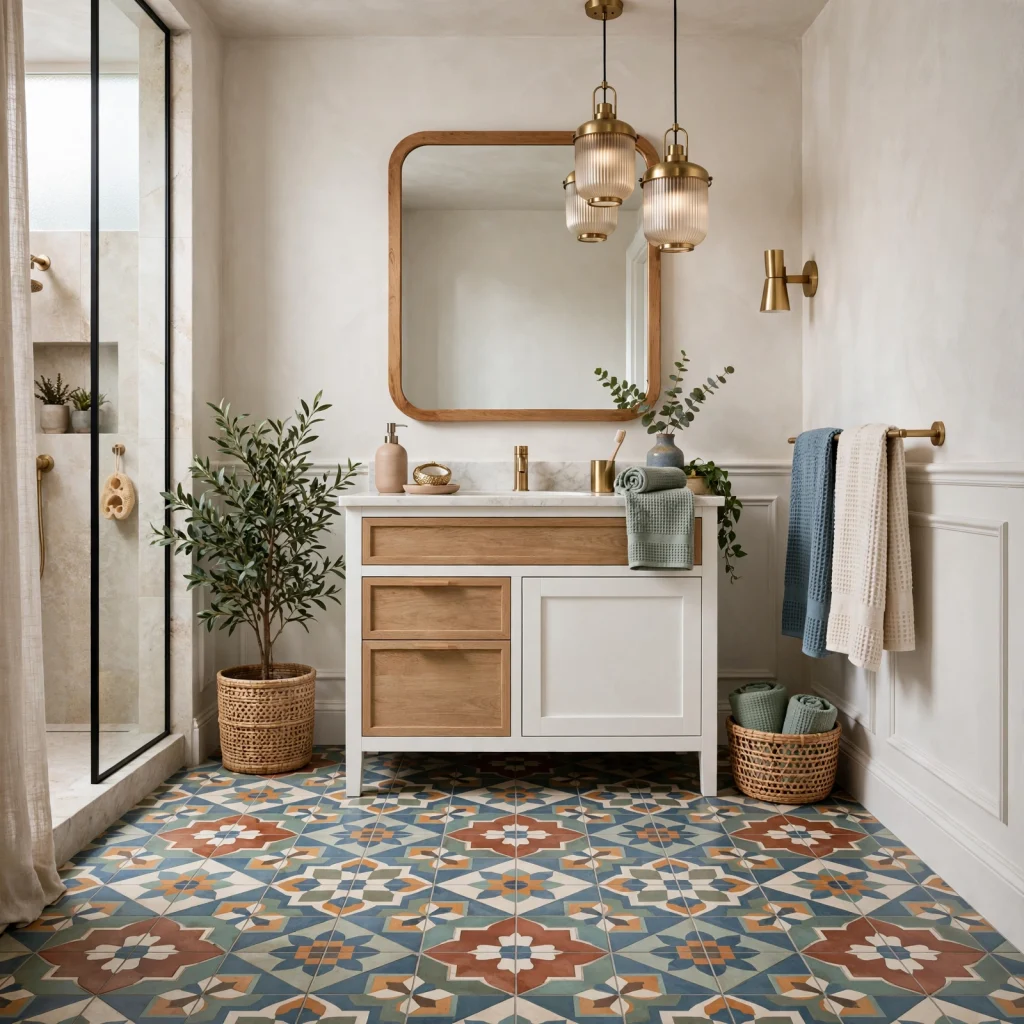
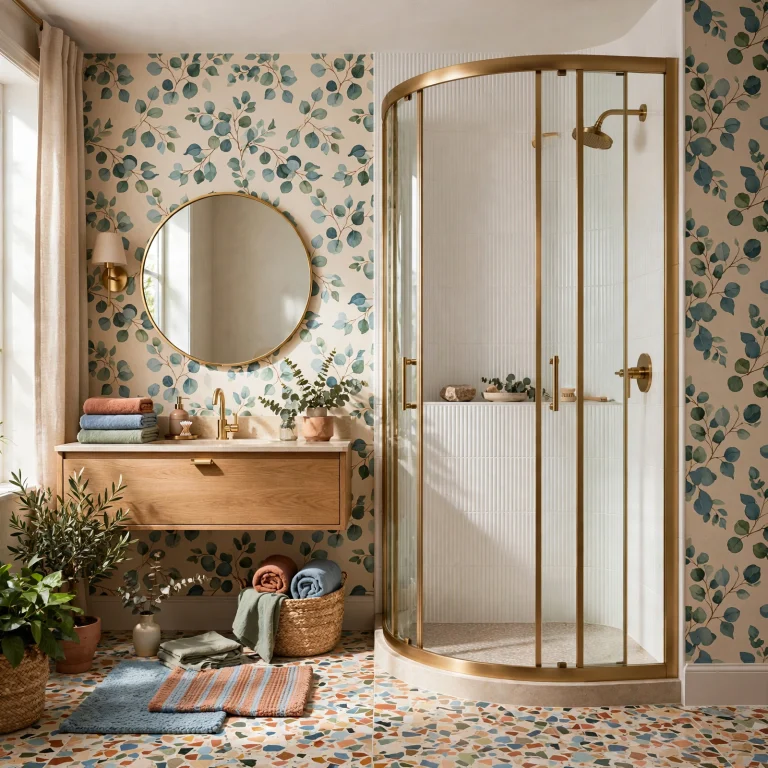
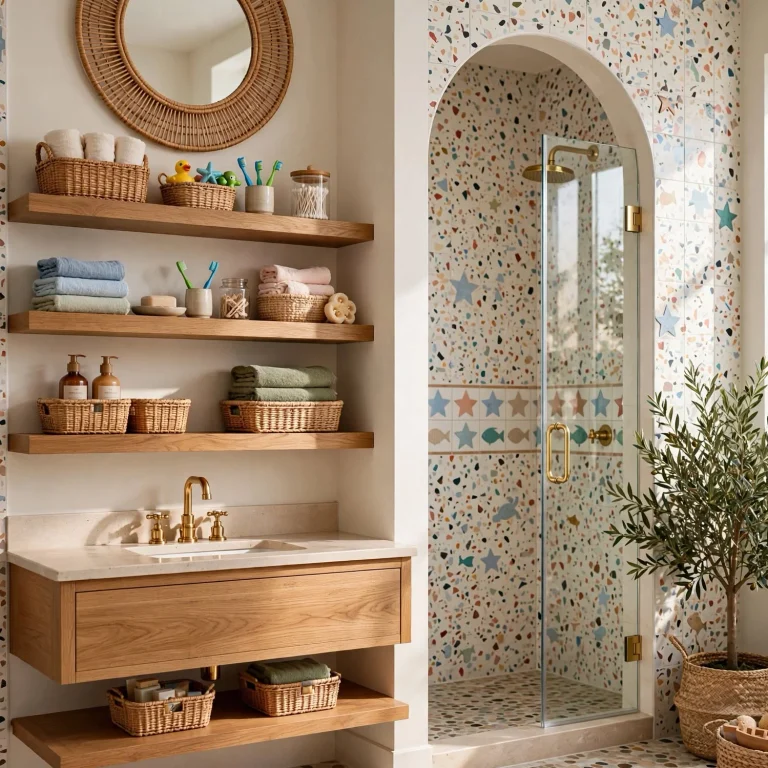
A statement tile floor, in a bold pattern or a natural stone-look material, gives a bathroom a distinctive focal point that a plain white or single-tone floor doesn’t provide. Choosing a patterned tile for the floor while keeping walls simpler allows the floor to serve as the room’s clear design statement without competing elements. This approach works particularly well in a powder room or smaller bathroom, where a bold floor pattern has less square footage to cover and therefore less cost.
2. Walk-In Shower With Frameless Glass
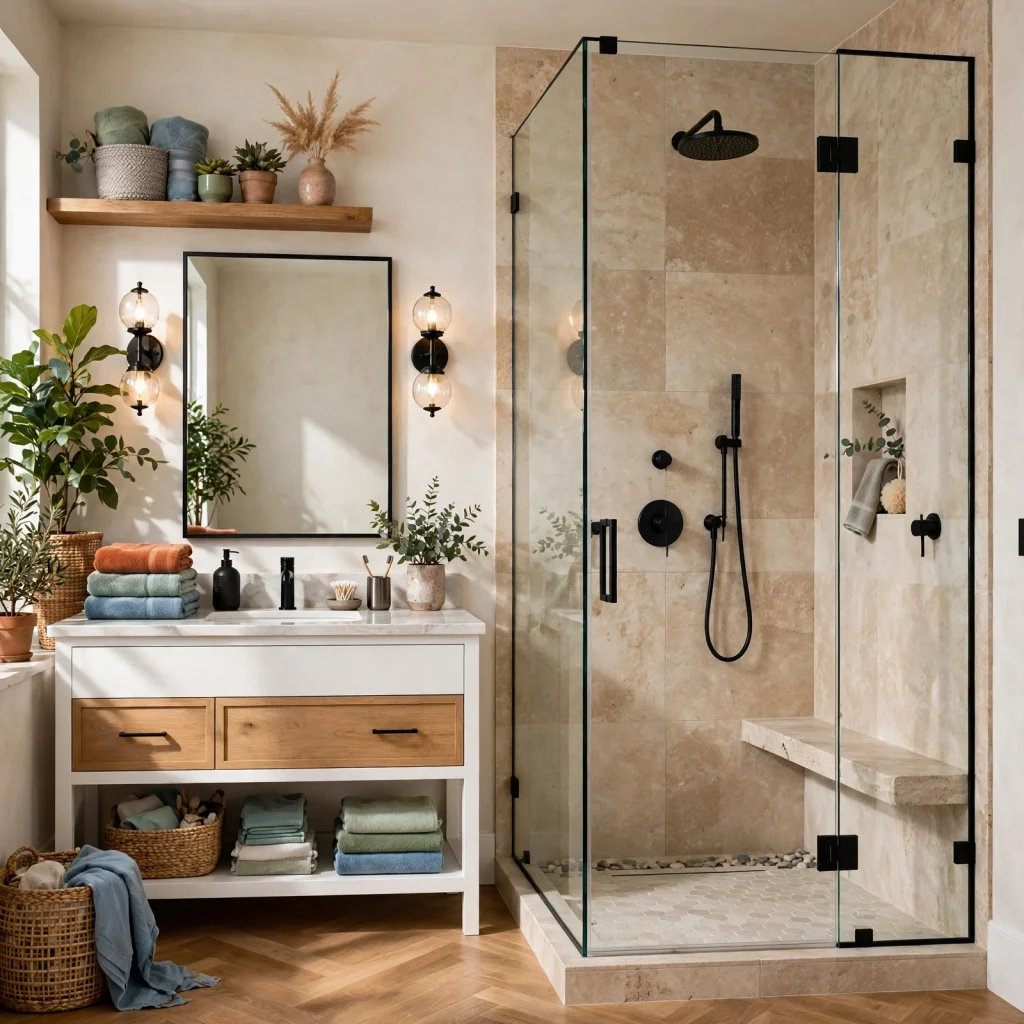
A walk-in shower with frameless glass panels, rather than a framed enclosure or shower curtain, gives a bathroom a more open, contemporary feel while also making the space appear larger than a fully enclosed shower would. This upgrade typically requires a curbless or low-curb shower base for the cleanest look, along with proper waterproofing during installation. Frameless glass also shows water spots more visibly than framed alternatives, so factoring in regular squeegee maintenance is worth considering before committing to this option.
3. Floating Vanity
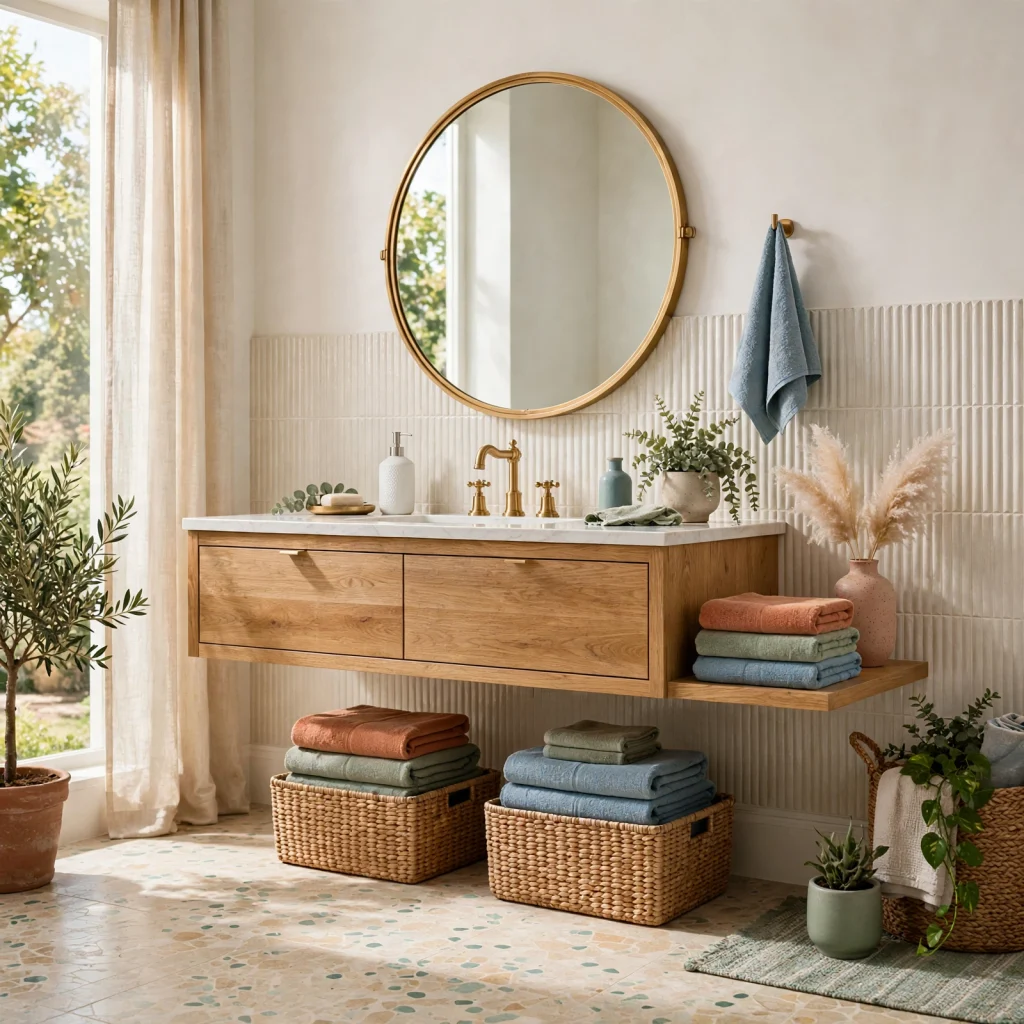
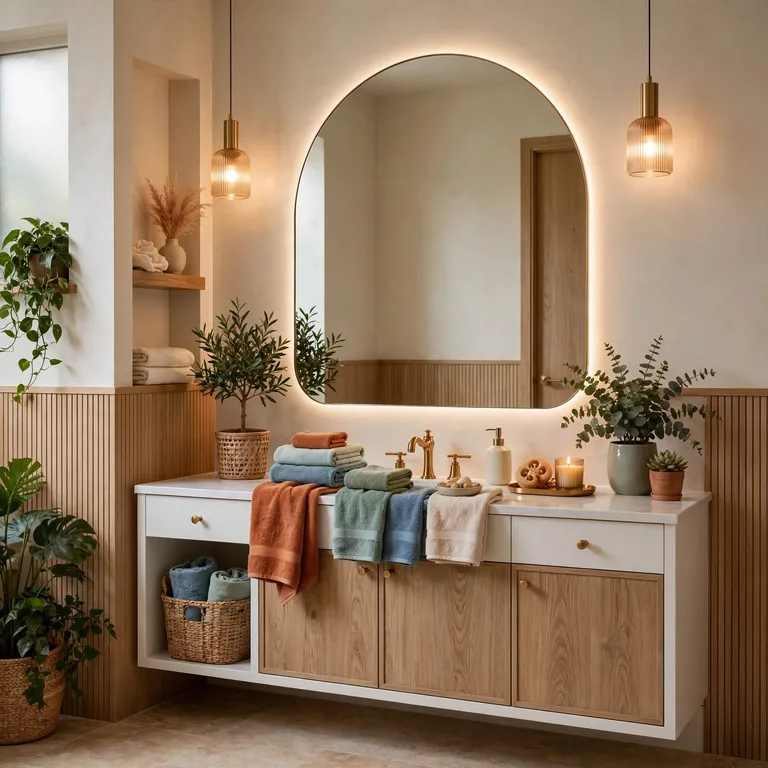
A floating vanity, mounted directly to the wall with no visible legs or base cabinet touching the floor, makes a bathroom feel more open and simplifies floor cleaning considerably. Choosing a vanity with closed storage beneath keeps everyday toiletries organized despite the piece’s visually lighter profile. This style suits a contemporary or minimalist bathroom particularly well, though it requires proper wall reinforcement during installation to support the vanity’s weight.
| Bathroom Size | Recommended Vanity Width | Storage Priority |
| Small (under 40 sq ft) | 24–30 in | Vertical storage, mirror cabinet |
| Medium (40–70 sq ft) | 36–48 in | Double-door vanity, open shelving |
| Large (70+ sq ft) | 60 in+ or double vanity | Dedicated linen storage |
4. Warm Metal Fixture Finishes
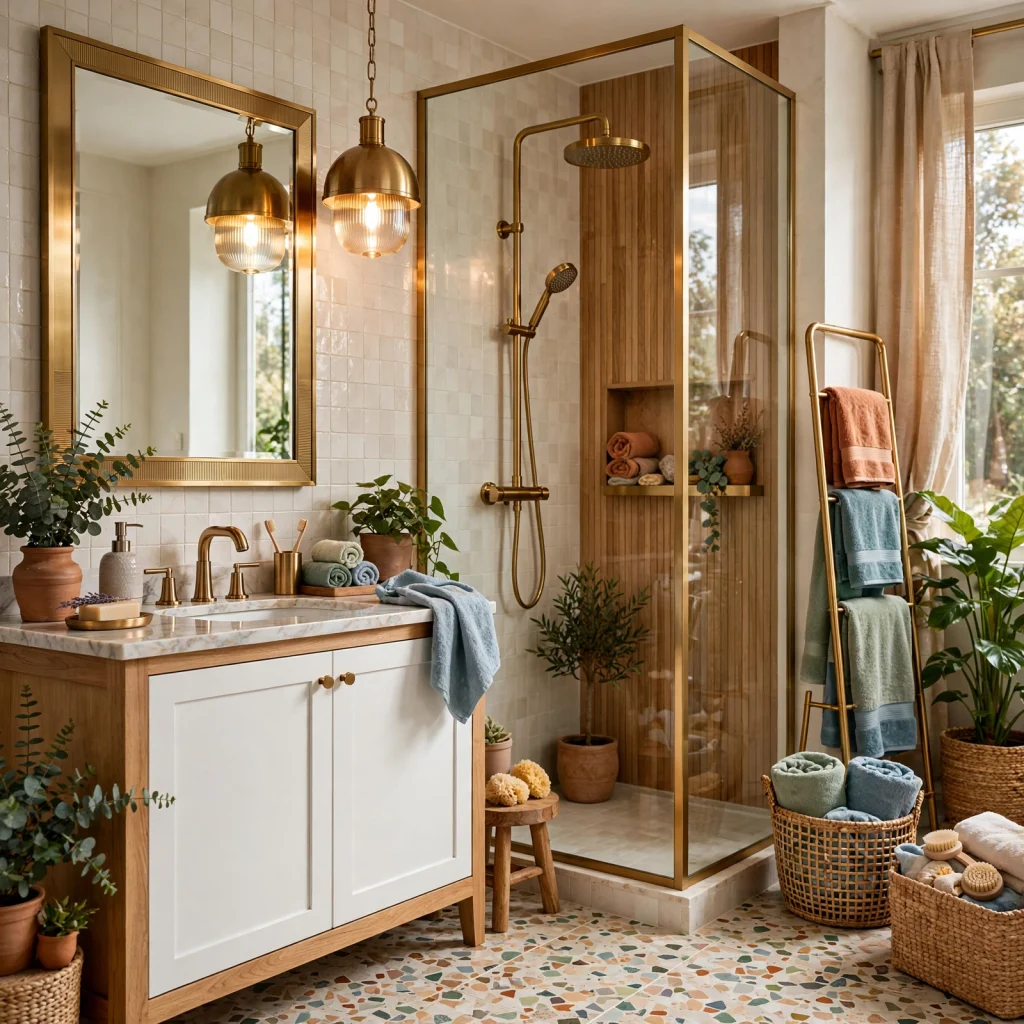
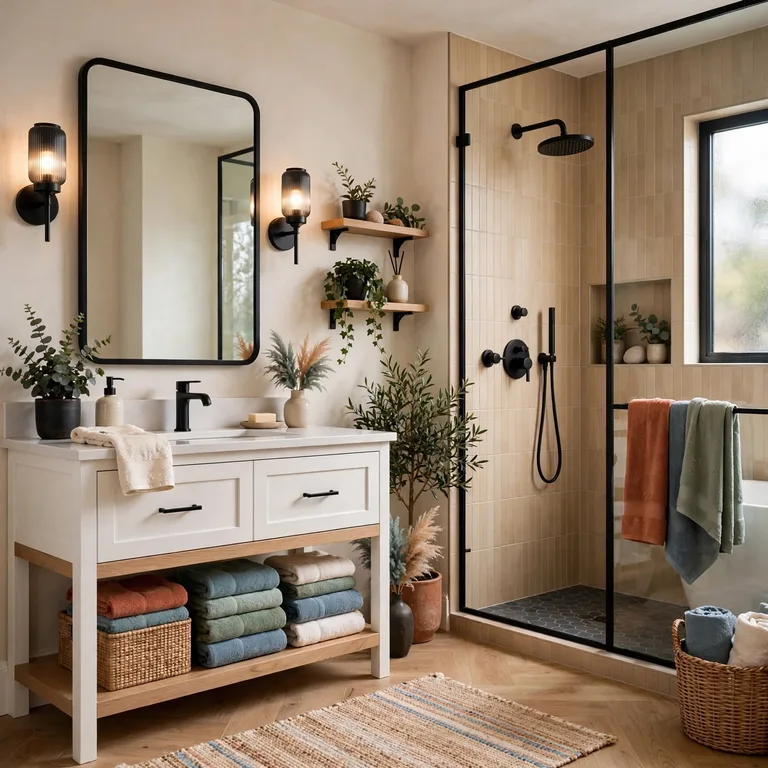
Choosing warm metal finishes, brushed brass or matte black, for faucets, showerheads, and cabinet hardware gives a bathroom a more current, considered look than the polished chrome that dominated bathroom design for many years. Keeping this metal finish consistent across all fixtures in the room, rather than mixing several different metals, produces a more cohesive overall result. This detail is one of the more affordable ways to update an existing bathroom without a full renovation, since fixtures can often be swapped without moving plumbing.
If you love sophisticated interiors, explore these luxury living room designs for elegant furniture, textures, lighting, and decor.
5. Natural Stone Countertop
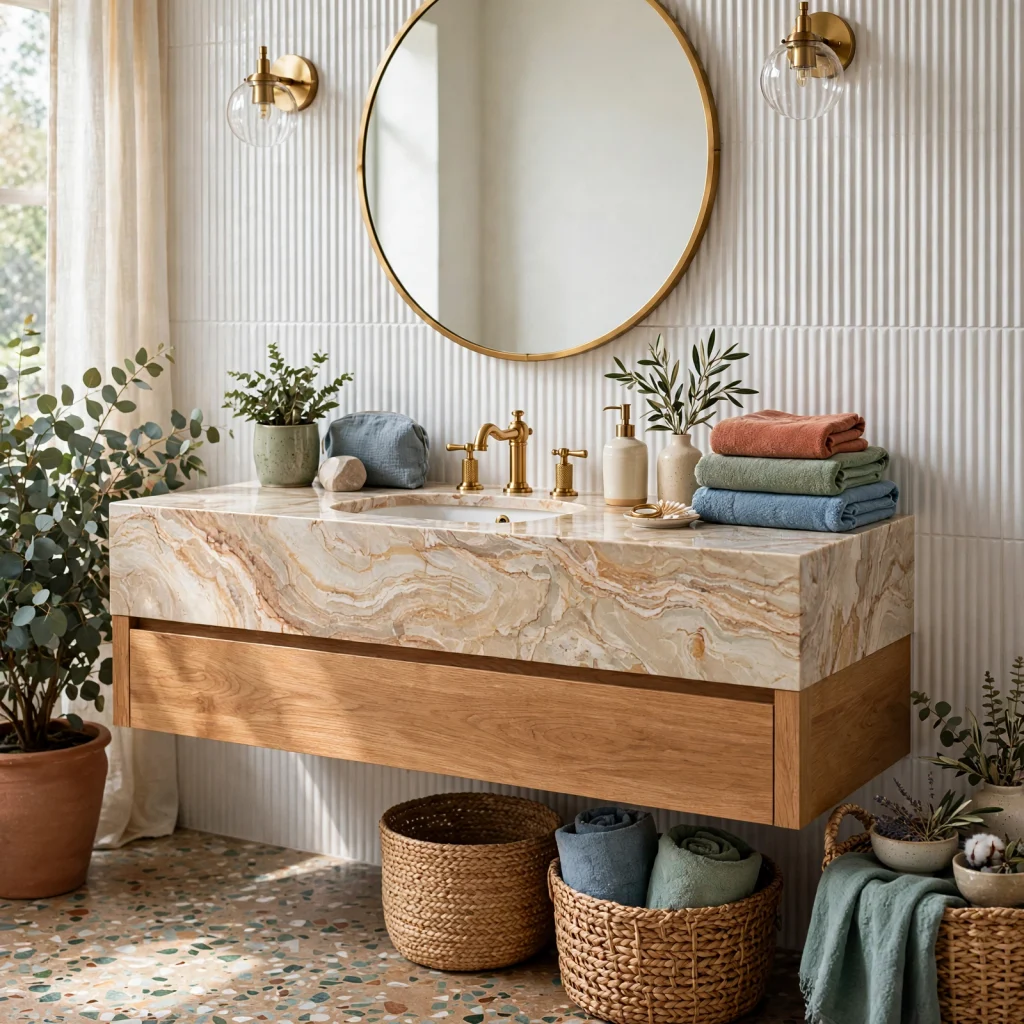
A natural stone countertop, in marble, quartzite, or a stone-look quartz, brings genuine material texture and visual interest to a bathroom vanity that a solid-color laminate or basic quartz can’t replicate. Choosing a honed rather than polished finish shows water spots and fingerprints less visibly, which matters considerably in a room with frequent water exposure. Quartz, an engineered stone, offers a lower-maintenance alternative to natural marble while still providing a similar organic veining appearance.
6. Layered Bathroom Lighting
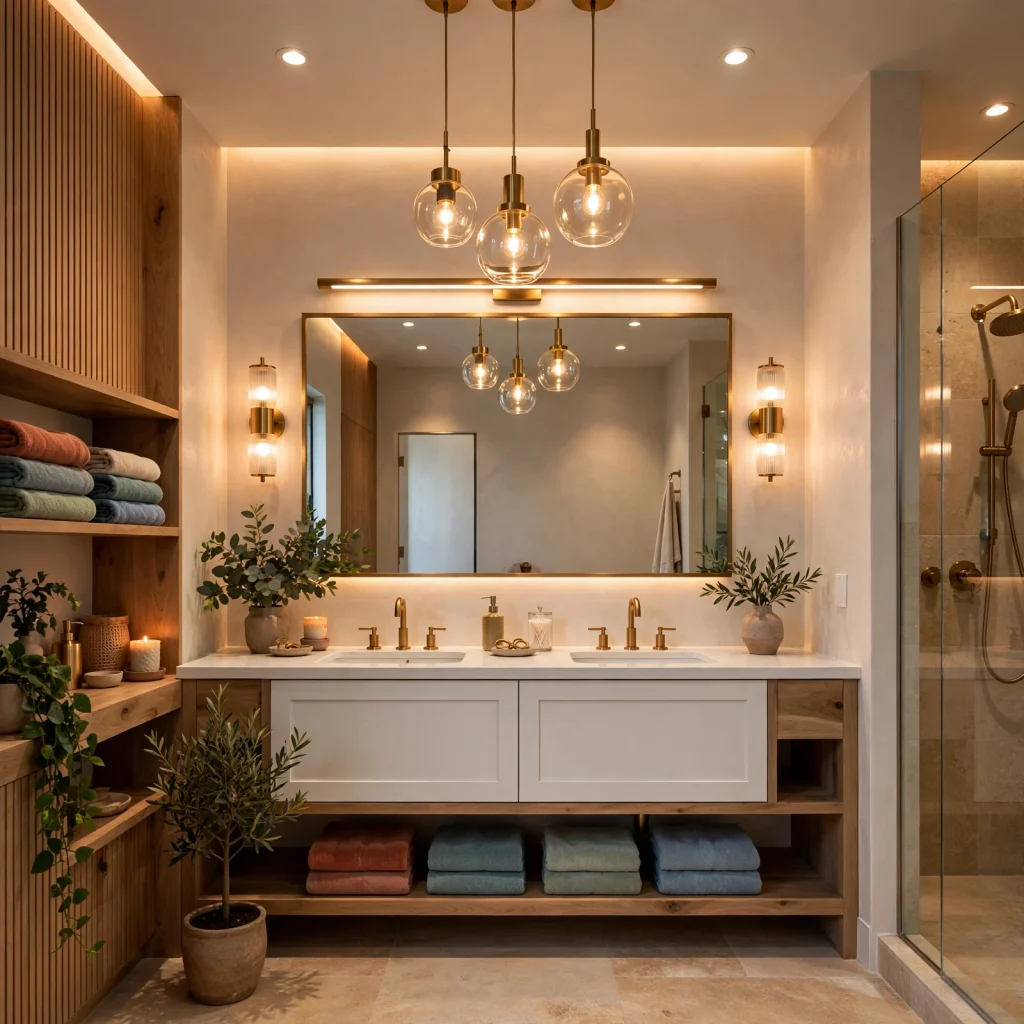
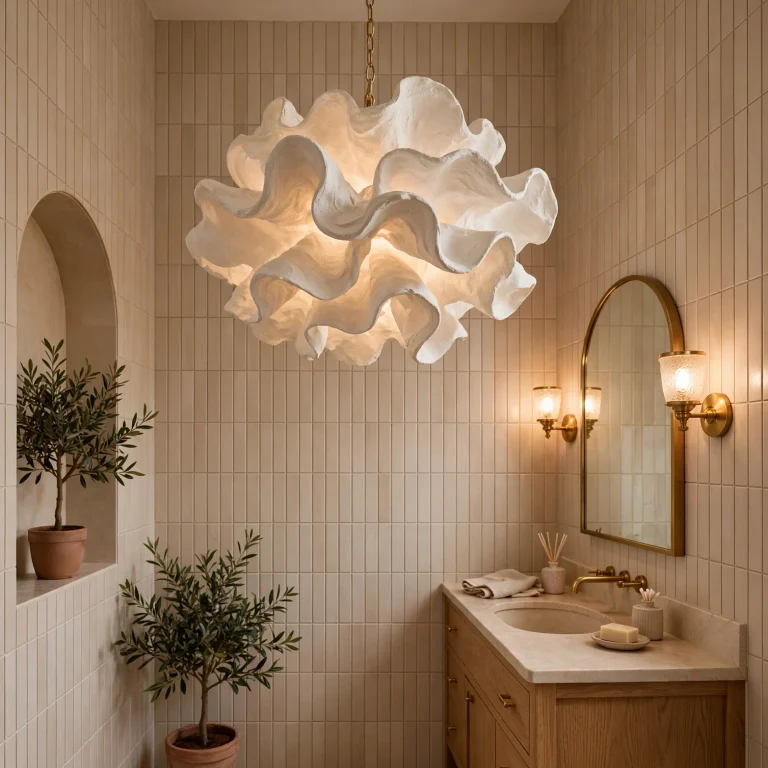
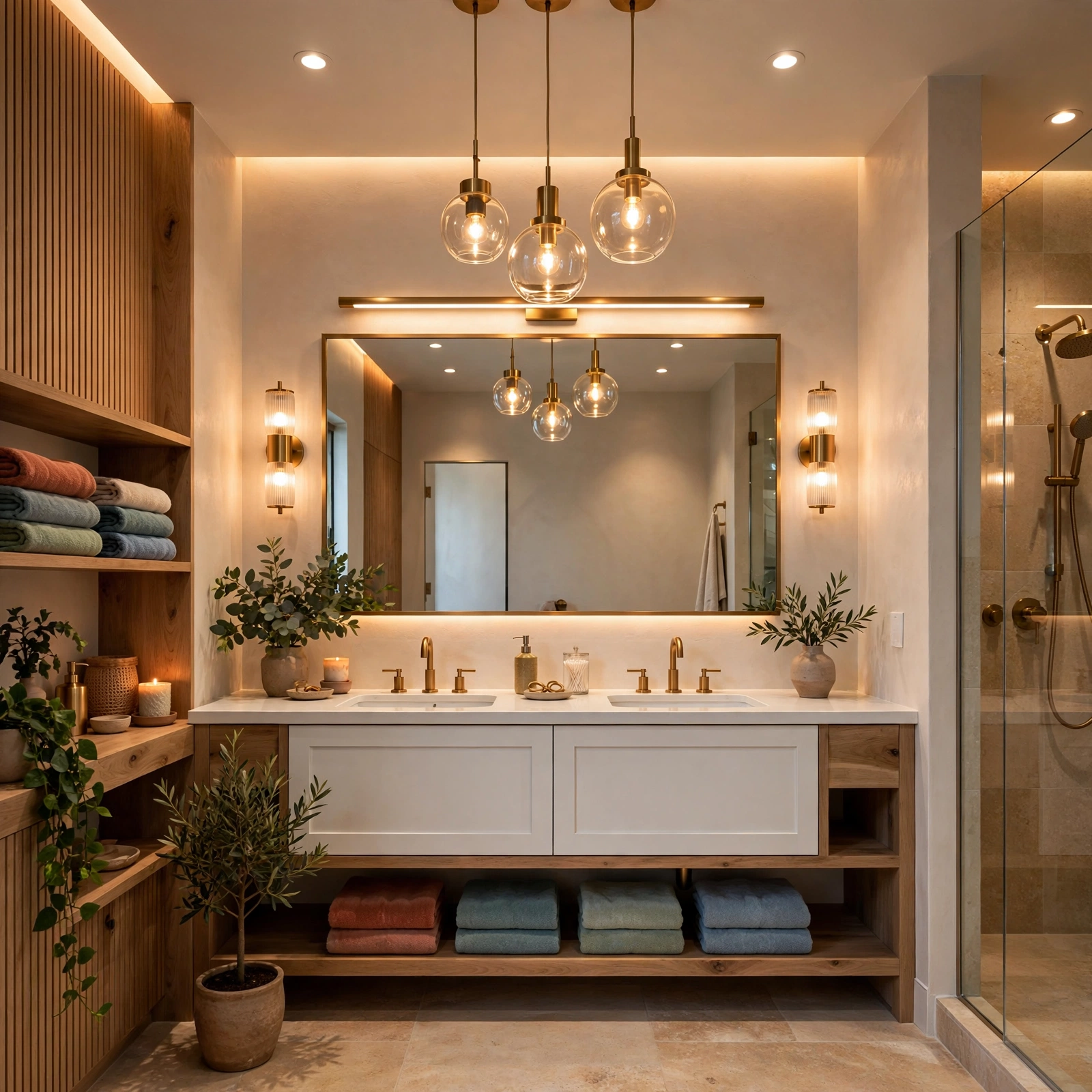
Layering task lighting directly at the mirror with softer ambient lighting elsewhere in the bathroom, rather than relying on a single central overhead fixture, significantly improves both function and mood within the room. Vertical sconces flanking the mirror provide more even, shadow-free lighting for grooming tasks than a single fixture mounted above the mirror. Adding a dimmer to the ambient layer allows the room to shift from bright and functional during morning routines to softer and more relaxing during an evening bath.
7. Built-In Niche Shower Storage
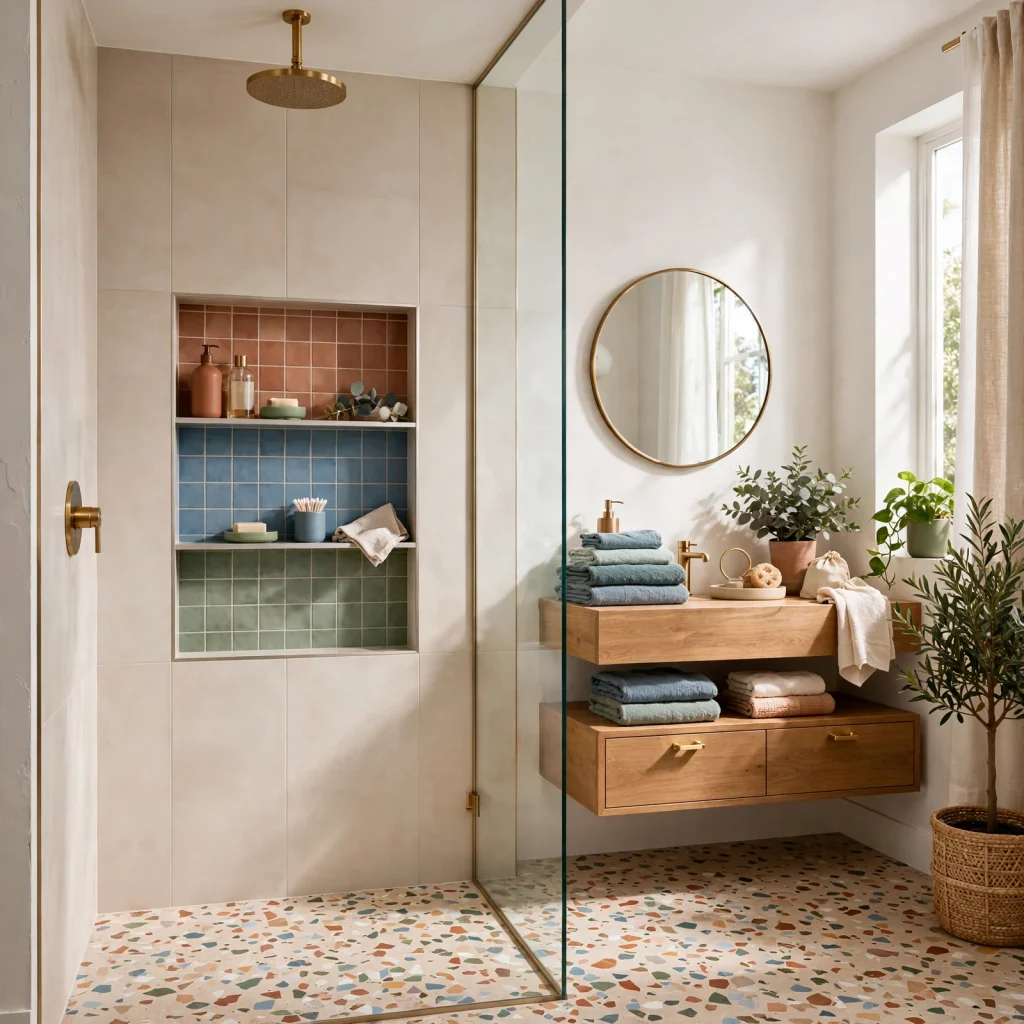
A built-in shower niche, recessed into the tiled wall during construction, provides clean, integrated storage for shampoo and soap without requiring a hanging caddy or corner shelf that can look cluttered or eventually rust. Sizing the niche to accommodate typical bottle heights, generally at least 14 inches tall, prevents a frustratingly cramped storage space once installed. Lining the niche with a contrasting tile or a small accent light adds a decorative detail to this primarily functional feature.
8. Wallpaper in a Powder Room
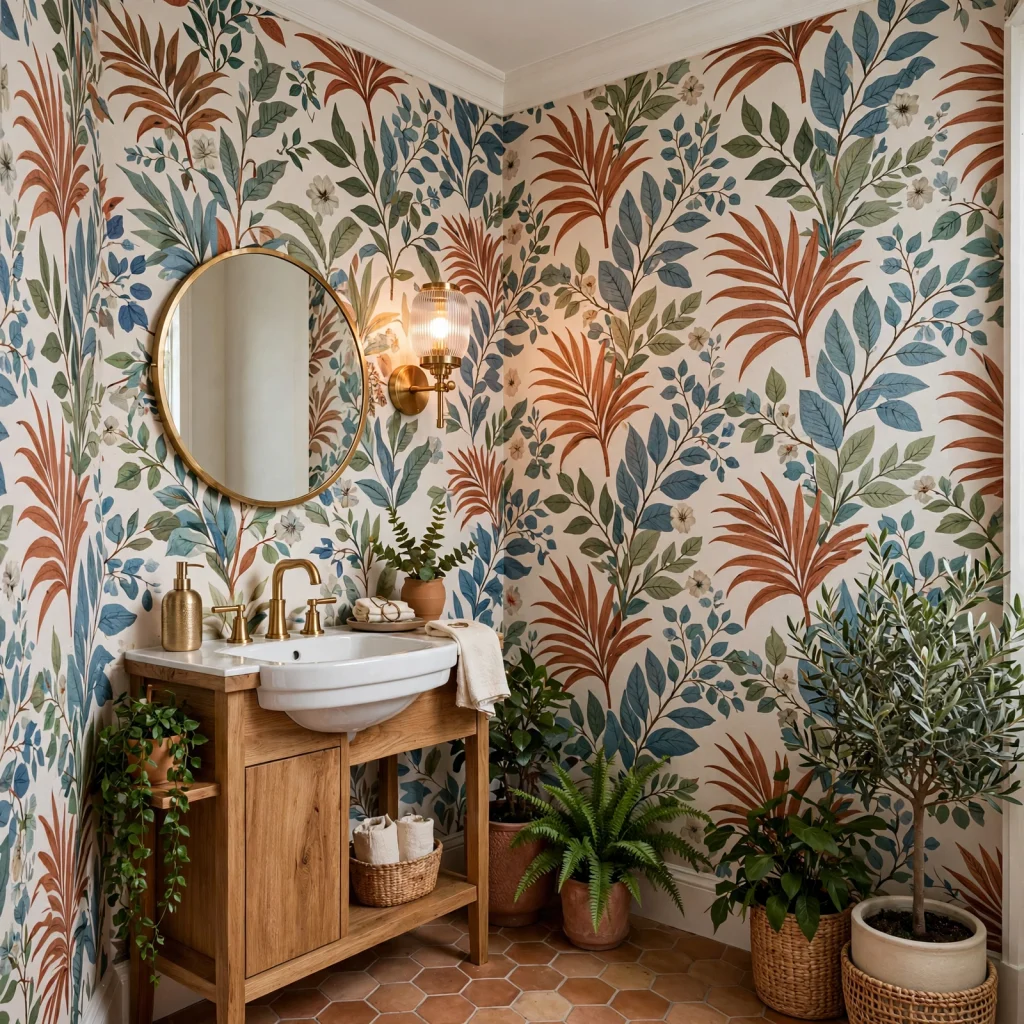
A bold or richly patterned wallpaper, applied to a powder room’s smaller wall area, allows for a dramatic design statement that might feel overwhelming in a larger, more frequently used bathroom. Choosing a moisture-resistant, vinyl-coated wallpaper specifically rated for bathroom use prevents peeling or damage from the room’s higher humidity levels. This approach works particularly well in a powder room without a shower, where humidity levels stay considerably lower than in a full bathroom.
9. Freestanding Soaking Tub
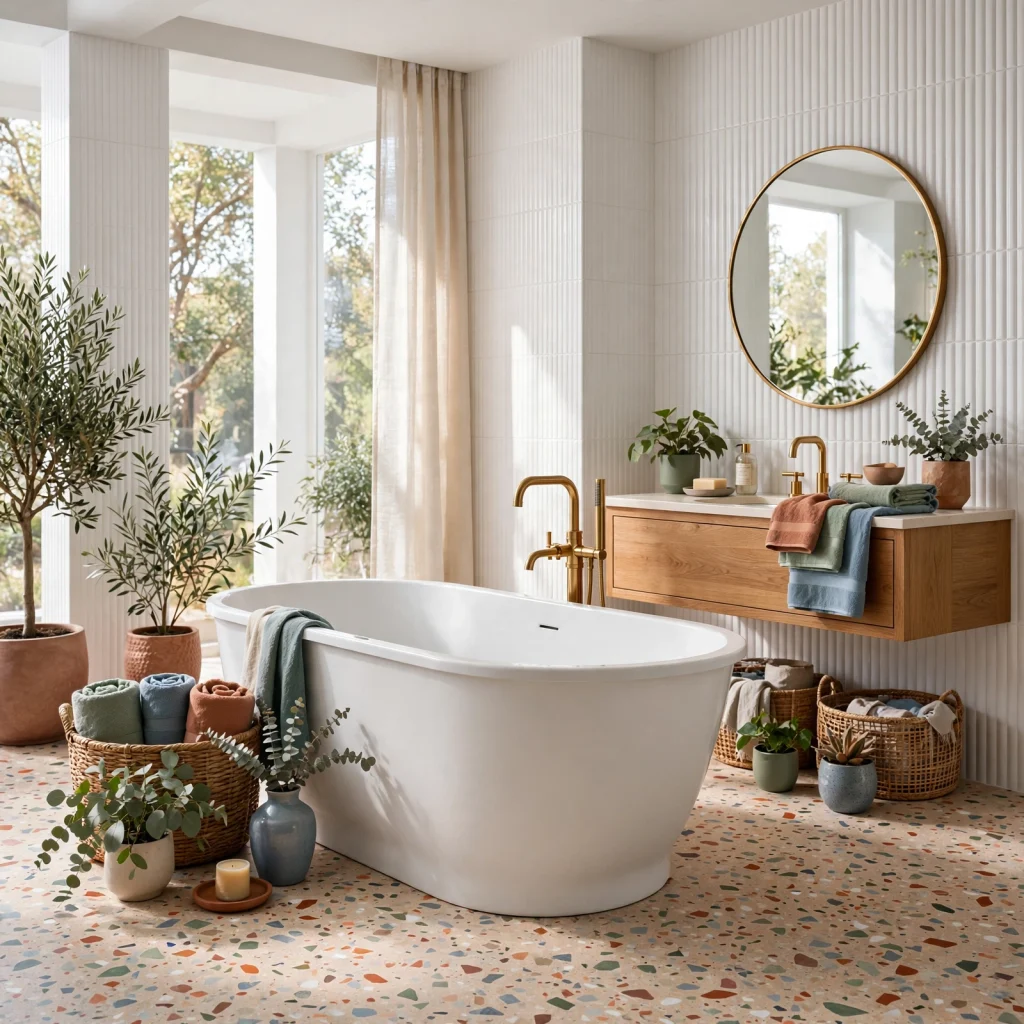
A freestanding soaking tub, positioned as a room’s central feature rather than built into a surround, gives a bathroom a genuine spa-like focal point, particularly effective in a primary bathroom with adequate floor space to accommodate the tub’s placement. Choosing a tub with a deeper basin, rather than a standard shallow tub-shower combination depth, supports genuine soaking rather than purely functional bathing. Positioning the tub near a window, where privacy allows, adds natural light and a sense of connection to the outdoors during use.
10. Vertical Storage Tower
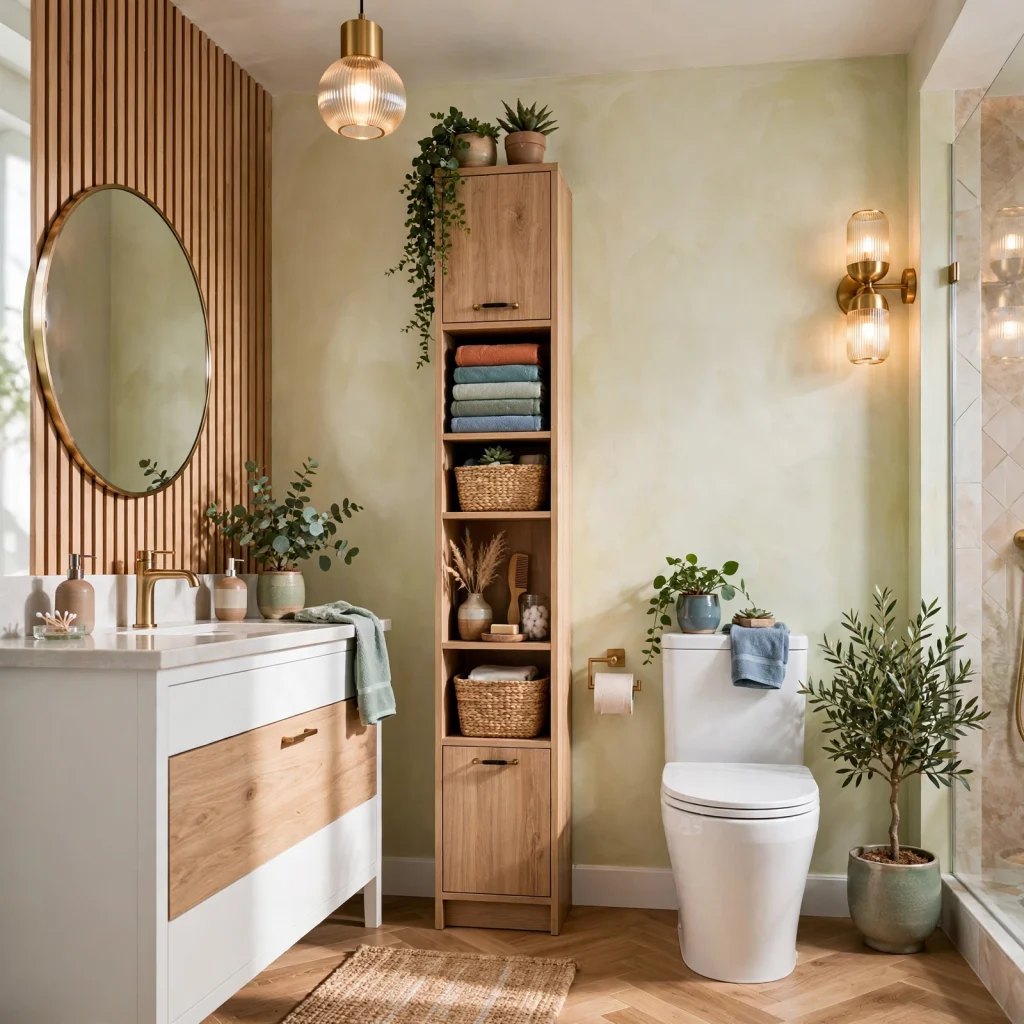
A tall, narrow storage tower, positioned beside the vanity or in an underused corner, adds meaningful storage capacity to a bathroom without consuming significant floor footprint. This solution works particularly well in a smaller bathroom where a standard linen closet isn’t available, providing a dedicated place for towels, extra toiletries, and cleaning supplies. Choosing a tower with a mix of open and closed storage balances easy access with a tidier overall appearance.
11. Heated Towel Rack
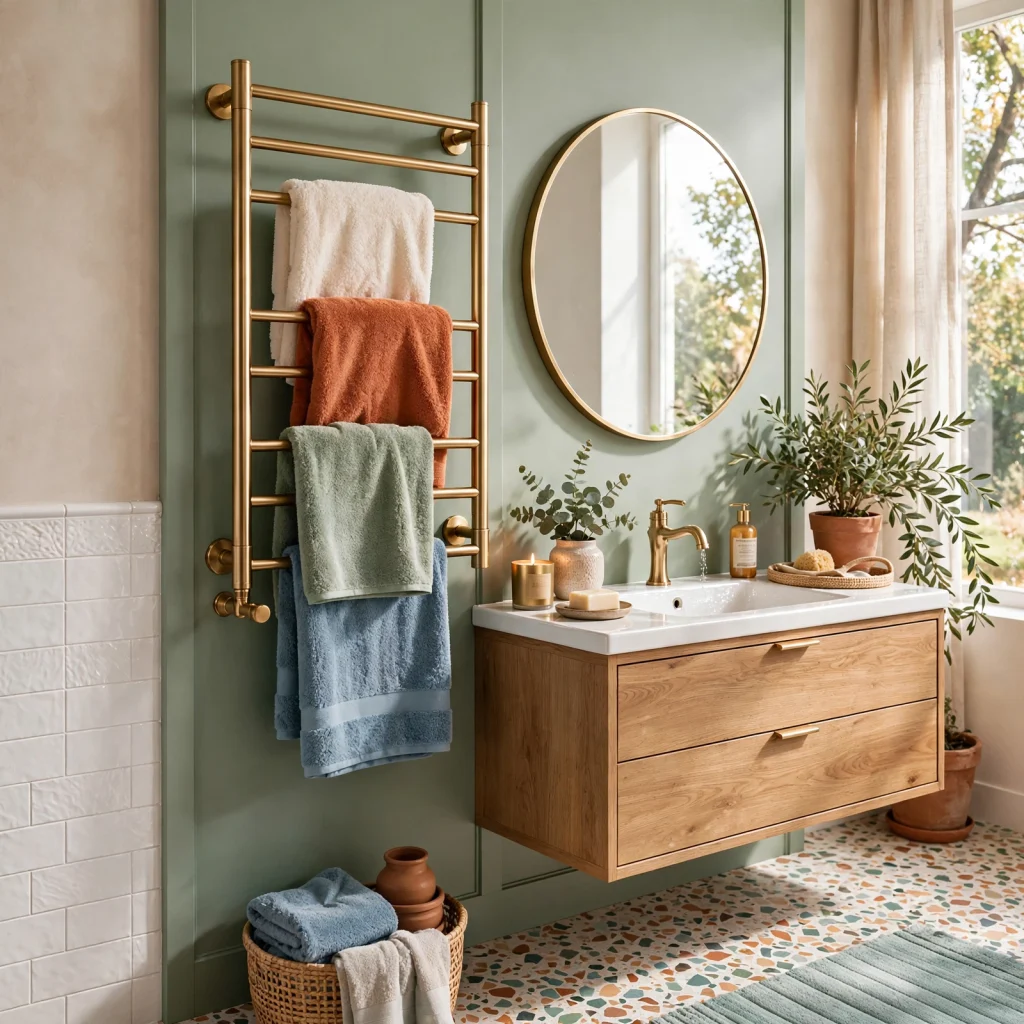
A heated towel rack, either a standalone electric unit or one integrated into the bathroom’s radiant heating system, adds a genuine daily comfort upgrade that’s easy to overlook in favor of purely visual bathroom improvements. This feature works particularly well in colder climates or homes with tile flooring, where a warm, dry towel meaningfully improves the post-shower experience. Choosing a hardwired unit during a renovation, rather than a plug-in version added later, produces a cleaner installation without a visible cord.
12. Double Vanity for Shared Bathrooms
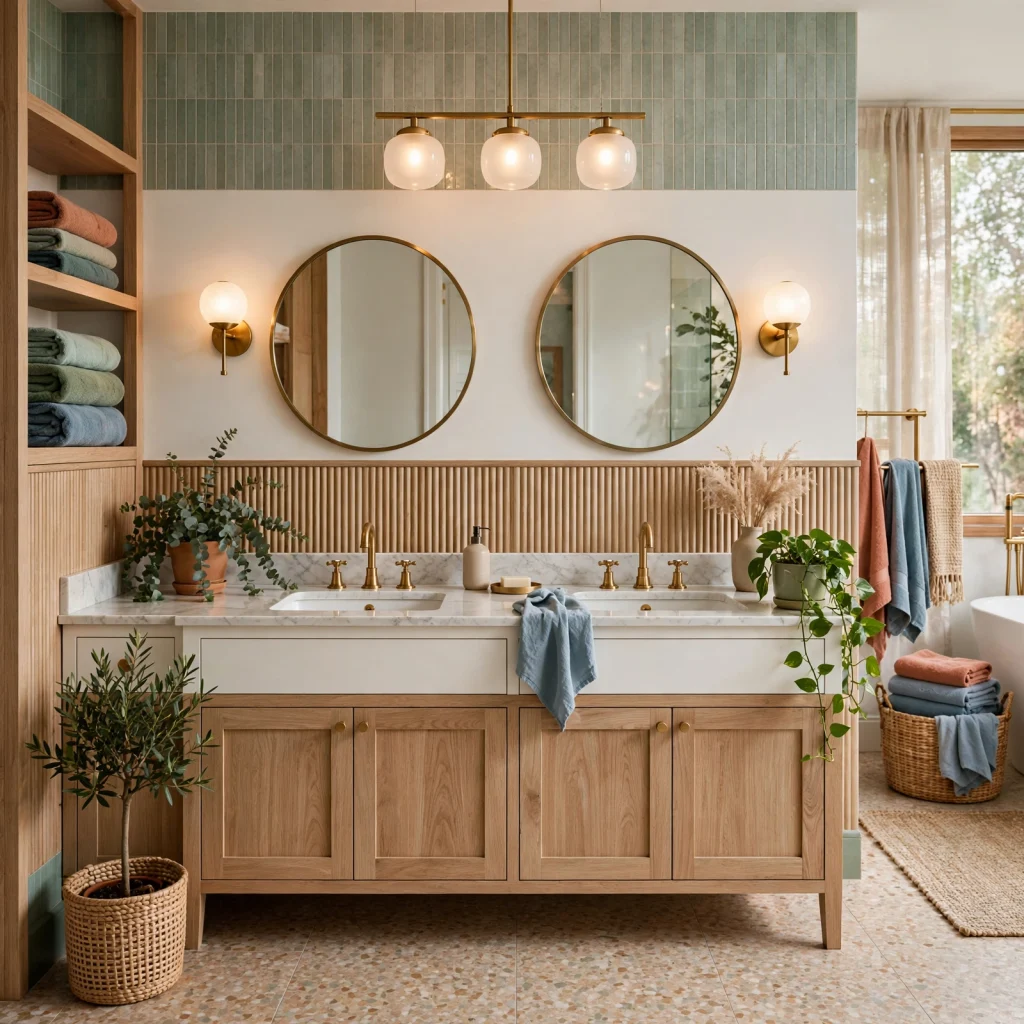
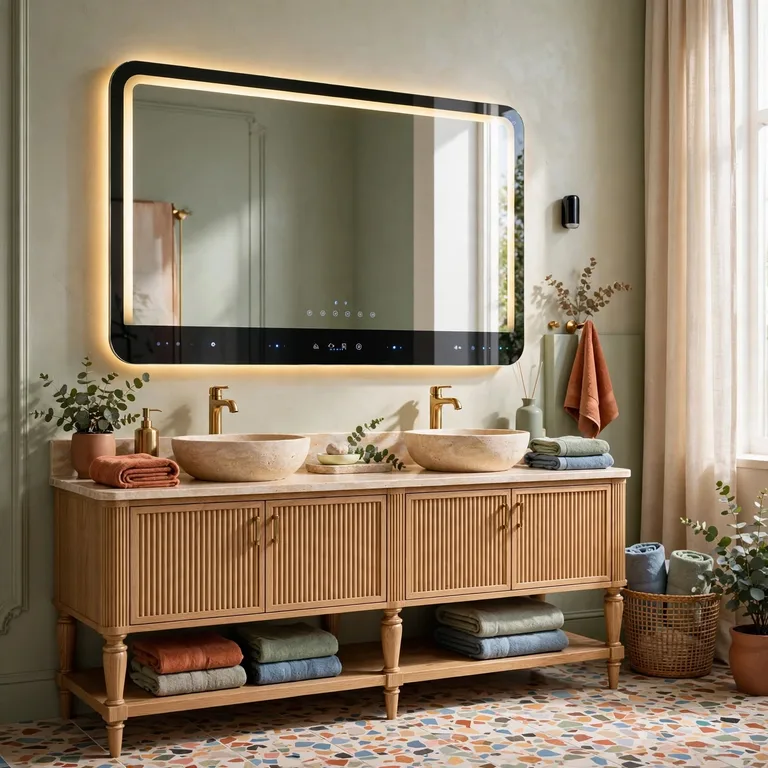
A double vanity, providing separate sink and counter space for two people, addresses a genuine daily function need in a shared primary or family bathroom, reducing morning routine congestion considerably. This upgrade requires adequate width, generally at least 60 inches, to comfortably accommodate two sinks with enough counter space between them. Choosing individual mirrors or lighting above each sink, rather than one shared fixture, further personalizes each side of the shared vanity.
13. Matte Black Window Frame or Shower Door
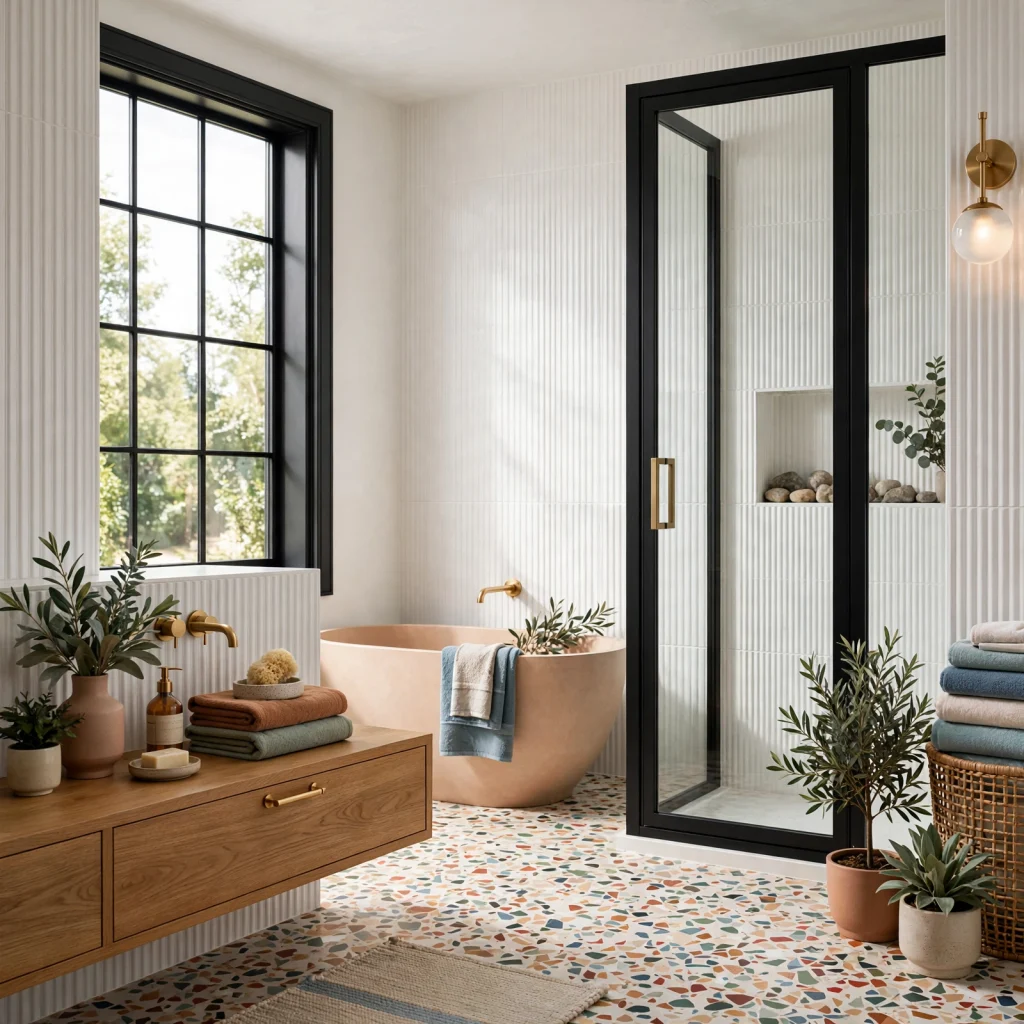
A matte black window frame or shower door frame introduces a defined architectural accent to a bathroom, creating contrast against typically lighter tile and wall colors. This detail works particularly well in a contemporary or transitional bathroom, echoing the same black accent trend seen throughout other rooms in a home. Limiting matte black to just one or two elements, rather than applying it throughout every fixture, keeps the accent feeling intentional rather than overdone.
14. Wood-Look Tile Flooring
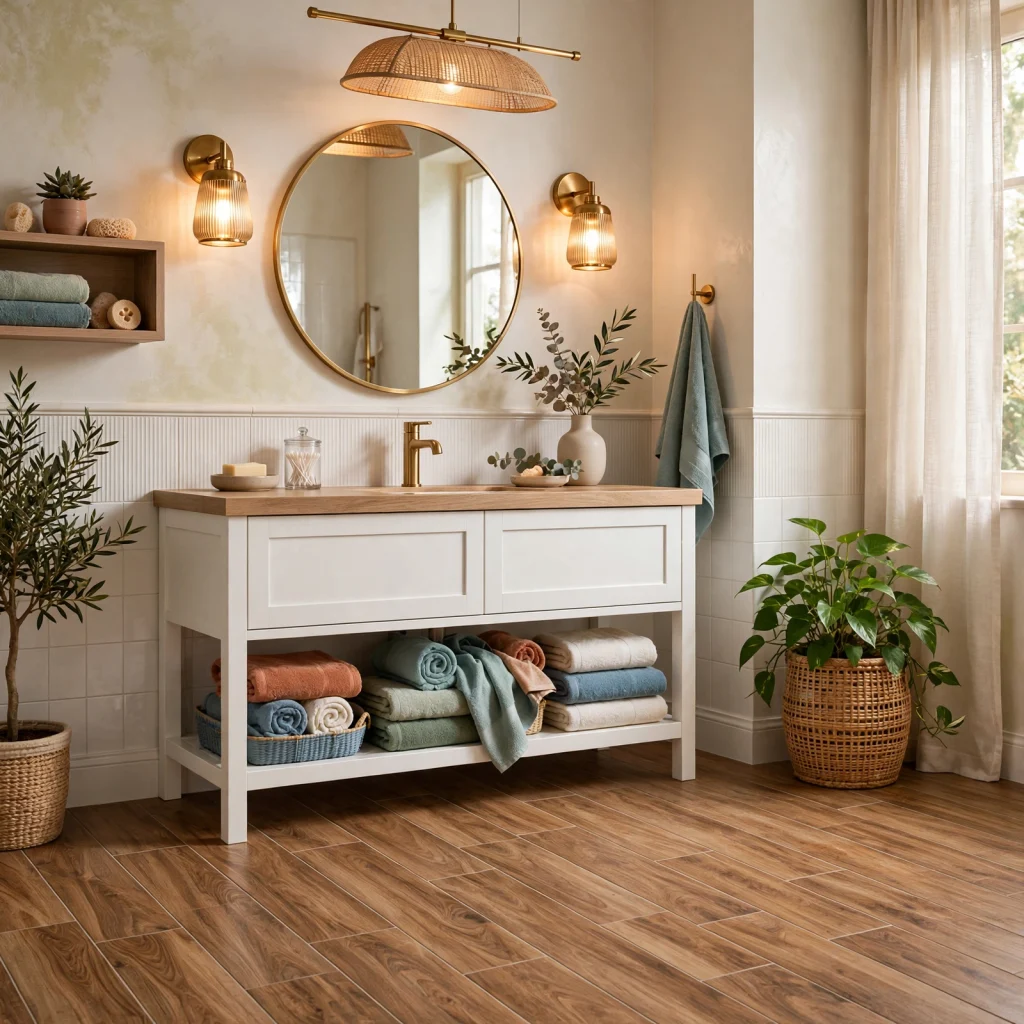
Wood-look porcelain tile flooring brings the warmth and visual appeal of genuine hardwood into a bathroom without the moisture damage risk real wood flooring would face in this specific room. This material has improved significantly in realism over recent years, with more convincing grain patterns and texture than earlier wood-look tile products offered. Choosing a slip-resistant finish, particularly important in a shower or wet area, balances this material’s aesthetic appeal with genuine safety considerations.
15. Compact Powder Room Pedestal Sink
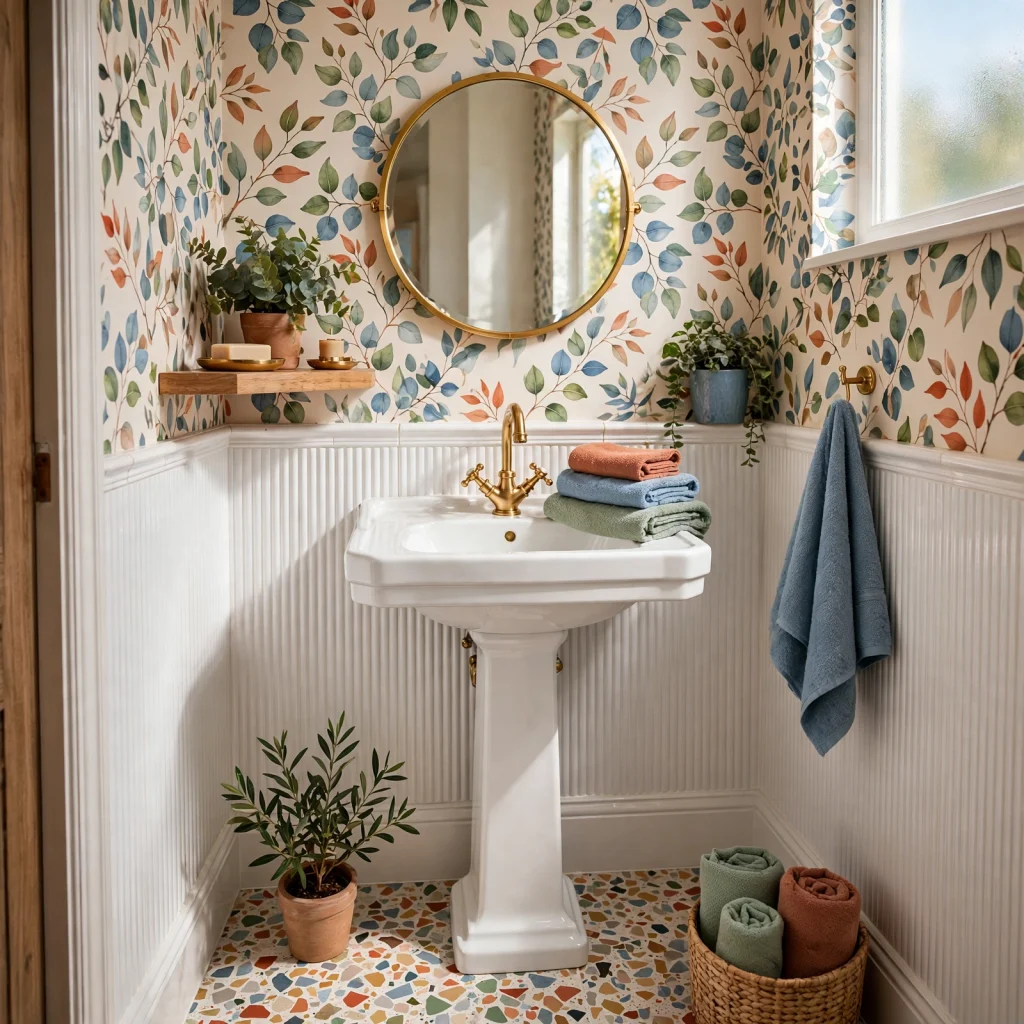
A pedestal sink, rather than a full vanity with base cabinet storage, suits a genuinely small powder room where floor space is at a premium and storage needs remain minimal given the room’s limited function. This choice makes a small space feel more open, though it does sacrifice the under-sink storage a vanity would provide. Pairing a pedestal sink with a small wall-mounted shelf or cabinet elsewhere in the room addresses basic storage needs, like extra hand towels or soap, without requiring the sink itself to provide that function.
Shop the Look
For a full bathroom renovation, start with a natural stone countertop, warm brass fixtures throughout, and layered lighting with sconces flanking the mirror. Add a built-in shower niche, a heated towel rack, and wood-look tile flooring for warmth underfoot. For a smaller powder room update, focus on a statement wallpaper, a pedestal sink, and a bold tile floor to make the most of the limited square footage.
Common Mistake to Avoid
A common mistake in bathroom design is prioritizing purely visual choices, tile pattern, fixture finish, without adequately planning for storage and ventilation needs that affect the room’s daily function considerably more than its appearance alone. A beautifully tiled bathroom without enough storage for towels and toiletries quickly accumulates visible clutter regardless of how well the surfaces were chosen. Addressing function, storage, lighting, and ventilation, alongside aesthetic choices from the start of the planning process produces a far more successful and livable final result.
FAQs
What’s the most durable flooring option for a bathroom?
Porcelain tile, including wood-look and stone-look varieties, generally offers the most durable and water-resistant flooring option for a bathroom, standing up well to moisture and daily wear better than most other materials. Natural stone tile also performs well but typically requires more regular sealing to maintain its water resistance over time. Vinyl plank flooring offers a lower-cost, still reasonably durable alternative, though it doesn’t quite match tile’s long-term durability in a consistently wet environment like a shower area.
How do I make a small bathroom feel bigger?
Choosing a light, cohesive color palette, incorporating a large mirror to reflect available light, and selecting a floating vanity or a frameless glass shower enclosure all help a small bathroom feel more spacious than its actual square footage. Vertical storage solutions, rather than wide furniture pieces, also help preserve valuable floor space in a compact room. Adequate lighting, avoiding a single dim overhead fixture in favor of brighter, layered light sources, further contributes to a small bathroom’s sense of openness.
What bathroom updates offer the best return on investment?
Updating fixtures, faucets, showerheads, and cabinet hardware, along with a fresh coat of paint and updated lighting, generally offer strong value for relatively modest cost compared to a full renovation involving new tile or plumbing relocation. A vanity replacement or refacing also tends to deliver a noticeable visual improvement without the expense of moving existing plumbing lines. For a full remodel, focusing budget on quality tile and adequate storage tends to matter more for long-term satisfaction than higher-end fixtures alone.
How important is ventilation in bathroom design?
Proper ventilation, typically through an exhaust fan rated appropriately for the room’s square footage, is essential to bathroom design, preventing moisture buildup that can lead to mold growth and damage to walls, flooring, and fixtures over time. This consideration is often overlooked in favor of purely visual planning but significantly affects the long-term durability of every other design choice made in the room. Running the exhaust fan during and for a period after showering, and ensuring it’s properly sized and installed, protects the bathroom’s other design investments considerably.
Should bathroom fixtures all match the same metal finish?
Keeping bathroom fixtures, faucets, showerheads, cabinet hardware, and lighting, in a single consistent metal finish generally produces a more cohesive, polished result than mixing several different metals throughout the room. Some designers do successfully mix two complementary finishes, such as a black faucet with brass cabinet hardware, but this requires more intentional planning than defaulting to a single finish throughout. For most bathroom updates, particularly smaller projects, choosing one finish and applying it consistently remains the safer and more broadly successful approach.
Conclusion
Successful bathroom ideas balance genuine style with the practical realities of moisture, storage, and daily function that this room faces more than almost any other space in the home. Save this guide to Pinterest for reference while planning your next bathroom update, and check out our related post on small living room ideas for more space-conscious design strategies that apply across the home.