12 Beautiful Garden Design Ideas for a Small Backyard Retreat
Most backyards fail not because the plants are wrong, but because the layout never had a plan behind it. Good garden design ideas start with structure paths, seating, borders, and grade and let the planting fill in around it. This post walks through twelve specific approaches, from raised beds to a moon gate archway, each with real materials, real spacing, and a clear sense of what it takes to build.
Trend & Background
Garden design has shifted noticeably toward drought-tolerant plantings, gravel and decomposed granite hardscape, and multi-use outdoor rooms that function as an extension of the house rather than a decorative afterthought. Rising water restrictions in much of the country, combined with more people working from home and wanting a usable outdoor space, have pushed native meadow plantings, dry creek beds, and outdoor kitchens from niche choices into mainstream requests from landscape designers this season.
Key Takeaways
- These 12 garden design ideas range from low-cost gravel patios to structural additions like pergolas and moon gate archways
- Several ideas include raised beds, gravel patios, pergolas, fire pits, and espaliered trees include sizing and budget comparison tables
- Drainage and grading matter more than plant selection for a design that actually lasts through wet seasons
- Most of these ideas can be phased in over a few seasons rather than built all at once
1. Raised Garden Beds
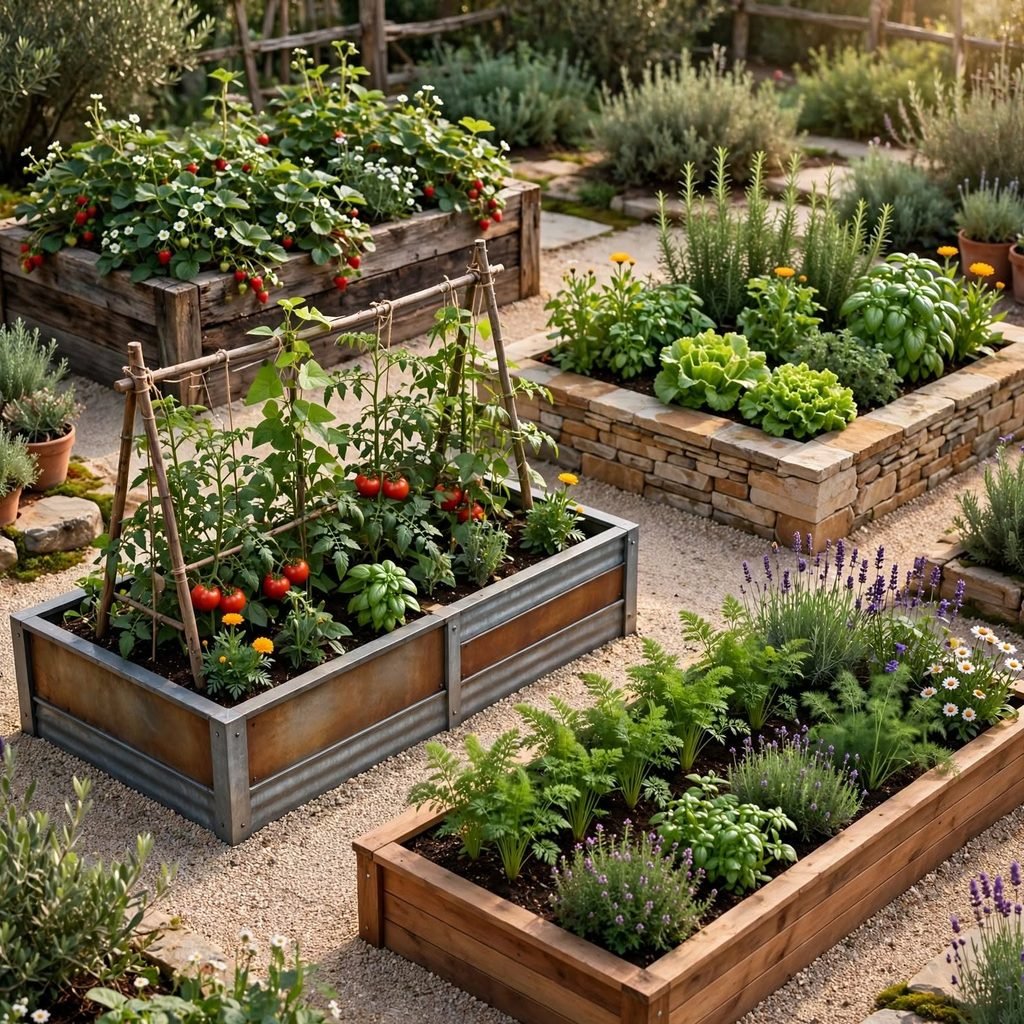
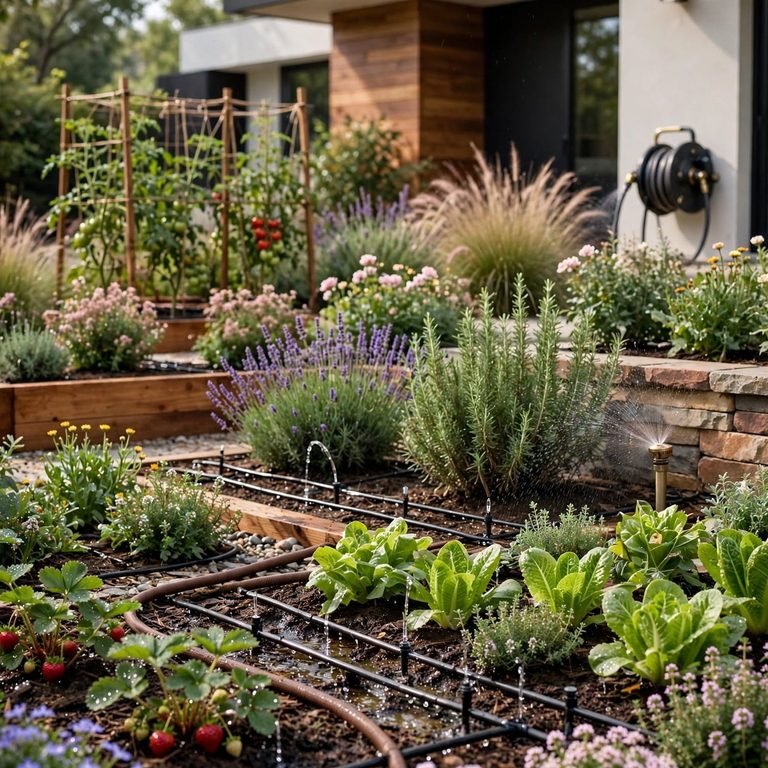
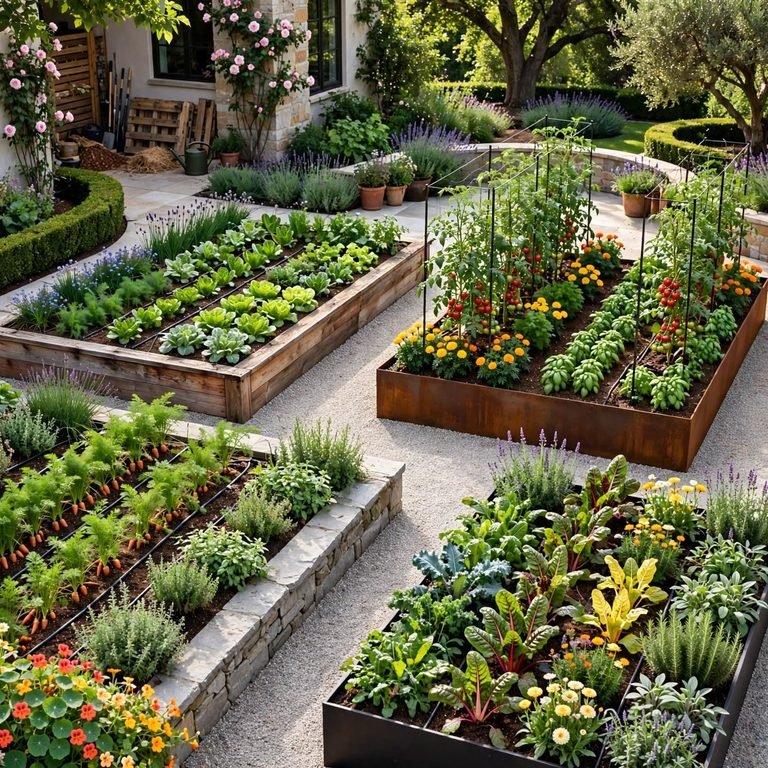
Raised beds solve drainage and soil-quality problems in one move, since you’re filling them with a controlled mix instead of fighting native clay or sand. Cedar and redwood resist rot without chemical treatment, corrugated metal beds last decades but run hotter in full sun, and concrete block beds are the most permanent but the hardest to reconfigure later. Standard depth runs 12 to 18 inches for vegetables, deeper for root crops like carrots and potatoes.
| Bed Height | Best For | Material | Approx. Cost per 4×8 Bed |
| 6–8 in | Herbs, lettuce | Cedar plank | $80–120 |
| 12–18 in | Vegetables, root crops | Corrugated metal | $150–250 |
| 24–30 in | Accessible/no-bend gardening | Concrete block | $300–450 |
2. Vertical Herb Wall
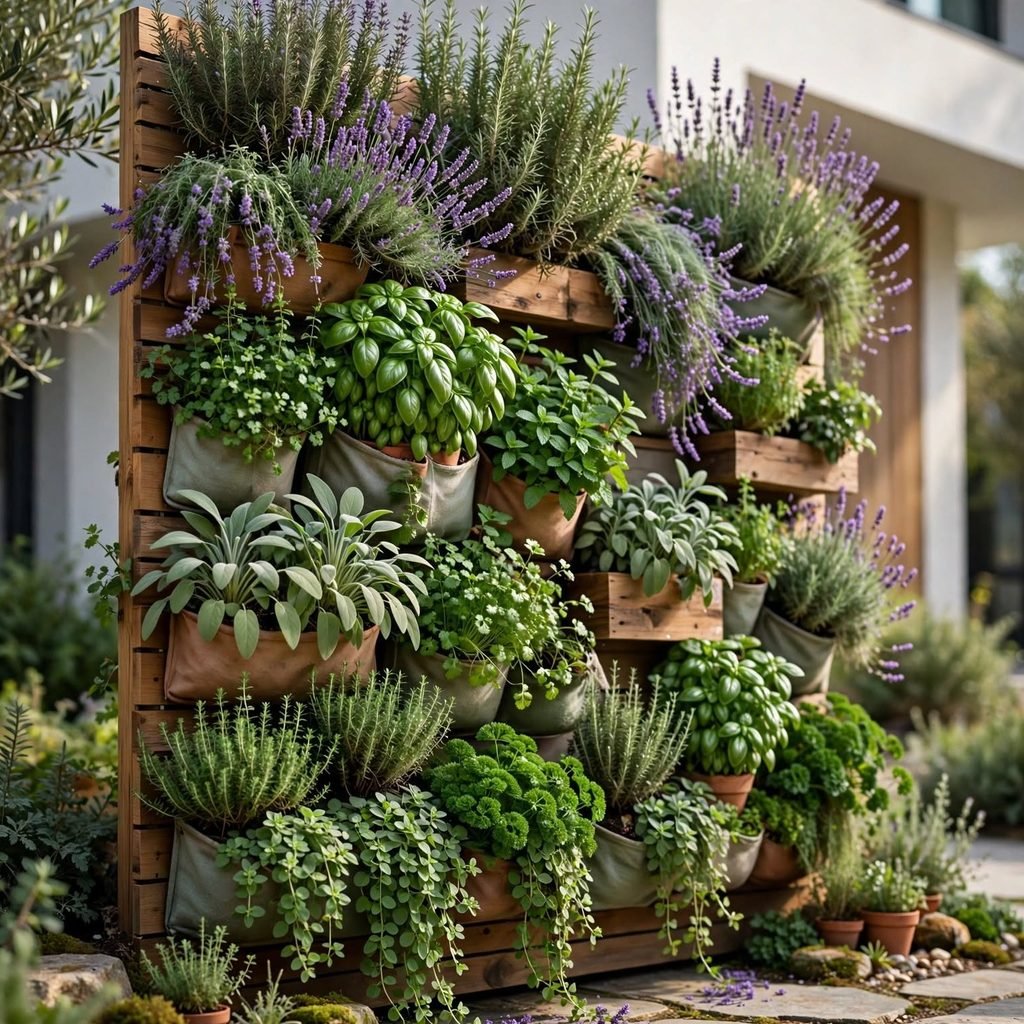
A vertical herb wall turns an unused fence line or exterior wall into growing space without taking up any ground footprint. Modular felt pocket panels, cedar ladder shelving, or repurposed wooden pallets all work as the frame, with drip irrigation run along the top row so water gravity-feeds down through each tier. This works best against a south- or west-facing wall for herbs like rosemary, thyme, and oregano that want full sun and sharp drainage.
3. Gravel Patio
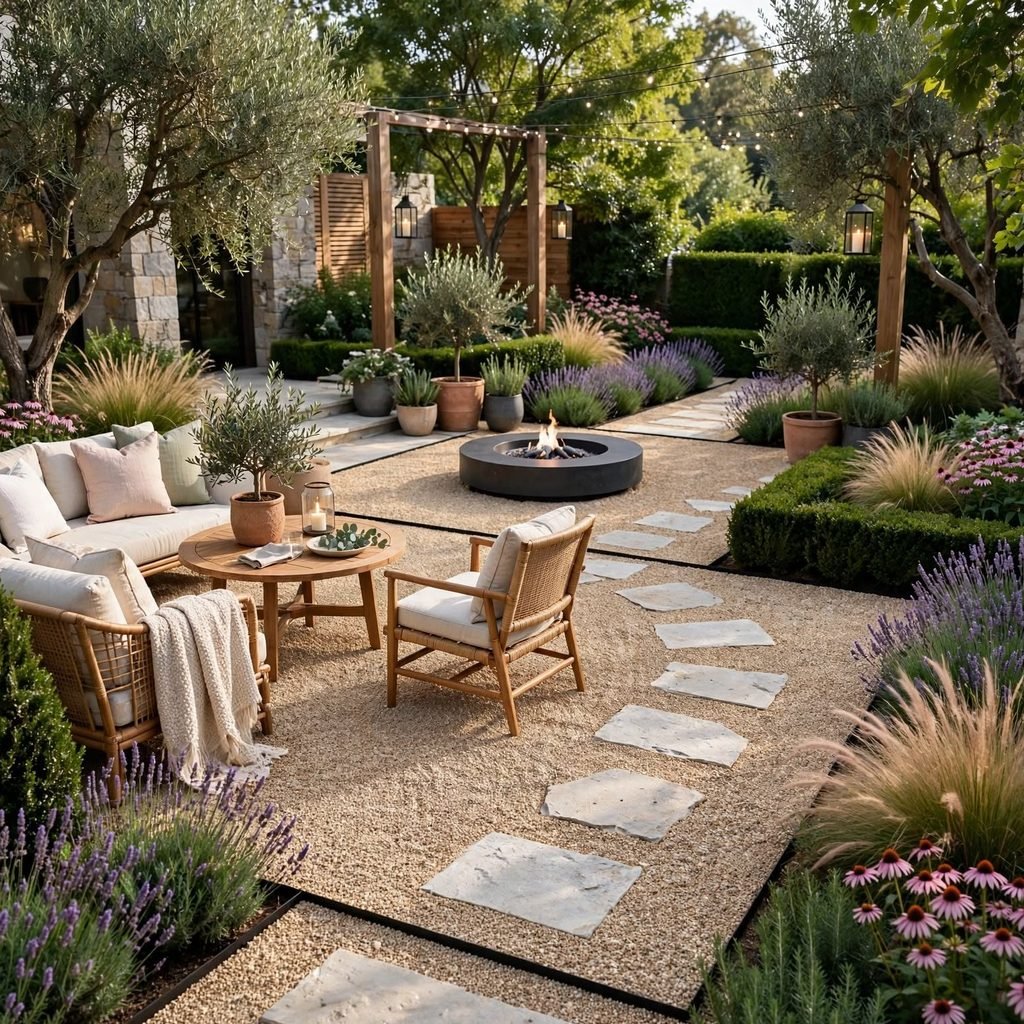
A gravel patio costs a fraction of poured concrete or pavers and drains instantly after rain, which matters if your yard sits on heavy clay. Pea gravel gives a soft, informal texture but shifts underfoot over time; decomposed granite compacts into a firmer, more walkable surface; crushed granite in the 3/8-inch range sits between the two. All three need a compacted base and steel or aluminum edging to keep the material from migrating into planting beds.
| Gravel Type | Feel Underfoot | Drainage | Cost per Sq Ft |
| Pea gravel | Loose, soft | Excellent | $1.50–3 |
| Decomposed granite | Firm, packed | Good | $2–4 |
| Crushed granite (3/8″) | Stable, walkable | Excellent | $2.50–5 |
4. Cottage Border Planting
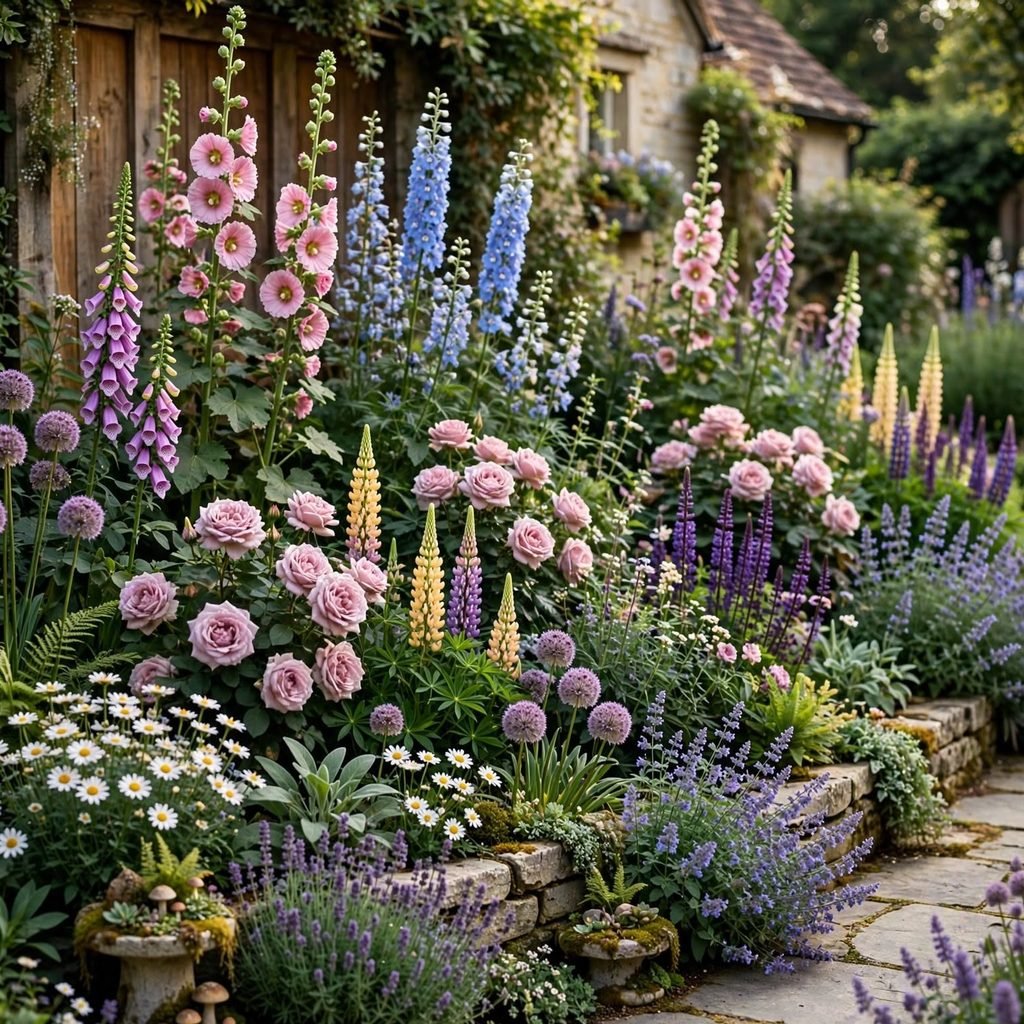
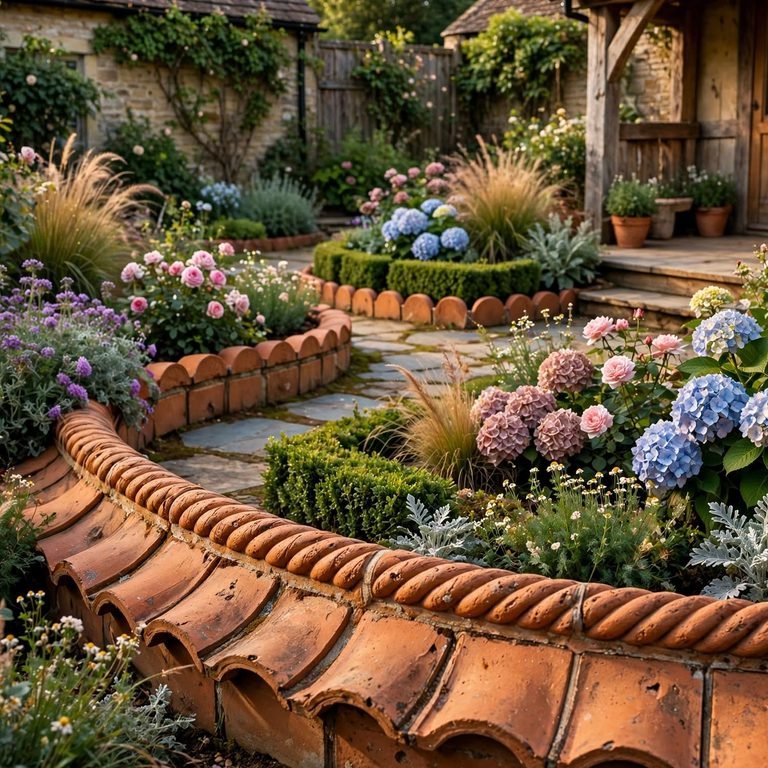
Cottage border planting layers perennials, self-seeding annuals, and small shrubs in loose, overlapping drifts rather than tidy rows, so the bed reads as full from spring through fall instead of peaking once and going bare. Foxglove, catmint, black-eyed Susan, and old garden roses are reliable anchors, planted in odd-numbered clusters of three or five with taller plants at the back and low edging plants like lamb’s ear spilling over the front border line.
Transform your outdoor area with these practical and beautiful front garden ideas.
5. Pergola With Climbing Vines
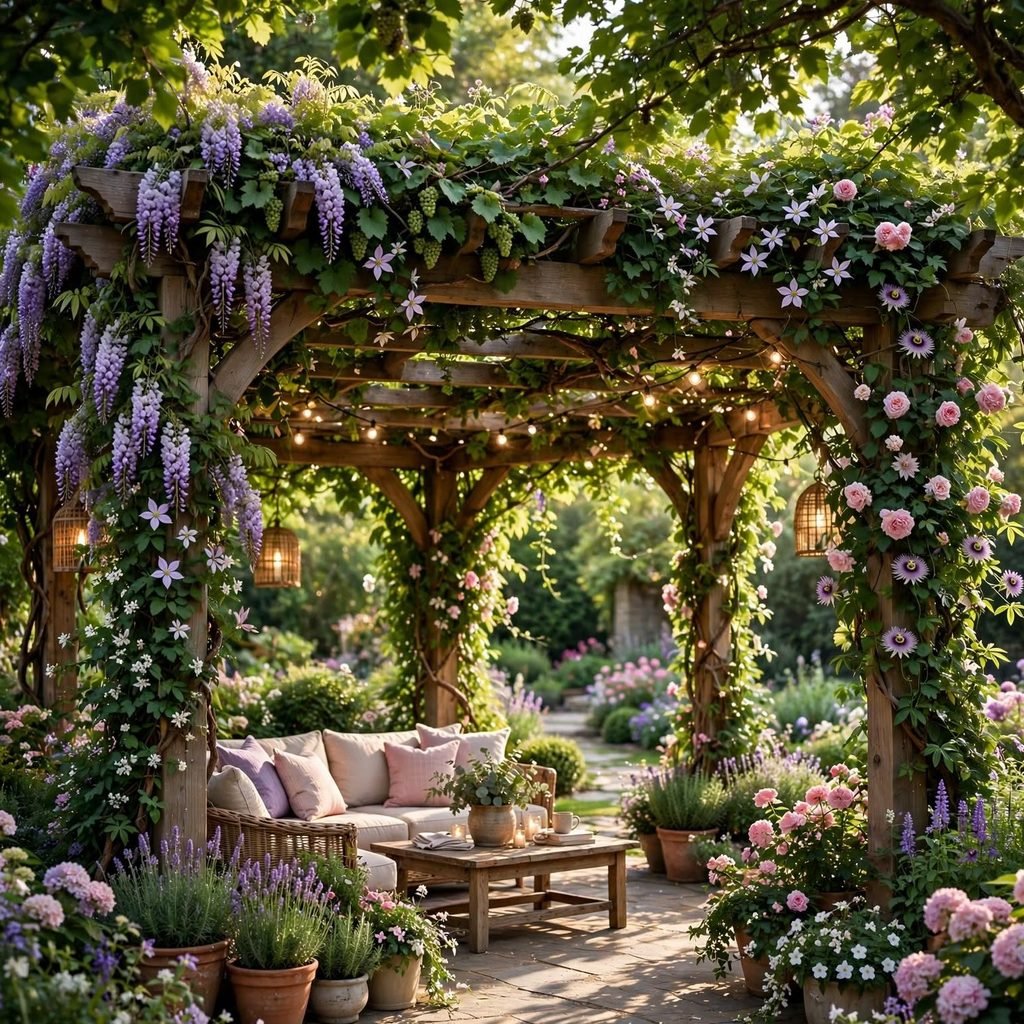
A pergola gives a patio or seating area partial shade and a sense of enclosure without the cost or permitting hassle of a full roof structure. Cedar and redwood weather to a natural silver-gray and need almost no maintenance; powder-coated aluminum costs more upfront but never rots or warps. Wisteria, climbing hydrangea, and grapevine all train well onto the crossbeams, though wisteria needs aggressive pruning twice a year or it will overtake the structure entirely.
| Material | Typical Footprint | Lifespan | Cost Range |
| Cedar | 10×12 ft | 15–20 yrs | $1,500–3,000 |
| Redwood | 10×12 ft | 20–25 yrs | $2,000–3,500 |
| Powder-coated aluminum | 10×12 ft | 30+ yrs | $3,000–5,500 |
6. Dry Creek Bed
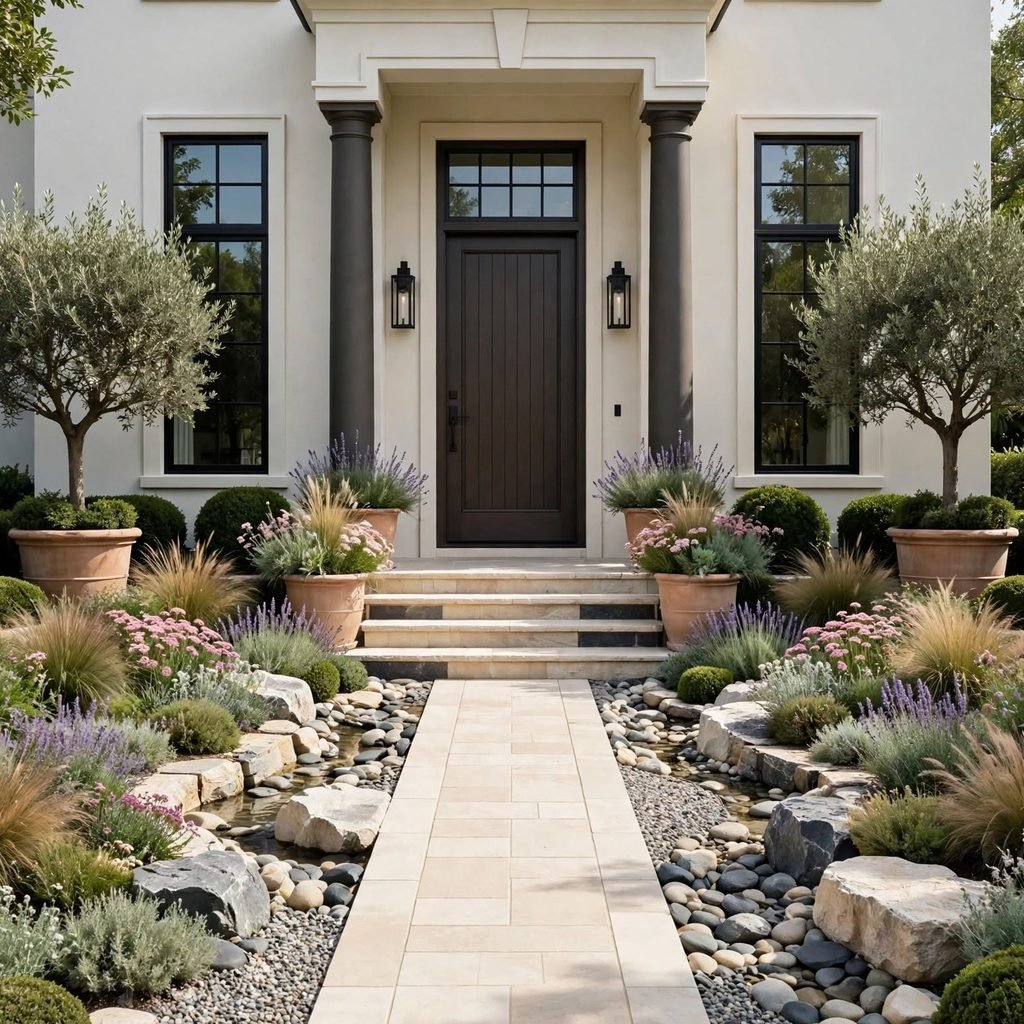
A dry creek bed channels stormwater runoff away from the foundation while doubling as a planted focal point the rest of the year. The base layer uses landscape fabric, then a mix of river rock in graduated sizes — larger boulders along the outer edge, smaller cobble in the center where water would actually flow during heavy rain. Planting drought-tolerant grasses like blue fescue or dwarf pampas along the banks keeps it from reading as a bare gravel strip in dry months.
7. Fire Pit Seating Area
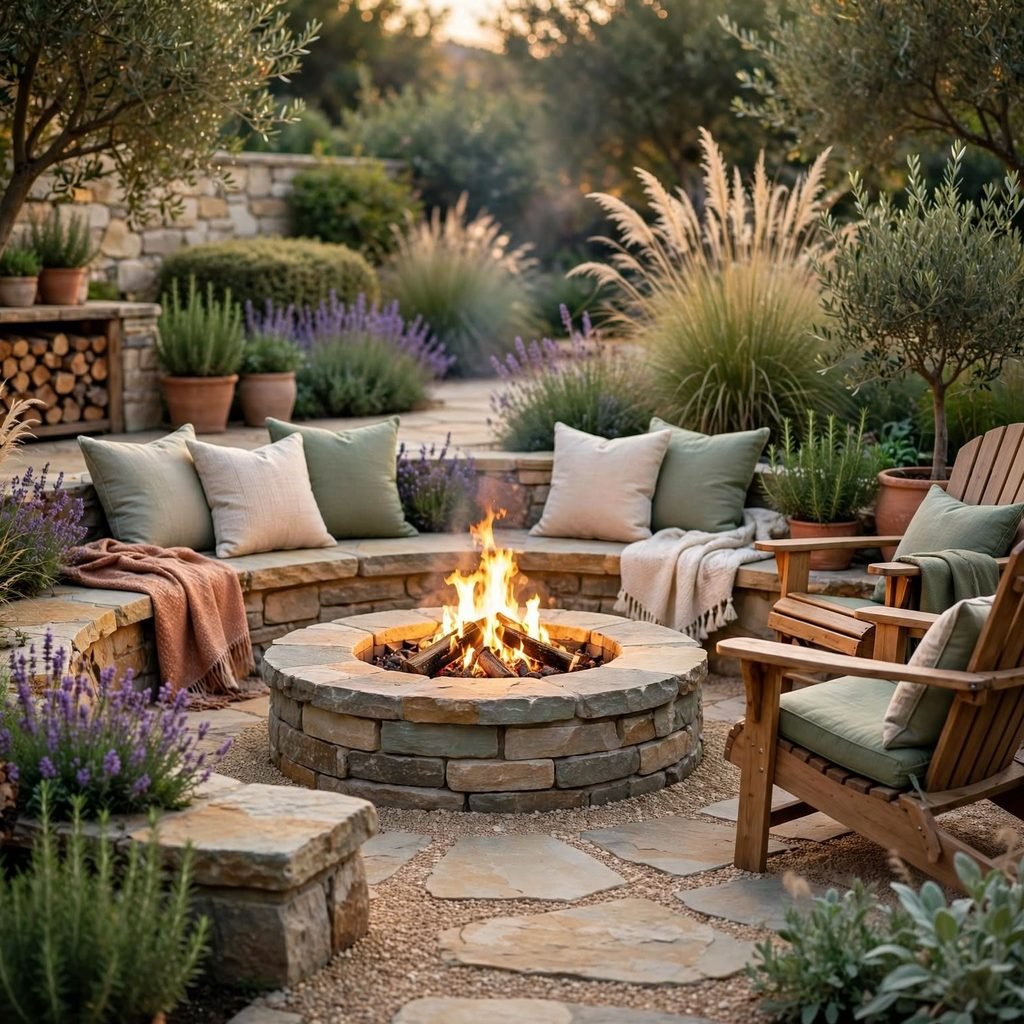
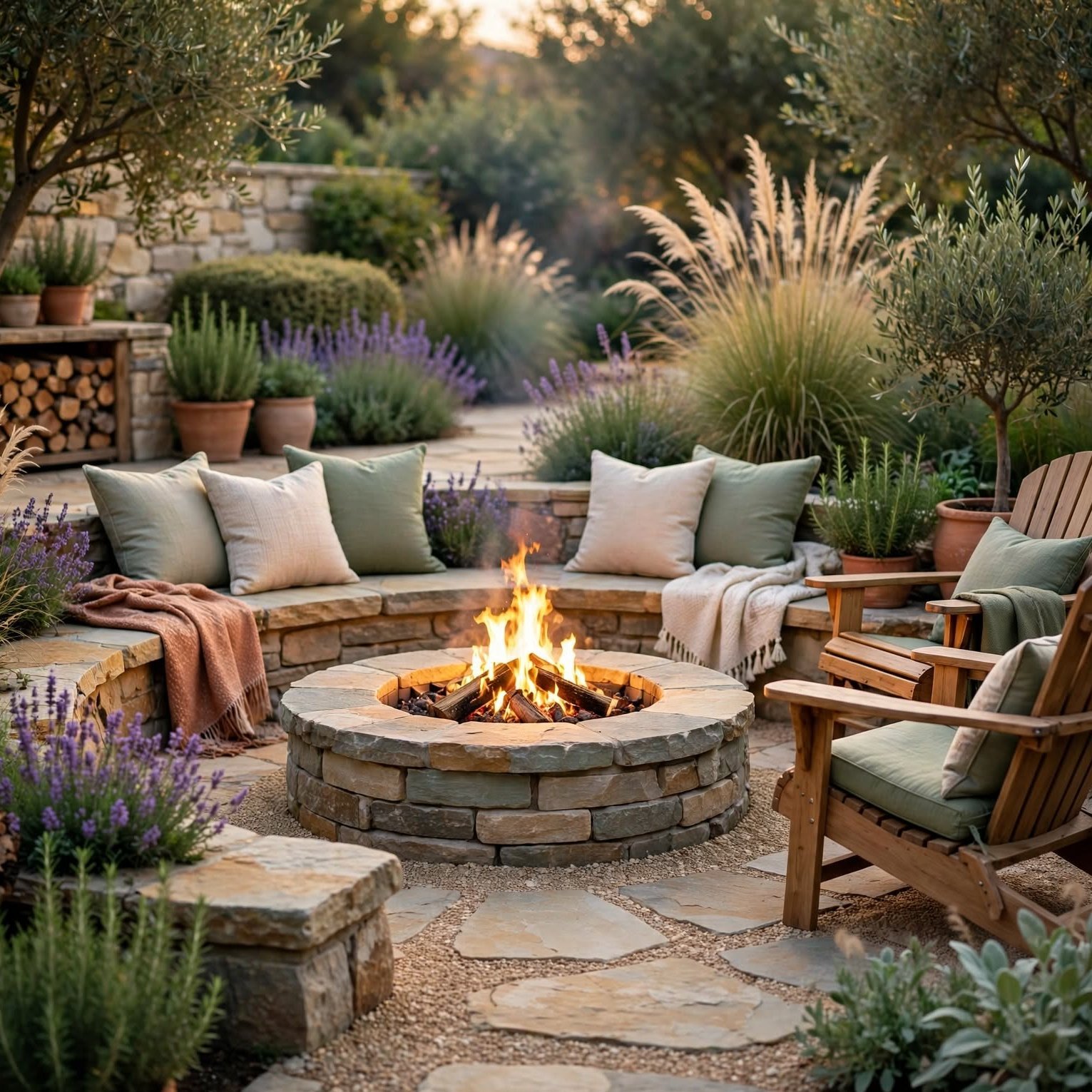
A fire pit seating area anchors the far end of a yard as a destination rather than leaving that space as unused lawn. Steel bowl inserts are the simplest option, stacked stone or concrete block rings look more built-in, and gas-fed fire tables skip the smoke and ash entirely. Clearance matters more than most people plan for combustible seating and structures need real distance from an open flame, and local fire codes often set the minimum.
| Fire Pit Diameter | Seating Capacity | Min. Clearance to Structures |
| 30 in | 4–5 people | 10 ft |
| 36 in | 6–8 people | 15 ft |
| 42+ in | 8–10 people | 20 ft |
Check your local fire code and any HOA outdoor fire guidelines before installing a wood-burning pit some jurisdictions require gas-only units.
8. Zen Garden Design Ideas
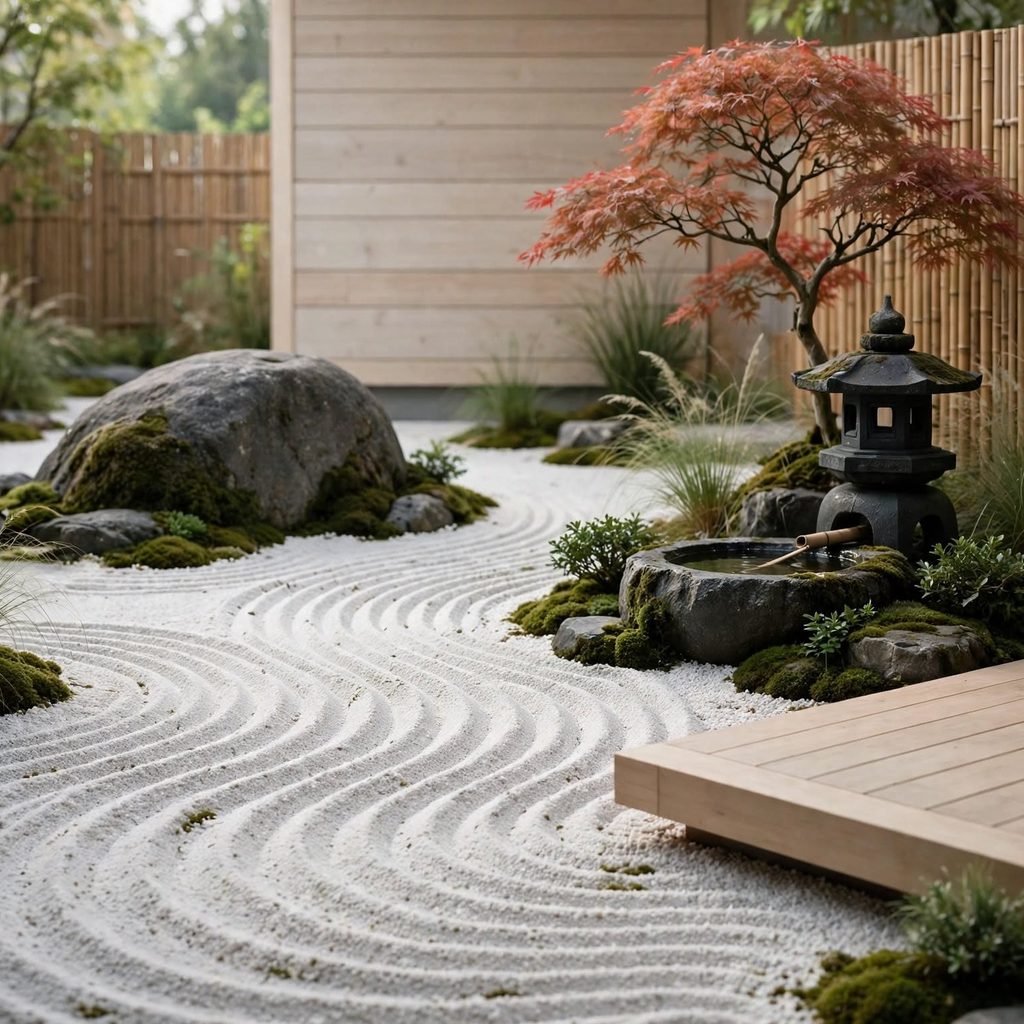
Zen garden design ideas draw from Japanese dry landscape gardens, using raked gravel, moss, and carefully placed stone instead of flowering plants to create a space meant for quiet rather than color. A rake with wide, evenly spaced tines pulls the gravel into concentric patterns around anchor rocks, which should be set at odd numbers and varying heights to avoid a symmetrical, artificial look. Japanese maple and black pine are the two most traditional plantings if you want any greenery at all.
9. Native Wildflower Meadow
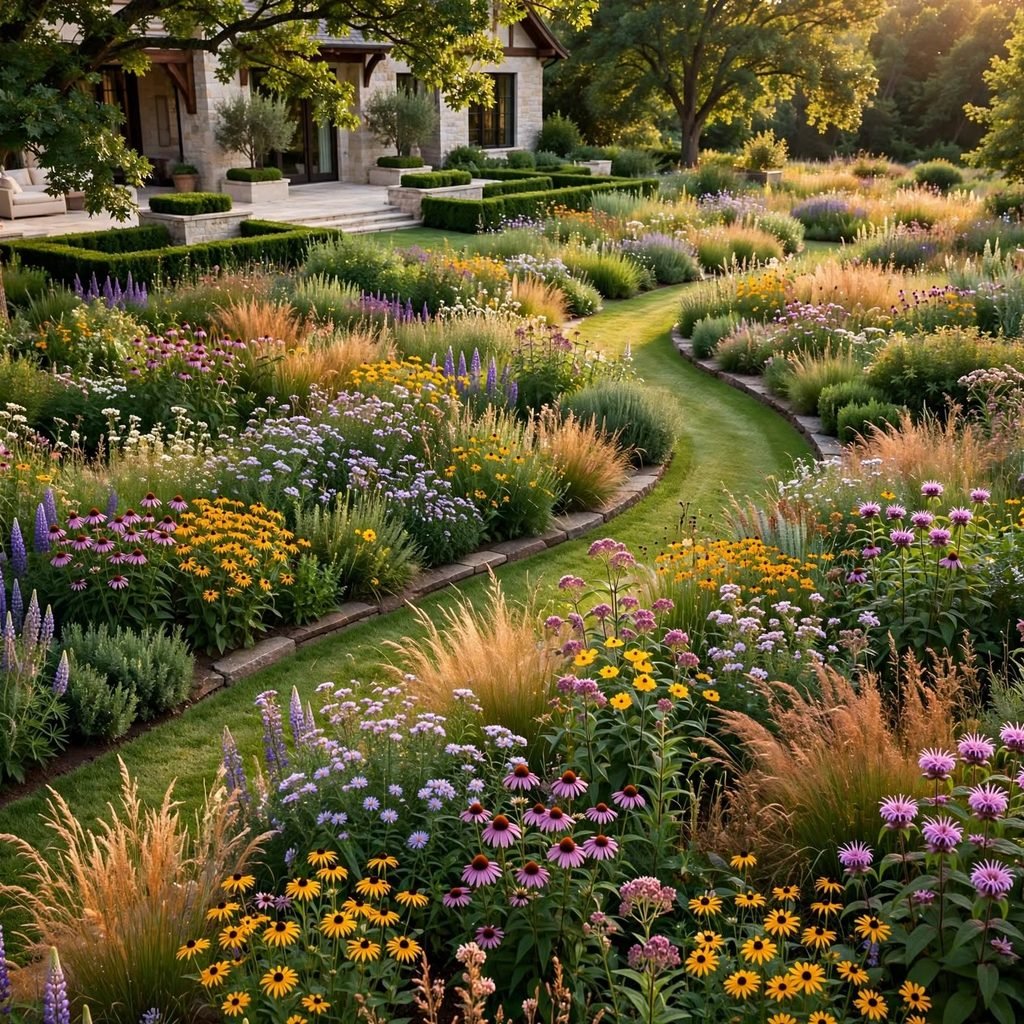
A native wildflower meadow replaces a section of turf lawn with regionally adapted grasses and flowering perennials that need no irrigation once established and support local pollinators far better than mowed grass ever will. Seed mixes should be sourced specifically for your region rather than a generic “wildflower mix,” since plants suited to the Northeast will mostly fail in the Southwest and vice versa. Expect two full growing seasons before the meadow looks intentional rather than patchy.
10. Espaliered Fruit Trees
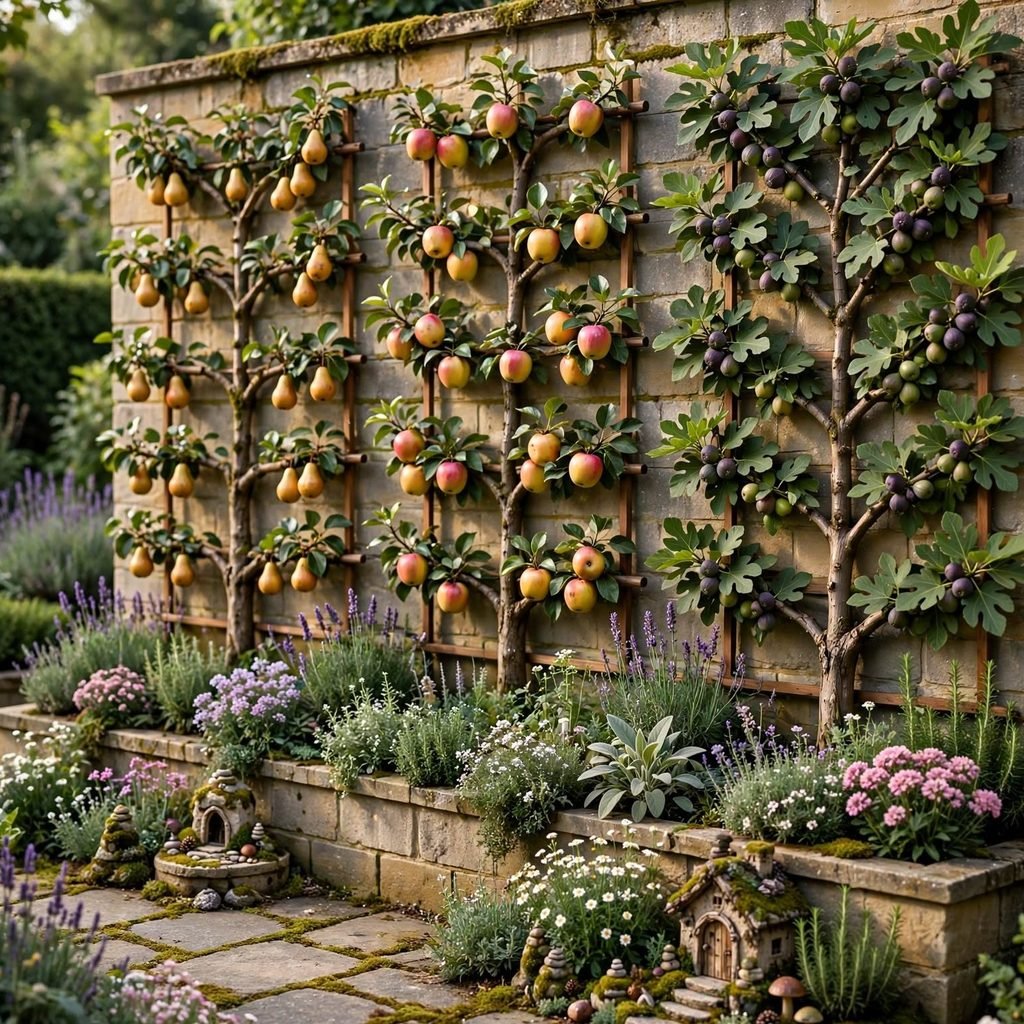
Espaliered fruit trees are trained flat against a wall, fence, or freestanding wire trellis, which turns a space too narrow for a full-canopy tree into productive growing area. Apple and pear tolerate the technique best because their fruiting spurs form readily along horizontal branches; stone fruits like peach are harder to train this way. The tree is pruned twice a year to force growth into a single flat plane, tied to horizontal wires spaced roughly 12 to 18 inches apart.
| Fruit Type | Wire Spacing | Training Difficulty |
| Apple | 12–15 in | Easy |
| Pear | 12–15 in | Easy |
| Peach/Nectarine | 18 in | Difficult |
See our full espalier pruning schedule for exact timing by climate zone.
11. Outdoor Kitchen Nook
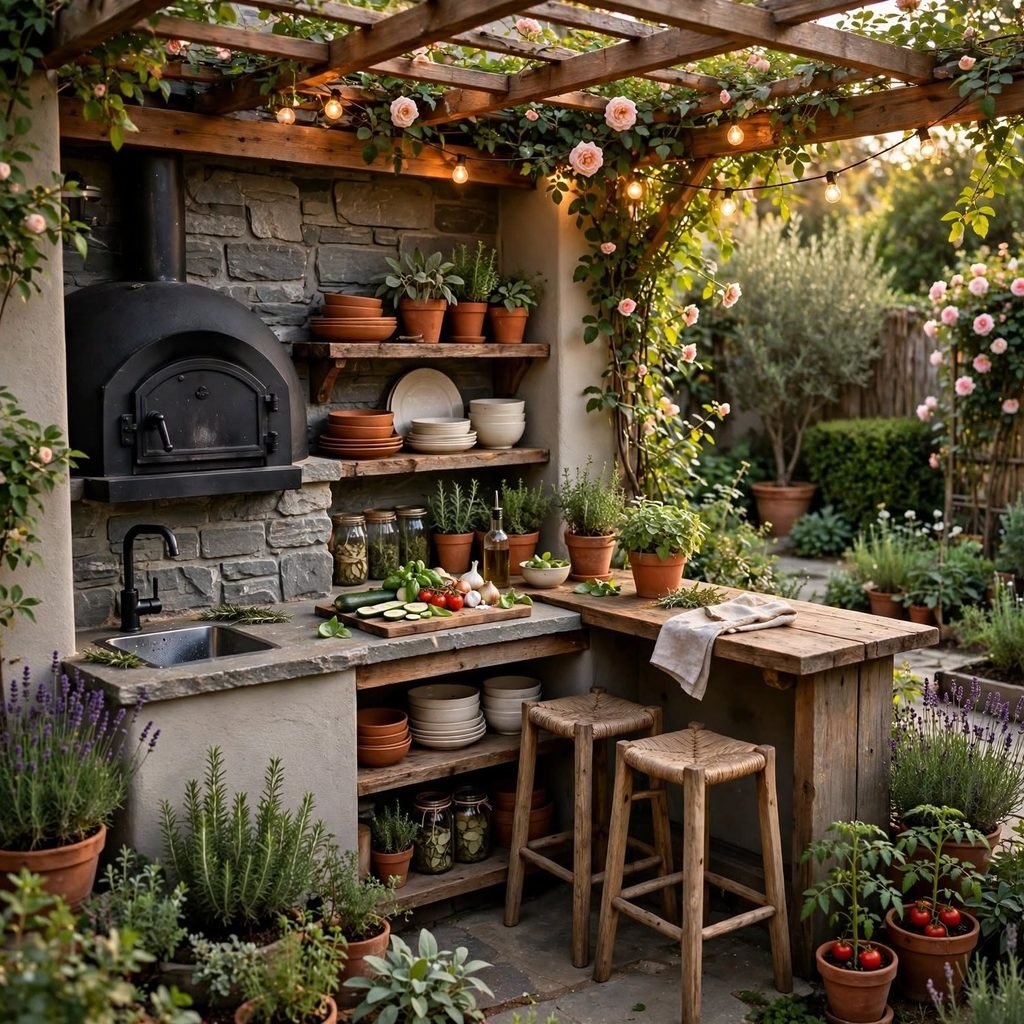
An outdoor kitchen nook extends meal prep and cooking outside without the full scope of a built-in outdoor kitchen, usually built around a single grill island, a small prep counter, and open or covered shelving for tools. Concrete countertop and stainless steel appliance fronts hold up to weather better than wood or laminate. Positioning it near the house cuts down on the distance for running gas or water lines, which is where most of the cost in this kind of build actually goes.
12. Moon Gate Archway
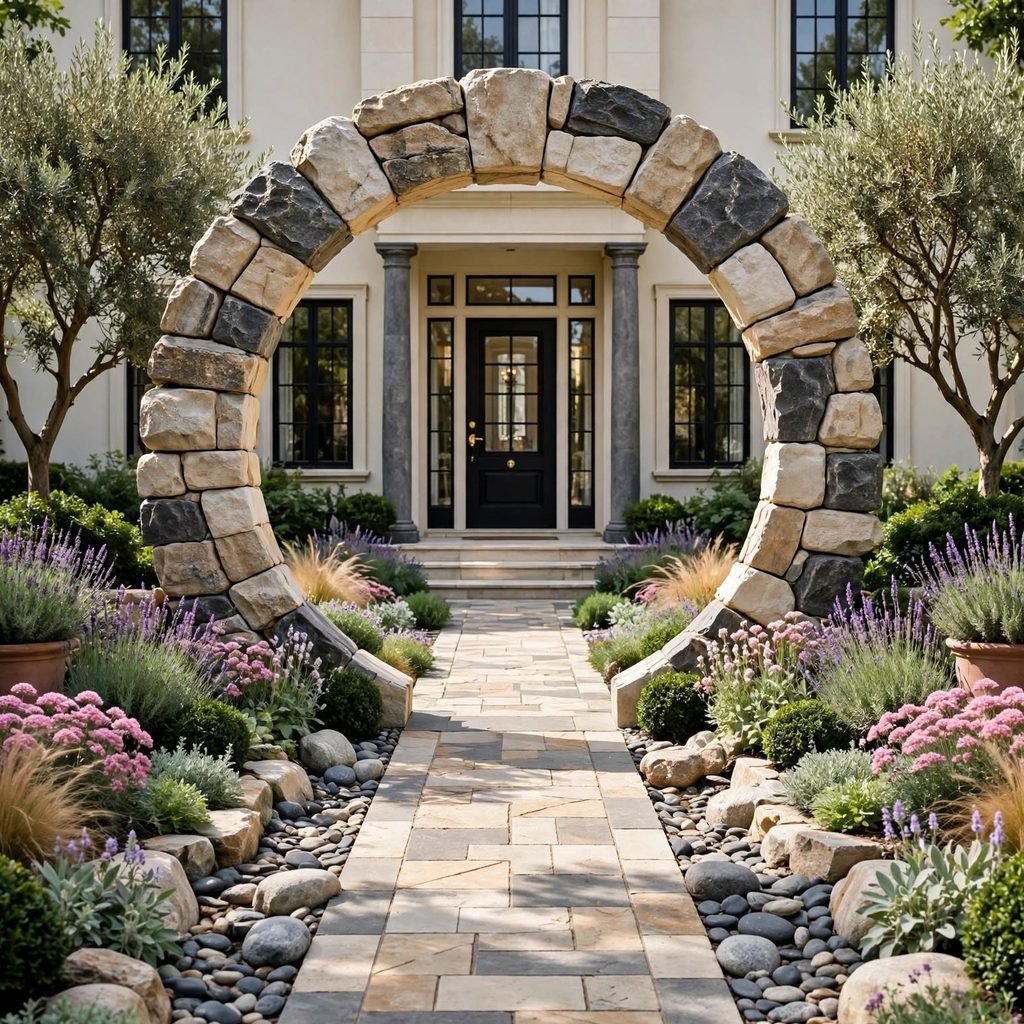
A moon gate archway is a circular opening built into a wall or hedge line, borrowed from traditional Chinese garden design, used to frame a view or mark the transition into a separate garden room. It can be built from stucco-clad concrete block for a solid, permanent version, or from a curved cedar frame for a lighter, more temporary structure. Planting climbing jasmine or clematis along the curve softens the hard geometry without hiding the shape of the opening itself.
Shop the Look
A handful of well-chosen pieces do most of the visual work across these ideas. Corten steel bed edging holds a clean line between gravel and planting beds while developing a rust patina that suits both the cottage and zen looks. A teak or eucalyptus bench works as a focal point at the end of a dry creek bed or inside a moon gate opening. Solar-powered path lights along a gravel walkway extend usability into the evening, and a set of glazed ceramic planters in graduated sizes gives raised beds or a patio corner a finished, intentional look without much additional cost.
Common Mistake to Avoid
The most common and costly mistake is installing hardscape — a patio, a fire pit, a raised bed — before checking how water actually moves across the yard after heavy rain. Skipping grading and drainage planning means water pools against a new patio slab, saturates raised bed foundations, or channels straight into a fire pit base. Fixing it after the fact usually means tearing out and regrading around whatever was just built, which costs far more than a simple pre-construction grading check would have.
Frequently Asked Questions
What is the best low-maintenance garden design idea for beginners?
A gravel patio paired with a native wildflower meadow is one of the lowest-maintenance combinations available, since neither needs mowing, regular watering, or seasonal replanting once established. The gravel patio needs only occasional weed pulling along the edges, and a regionally sourced wildflower mix is bred to handle local rainfall and soil without irrigation. Both can be installed by a homeowner over a weekend without specialized equipment or a landscaping crew.
How much does a small backyard garden redesign cost?
A small backyard redesign covering a few of these ideas, say, a gravel patio, raised beds, and border planting, typically runs $2,000 to $6,000 depending on materials and whether you hire out labor. DIY installation of gravel and raised beds cuts costs significantly since materials alone run under $1,000 for a modest-sized yard. Larger structural additions like a pergola or outdoor kitchen nook can add several thousand dollars on top of that baseline.
What garden design ideas work well for small spaces?
Vertical herb walls, espaliered fruit trees, and a compact gravel patio all work well in small spaces because none of them require the open footprint that a lawn, meadow, or full-size pergola needs. Espaliered trees in particular let you grow fruit against a narrow side yard or fence line that would otherwise sit unused. Raised beds also perform well in tight spaces since their footprint and height are both fully controlled by the builder.
How do you create a garden design on a budget?
Phasing the project over two or three seasons is the single biggest budget lever, since it spreads material costs and lets you build hardscape first, then fill in planting as funds allow. Gravel patios, DIY cedar raised beds, and border planting grown from seed or divided perennials from an existing garden are the lowest-cost entry points. Structural additions like a pergola or outdoor kitchen are the pieces most worth waiting on and saving toward.
What plants work best in raised garden beds?
Tomatoes, peppers, leafy greens, and root vegetables like carrots and beets all perform well in raised beds because the loose, controlled soil mix drains better and warms up faster in spring than native ground soil. Herbs such as basil and thyme also do well, particularly in shallower 6 to 8 inch beds where drainage matters more than depth. Deep-rooted crops like potatoes need the 18-inch-plus depth range to develop properly.
Conclusion
The strongest garden design ideas on this list share one thing in common: they start with structure and drainage, then let planting fill in around a plan that already works. Whether you begin with a simple gravel patio or work up to a moon gate archway, building in phases keeps the project realistic and the budget under control. Save this post to Pinterest for reference as you plan out your own yard, or read our related guide to backyard drainage planning before breaking ground.