12 Effective Herb Garden Ideas for Fresh Flavor Year-Round
Herb garden ideas succeed on a detail most vegetable gardens can ignore: most culinary herbs actually perform worse in rich, heavily amended soil than in lean, sharply drained conditions. This post walks through twelve specific approaches from a classic spiral bed to an indoor grow-light shelf for winter harvesting each with real plant groupings, spacing, and what it takes to build or set up.
Trend & Background
Herb gardening has shifted toward compact, multi-zone setups that separate Mediterranean herbs needing dry, sunny conditions from moisture-loving herbs like mint and parsley that would otherwise struggle in the same bed. Indoor grow-light shelves have also moved from a niche hobbyist purchase into a standard winter setup for home cooks who want fresh basil and cilantro through the colder months rather than relying on grocery-store bunches. At the same time, more gardeners are building a single dedicated herb spiral or raised bed near the kitchen door specifically to shorten the distance between harvesting and cooking.
Key Takeaways
- These 12 herb garden ideas cover indoor windowsill setups, outdoor spiral beds, vertical walls, and greenhouse extensions for year-round growing
- Five ideas spiral beds, container groupings, vertical walls, raised beds, and indoor grow shelves include spacing, sizing, or material comparison tables
- Sun exposure and drainage matter more than soil richness for most culinary herbs, which generally prefer lean, well-drained conditions over heavily amended beds
- Several of these ideas combine well, such as pairing a spiral herb bed with a nearby container grouping for herbs that need different conditions
1. Herb Spiral Bed
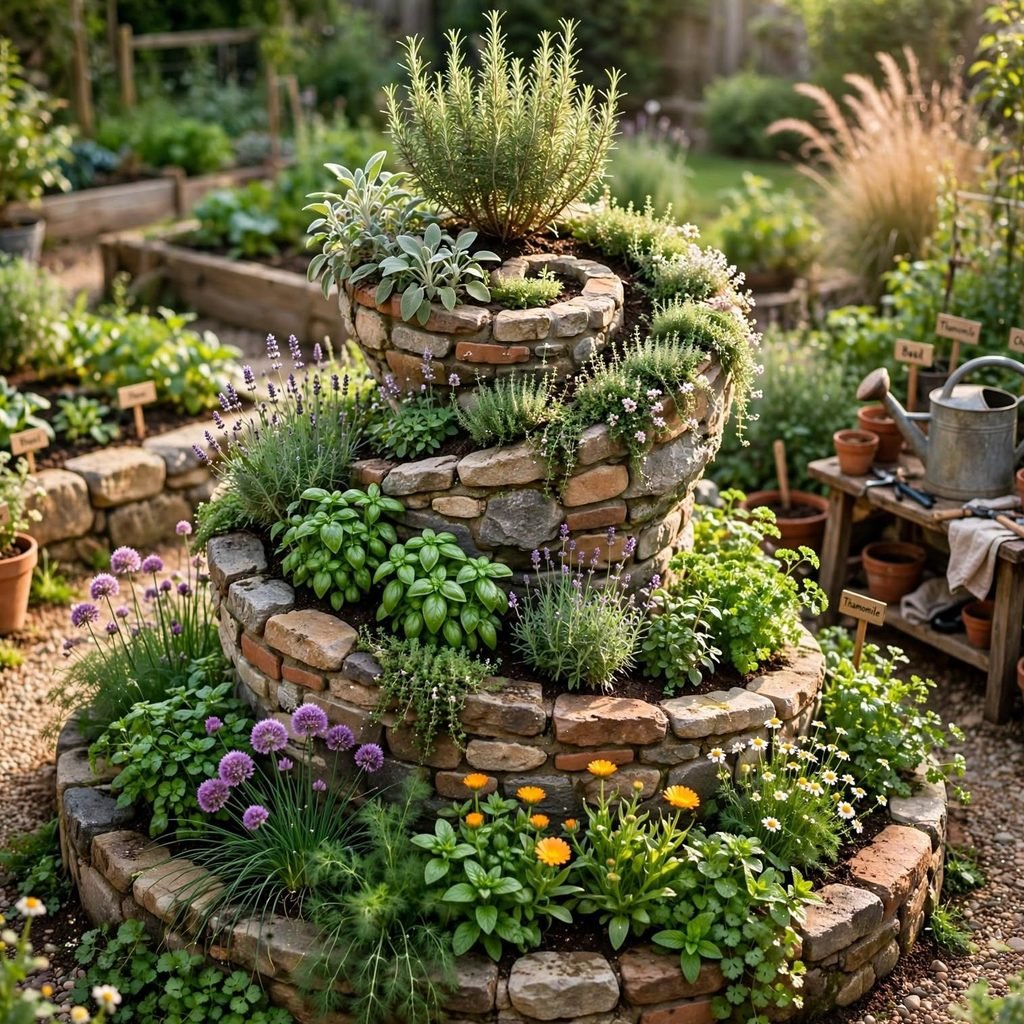
An herb spiral bed stacks soil and stone into a rising spiral shape, creating multiple microclimates within a single small footprint dry and sunny at the top, cooler and more moisture-retentive at the base. Rosemary, thyme, and oregano go at the top where drainage is sharpest, while parsley, chives, and mint do better lower down where the soil holds more moisture. A spiral roughly four feet in diameter and three feet tall fits a surprising number of herb varieties into a space that would otherwise hold only two or three plants in a flat bed.
| Spiral Zone | Moisture Level | Best Herbs |
| Top | Dry, full sun | Rosemary, thyme, sage |
| Middle | Moderate | Oregano, marjoram, chives |
| Base | Moist, partial shade | Mint, parsley, chervil |
2. Windowsill Herb Garden
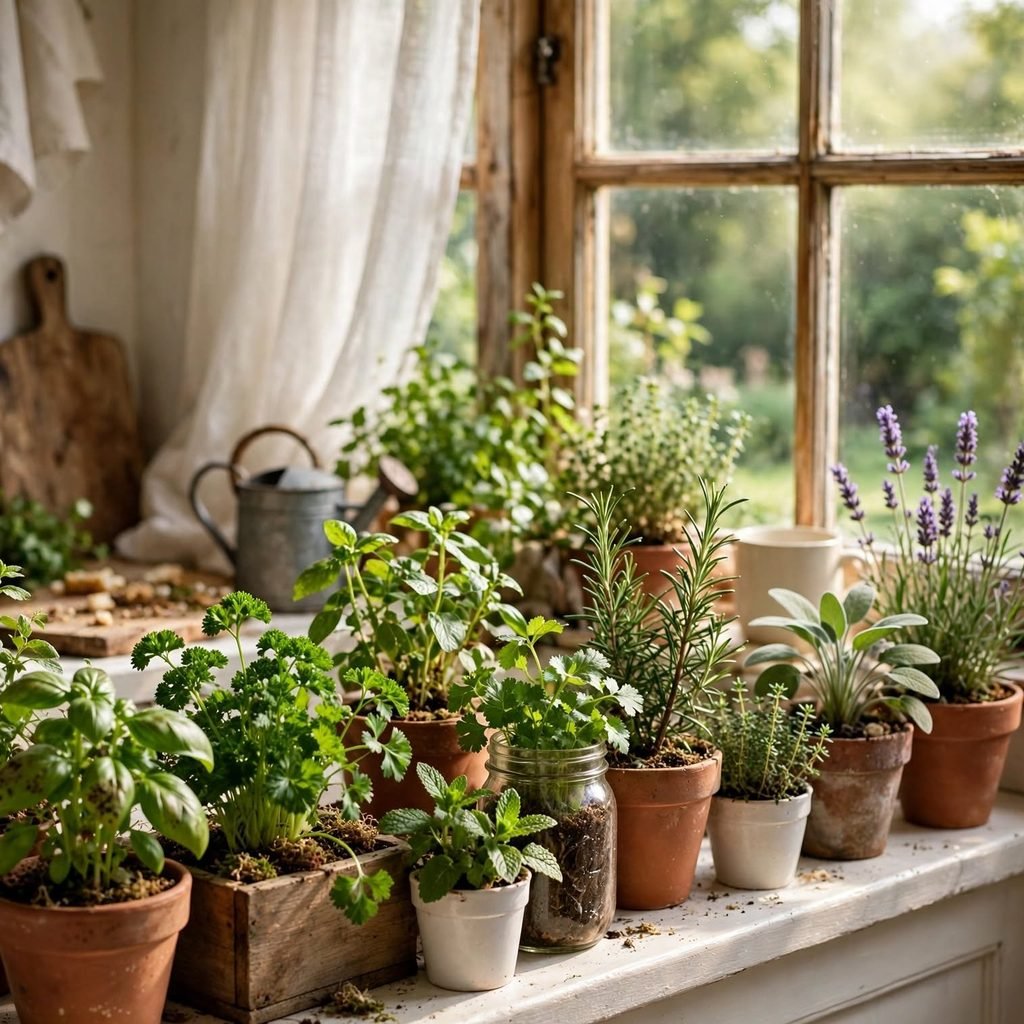
A windowsill herb garden keeps a handful of pots on a sunny kitchen sill, which works well for compact herbs but depends entirely on getting at least four to six hours of direct light, something a north-facing window rarely provides. Basil, chives, and parsley all tolerate the smaller pot sizes a windowsill requires, while herbs like rosemary that grow into small shrubs eventually outgrow the space and need transplanting outdoors or into a larger container. Turning the pots a quarter turn every few days keeps growth even instead of leaning hard toward the glass.
3. Vertical Herb Wall
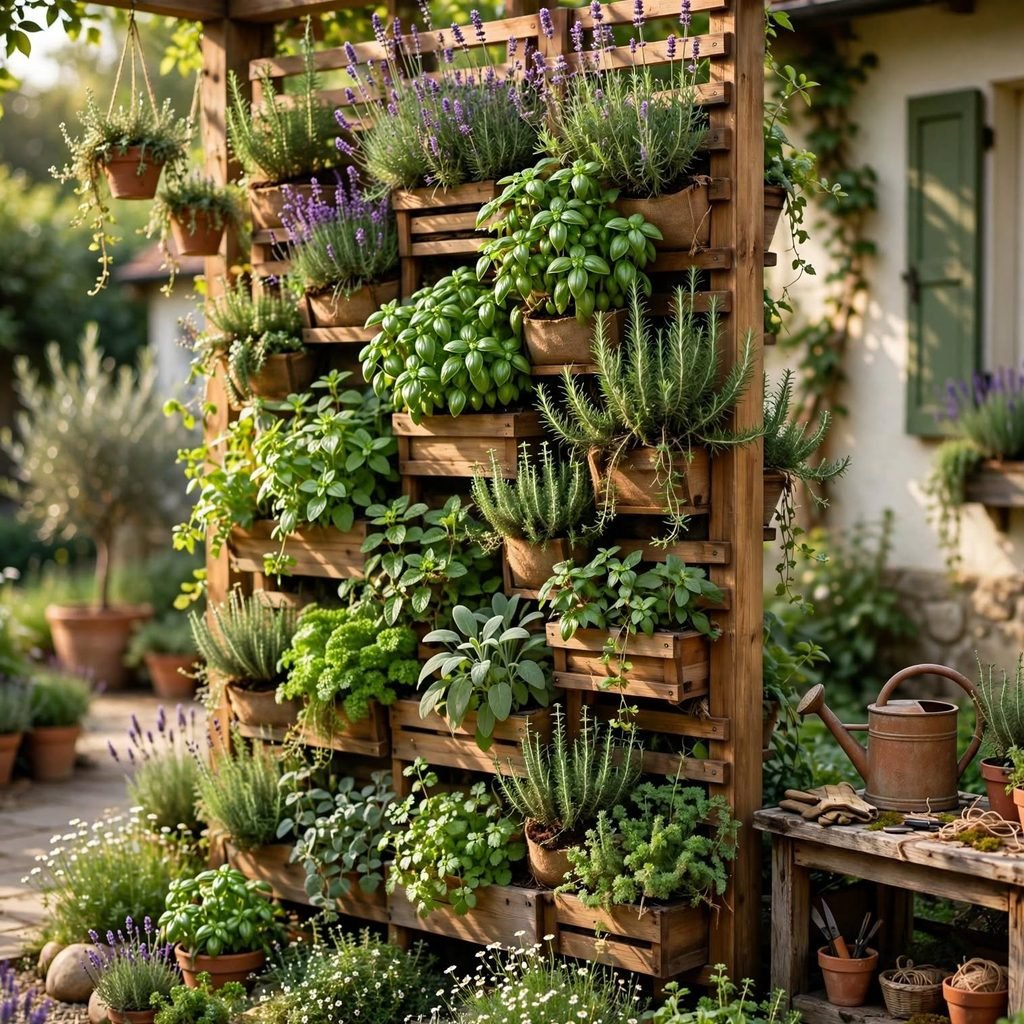
A vertical herb wall mounts modular planting pockets, a ladder-style shelf, or a repurposed pallet against a fence or exterior wall, turning unused vertical space into growing area without taking up any ground footprint. Felt pocket systems are the lightest and cheapest to install, while a cedar-framed shelf unit holds heavier pots and lasts considerably longer outdoors. Running a simple drip line along the top row keeps water distributed evenly down through the tiers instead of relying on hand-watering each pocket separately.
| System Type | Weight When Wet | Best For |
| Felt pocket panel | Light | Small herbs, shallow roots |
| Rigid modular tray | Moderate | Mixed herb varieties |
| Cedar shelf unit | Heavy | Larger pots, woody herbs |
4. Raised Herb Bed
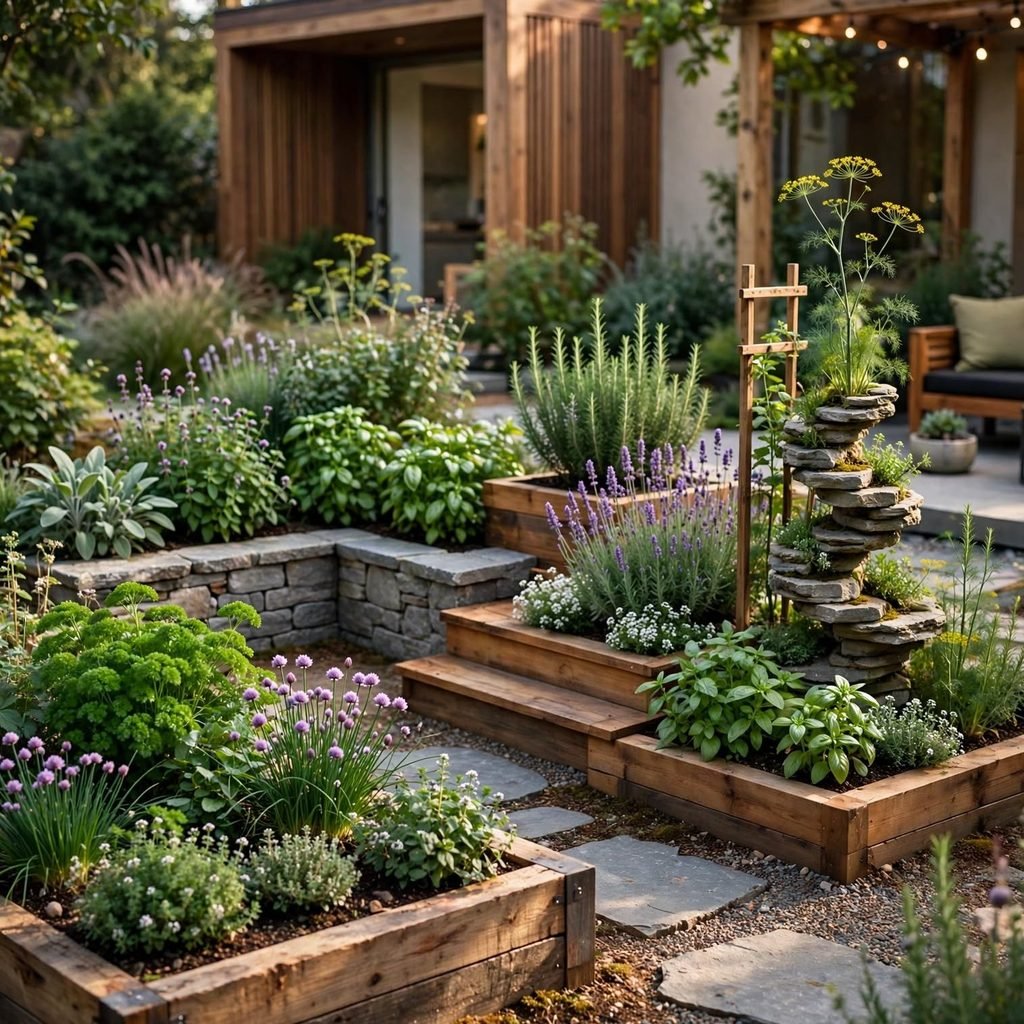
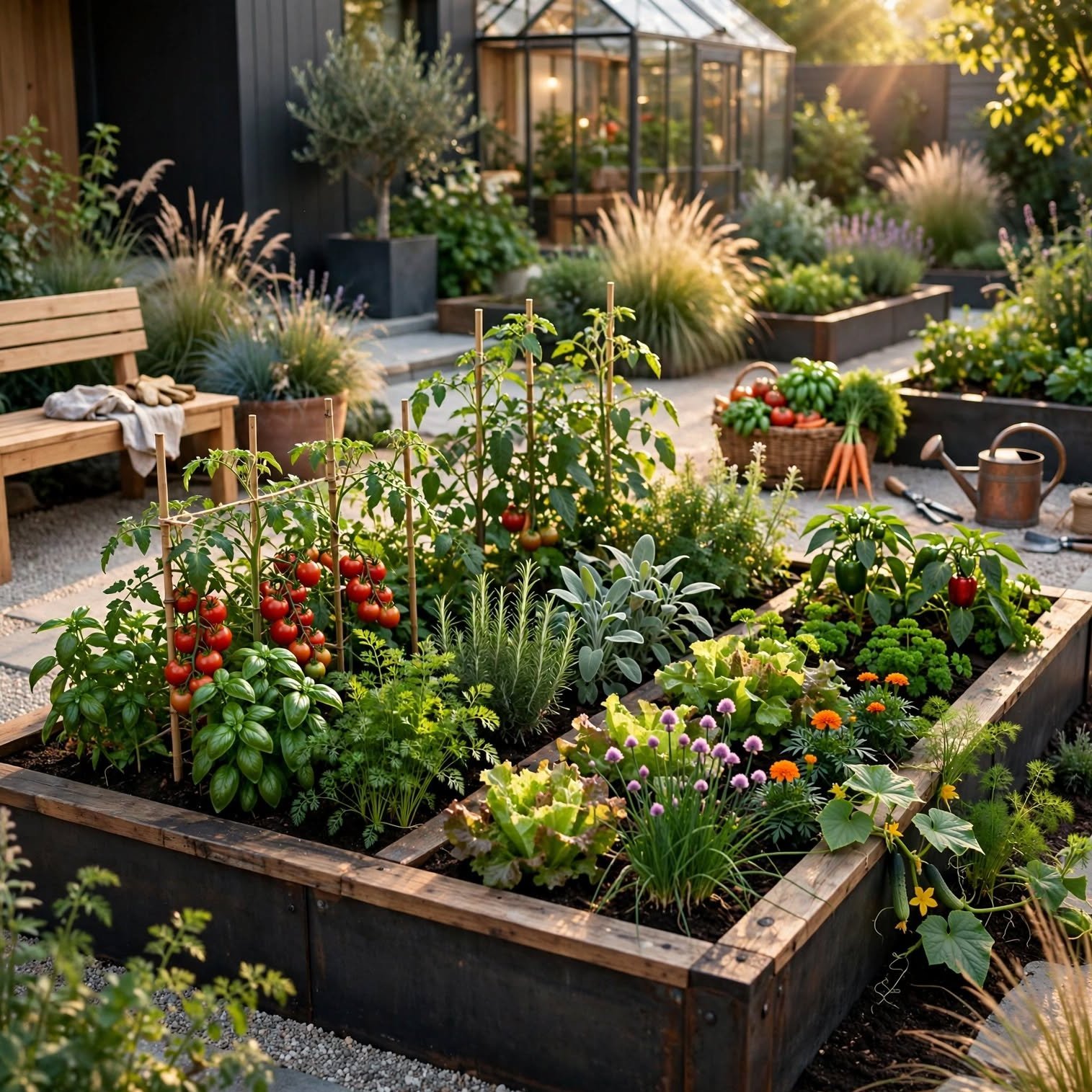
A raised herb bed gives full control over soil composition, which matters for herbs since most culinary varieties actively prefer a leaner mix than the rich, amended soil typical vegetable beds use. Cedar resists rot without chemical treatment, corrugated metal lasts decades but runs hotter in full sun, and a shallower 8 to 10 inch depth suits most herbs without the extra soil volume vegetable roots require. Mixing in coarse sand or perlite at planting time replicates the sharp drainage Mediterranean herbs like rosemary and thyme need to thrive.
| Bed Depth | Best For | Material |
| 6–8 in | Shallow-rooted herbs (thyme, chives) | Cedar plank |
| 8–10 in | Mixed herb bed | Corrugated metal |
| 10–12 in | Herbs with deeper roots (rosemary) | Cedar or stone |
5. Container Herb Grouping
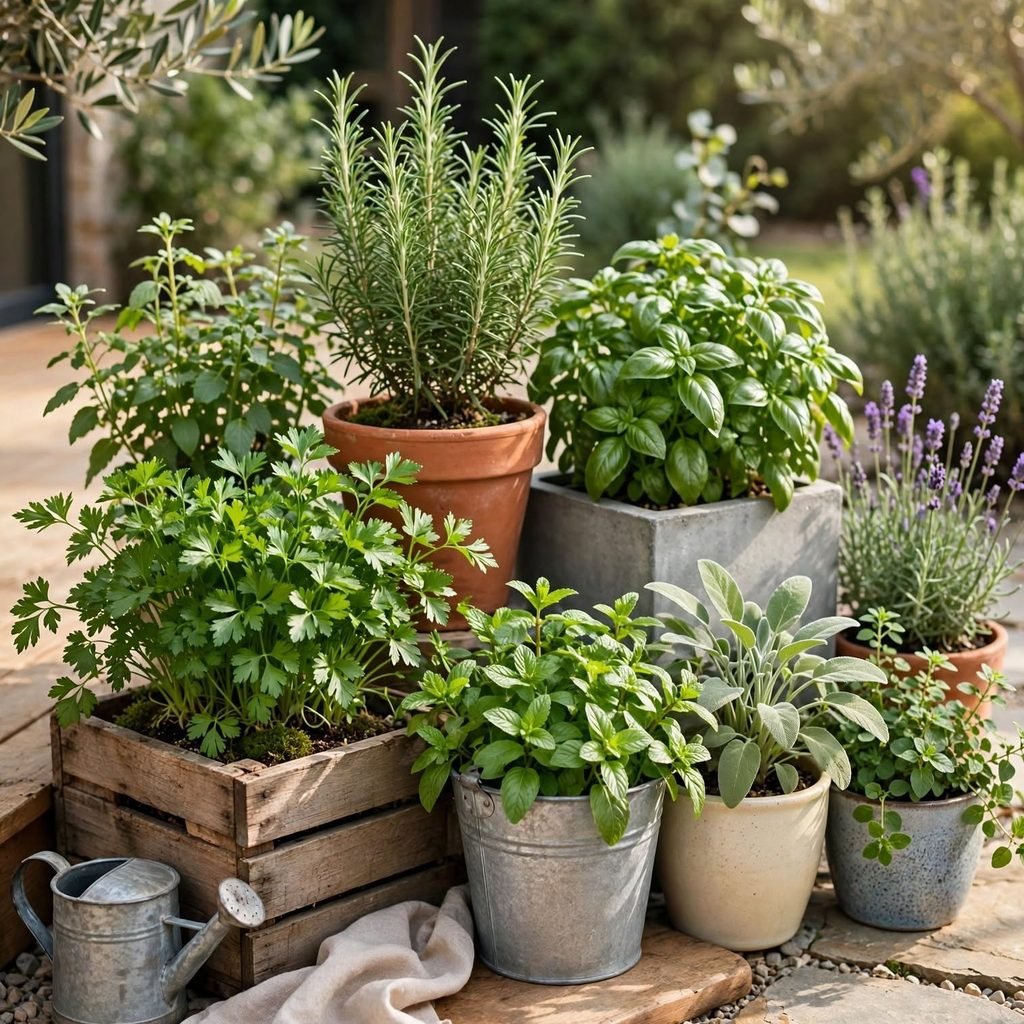
A container herb grouping clusters several pots together near a kitchen door or patio, which reads as more intentional than scattering single pots and makes harvesting from multiple herbs at once considerably faster. Terracotta suits herbs like rosemary and oregano that prefer to dry out between waterings, since the porous clay wicks moisture away from the roots, while glazed ceramic holds water longer for basil and parsley. Grouping five or six pots of varying heights on a small rolling cart also makes it easy to shift the whole setup as sun exposure changes through the season.
Bring your outdoor space to life with these creative flower garden fence ideas and planting inspiration.
6. Indoor Grow-Light Shelf
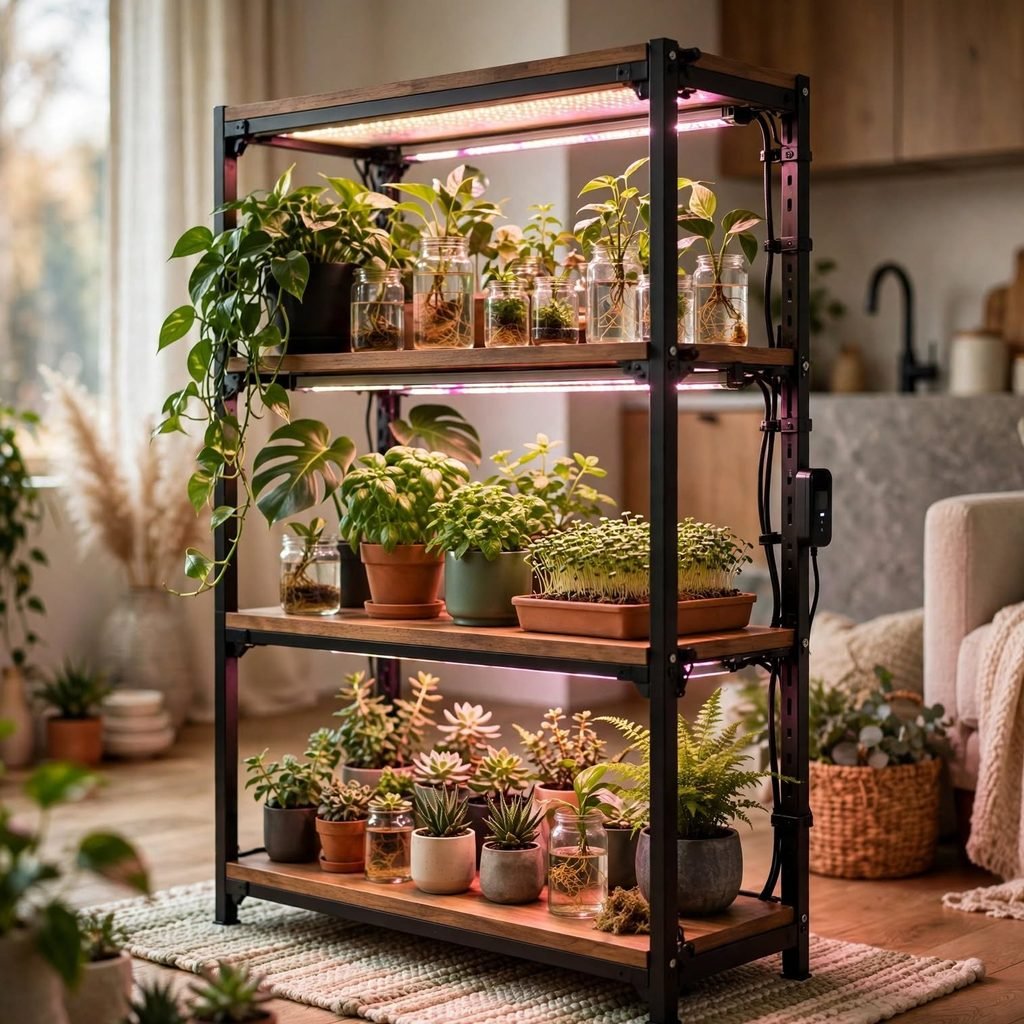
An indoor grow-light shelf extends herb growing through winter months when natural light indoors isn’t strong or long enough to support most culinary herbs. A basic setup uses a wire shelving unit with full-spectrum LED grow lights mounted on the underside of each shelf, positioned six to twelve inches above the plants and run on a timer for 12 to 14 hours a day. Basil, cilantro, and mint all perform well under lights, though basil in particular tends to get leggy if the light source sits too far above the canopy.
7. Herb Garden Ideas for Small Balconies
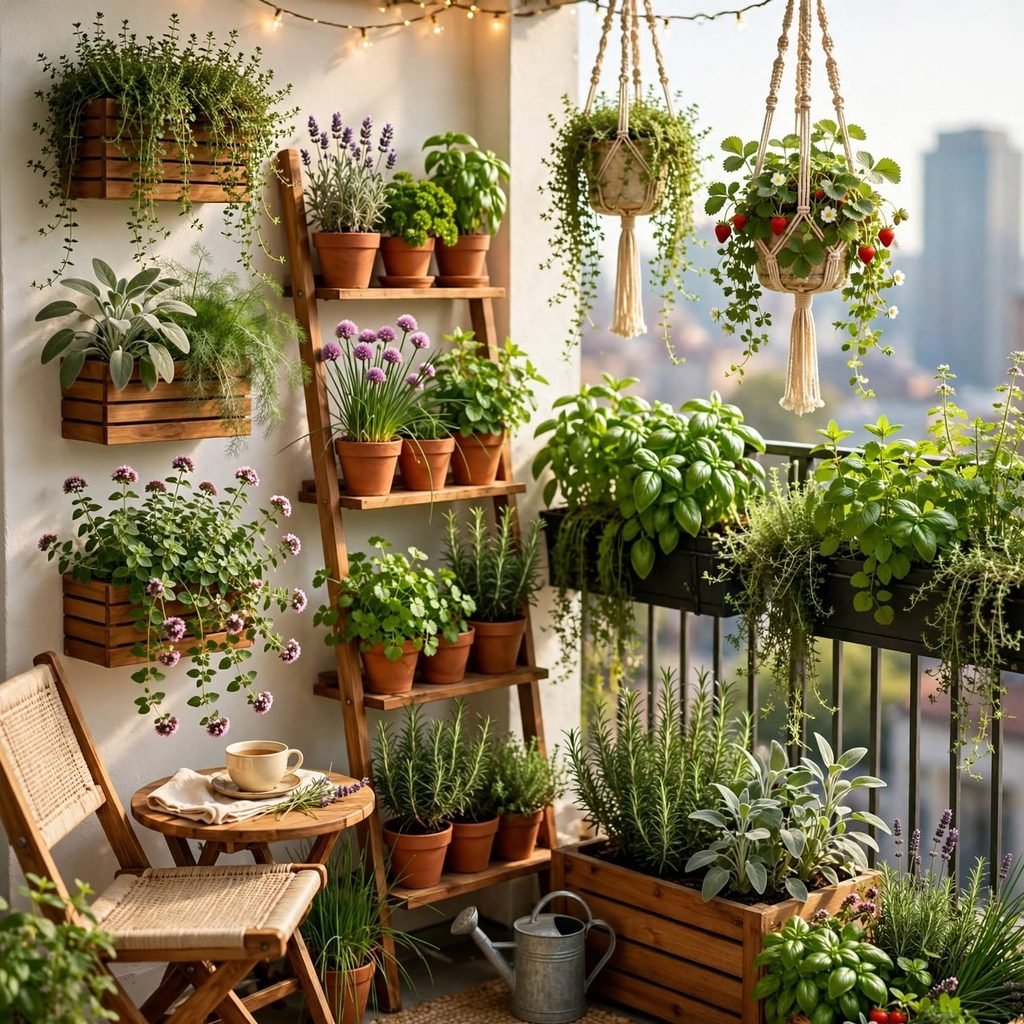
Herb garden ideas for small balconies work almost entirely through containers and rail-mounted planters, since balconies rarely have any ground bed and often carry weight restrictions that rule out large raised beds. Rail planters that clip directly onto a balcony railing free up floor space entirely, while lightweight fiberglass pots handle the wind exposure balconies get without tipping the way taller terracotta pots sometimes do. Wind is the main added challenge over a ground-level herb garden, and taller herbs like dill may need light staking even in a moderate breeze.
8. Kitchen Garden Border
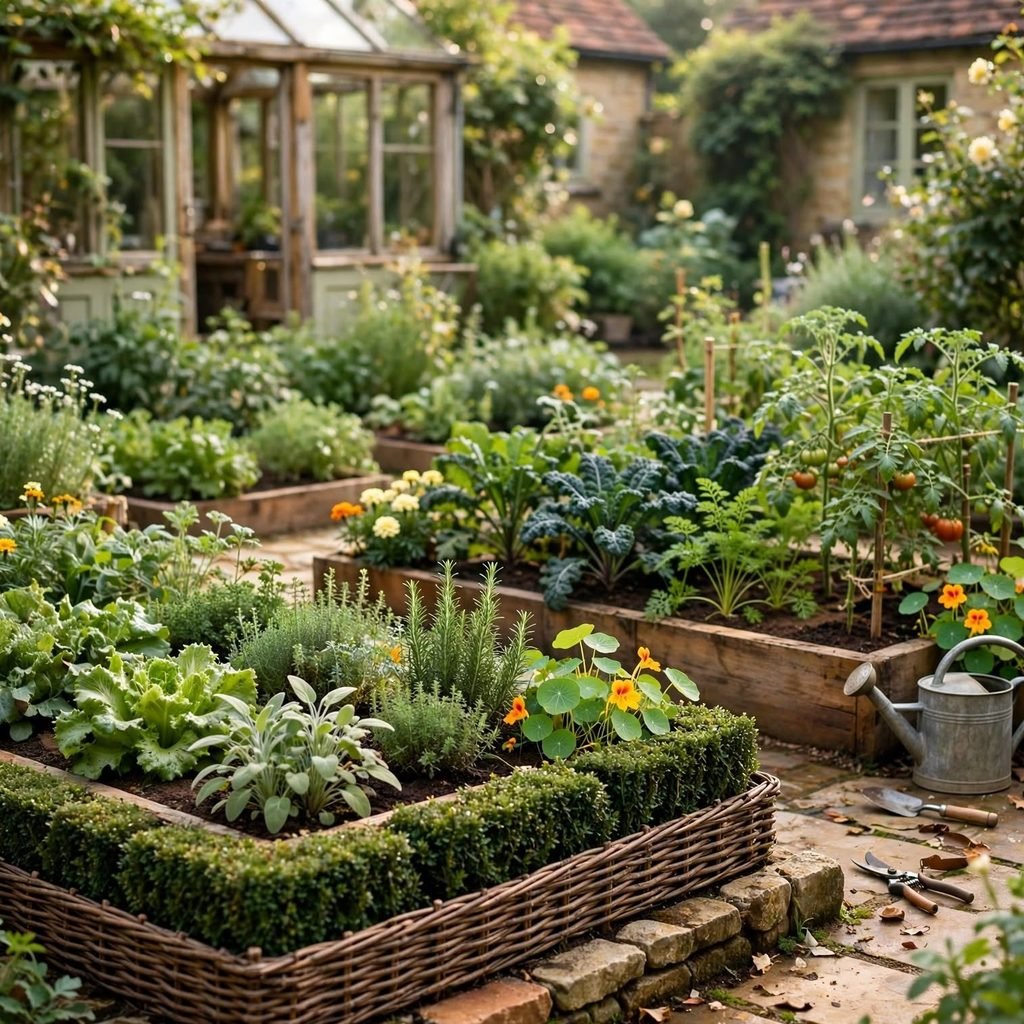
A kitchen garden border plants herbs directly into the front edge of an existing ornamental bed near the house, blending them into the landscape rather than isolating them in a separate dedicated plot. Low, mounding herbs like thyme and low-growing varieties of sage work well as an edging plant, holding a defined line along a path or bed border while still being fully harvestable. This approach suits gardeners who want fresh herbs without carving out additional bed space specifically for them.
9. Greenhouse Herb Extension
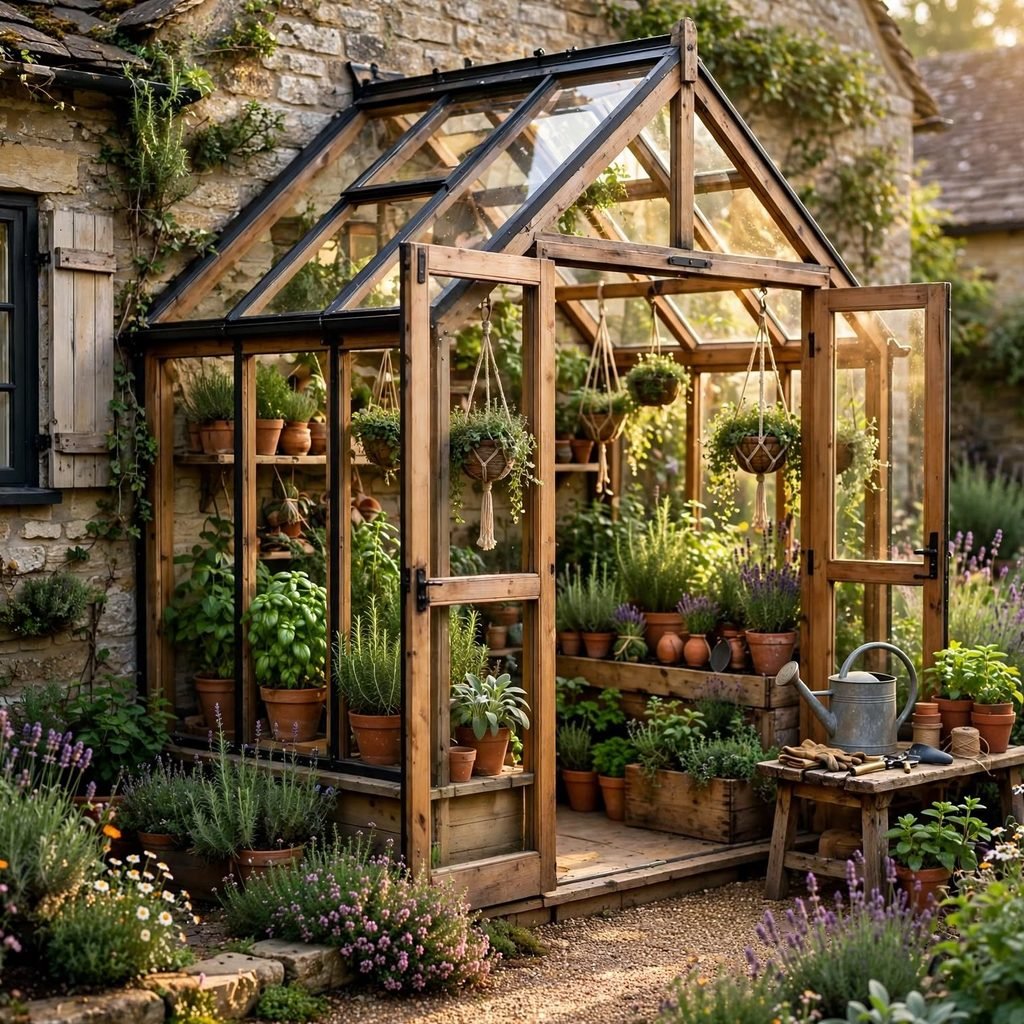
A greenhouse herb extension dedicates a section of an existing greenhouse or a small standalone cold frame specifically to herbs that struggle outdoors through winter in colder climates. Bay laurel, lemongrass, and rosemary all benefit from the frost protection a greenhouse provides, since none reliably survive an outdoor winter below USDA zone 7 or 8 without it. Even an unheated cold frame extends the growing season by several weeks on either end, which matters most for tender annual herbs like basil that die back at the first frost outdoors.
10. Tea Herb Garden
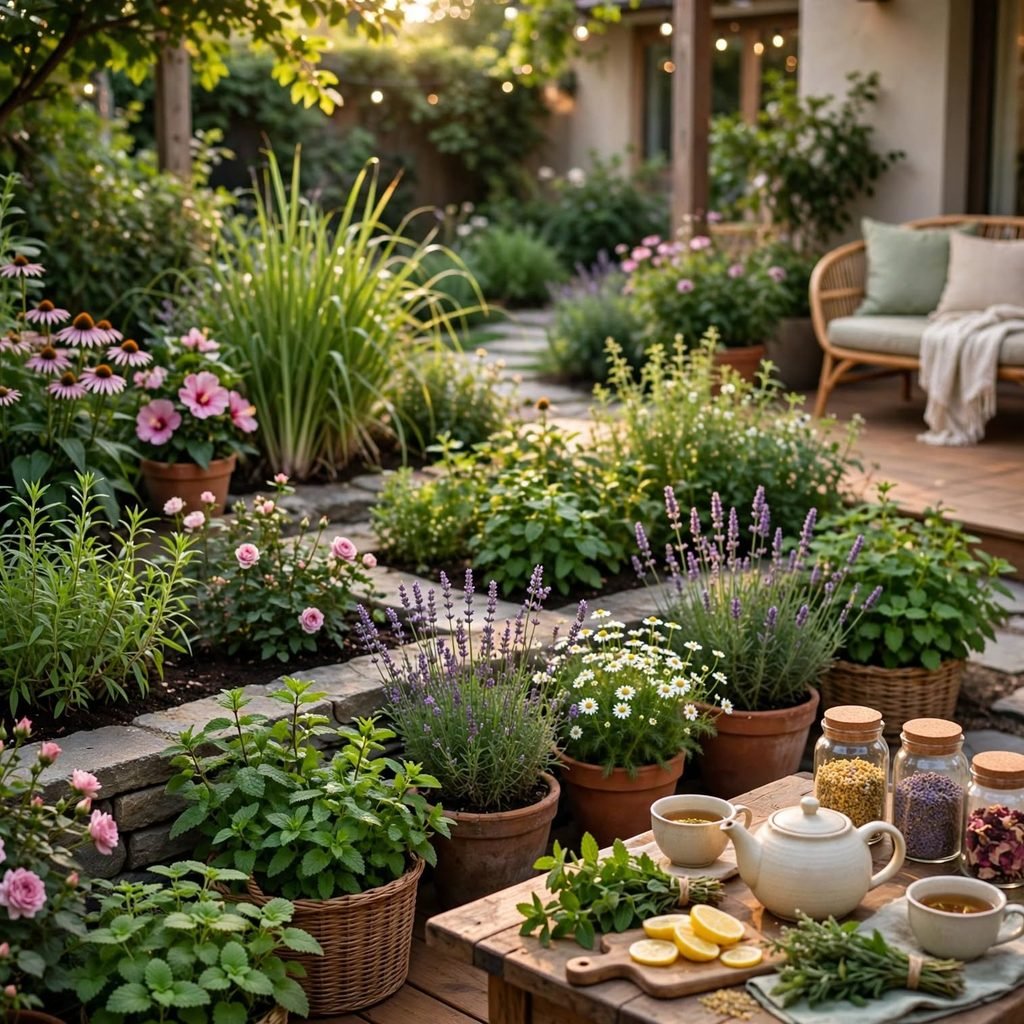
A tea herb garden groups plants specifically grown for brewing rather than culinary use, which changes the plant selection considerably from a standard kitchen herb bed. Chamomile, lemon balm, mint, and lavender are the core plants most tea gardens build around, with mint requiring a contained pot or buried barrier since its spreading roots will otherwise overtake an open bed within a single season. Harvesting for tea generally means cutting whole stems just before flowering, when the essential oils responsible for flavor and aroma are at their peak concentration.
11. Raised Wheel Barrow Planter
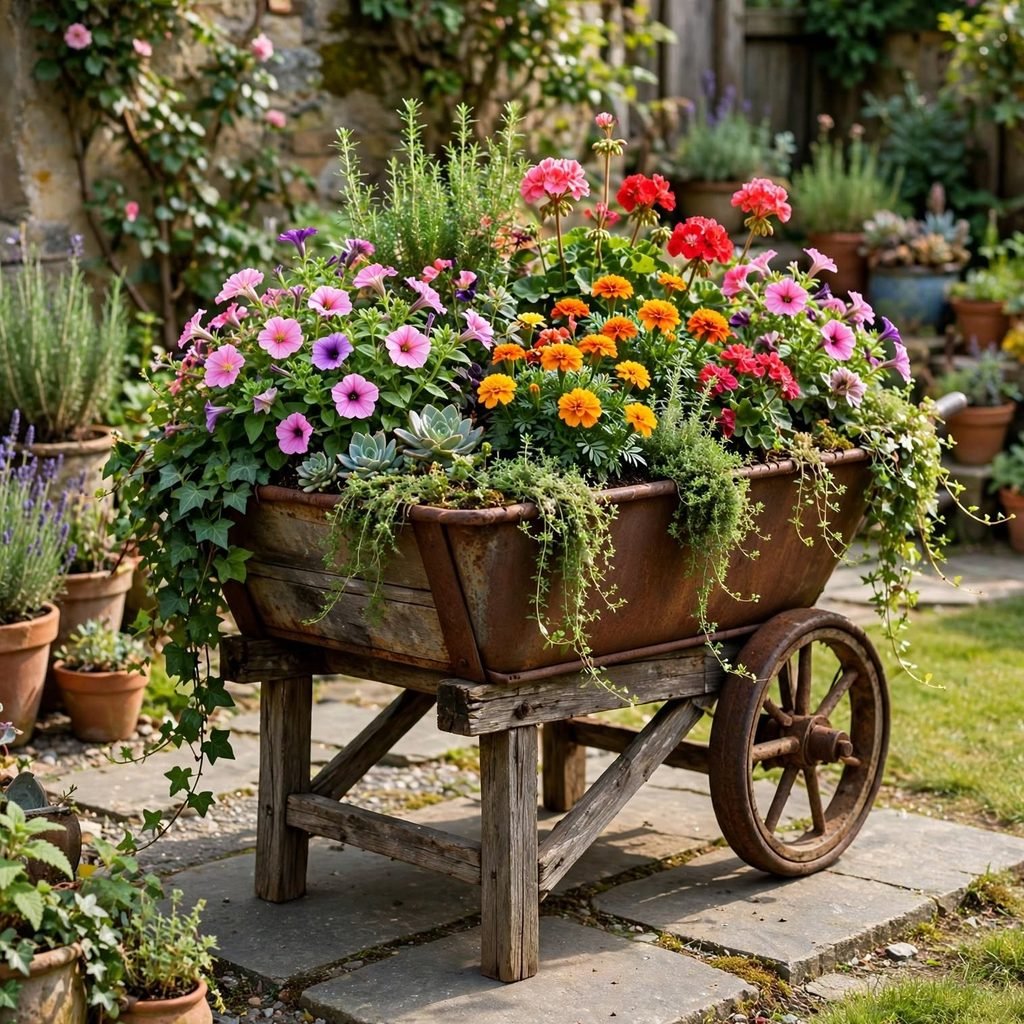
A raised wheelbarrow planter repurposes an old or decorative wheelbarrow as a mobile herb container, which works especially well for renters or anyone who wants to move the entire herb collection to chase sun or bring it indoors before frost. Drilling drainage holes in the base before filling with soil is essential, since a standard wheelbarrow has no built-in drainage and will otherwise waterlog quickly. The curved shape holds less soil volume than a standard raised bed, so it suits shallow-rooted herbs like chives and parsley better than deeper-rooted rosemary.
12. Companion Herb and Vegetable Bed
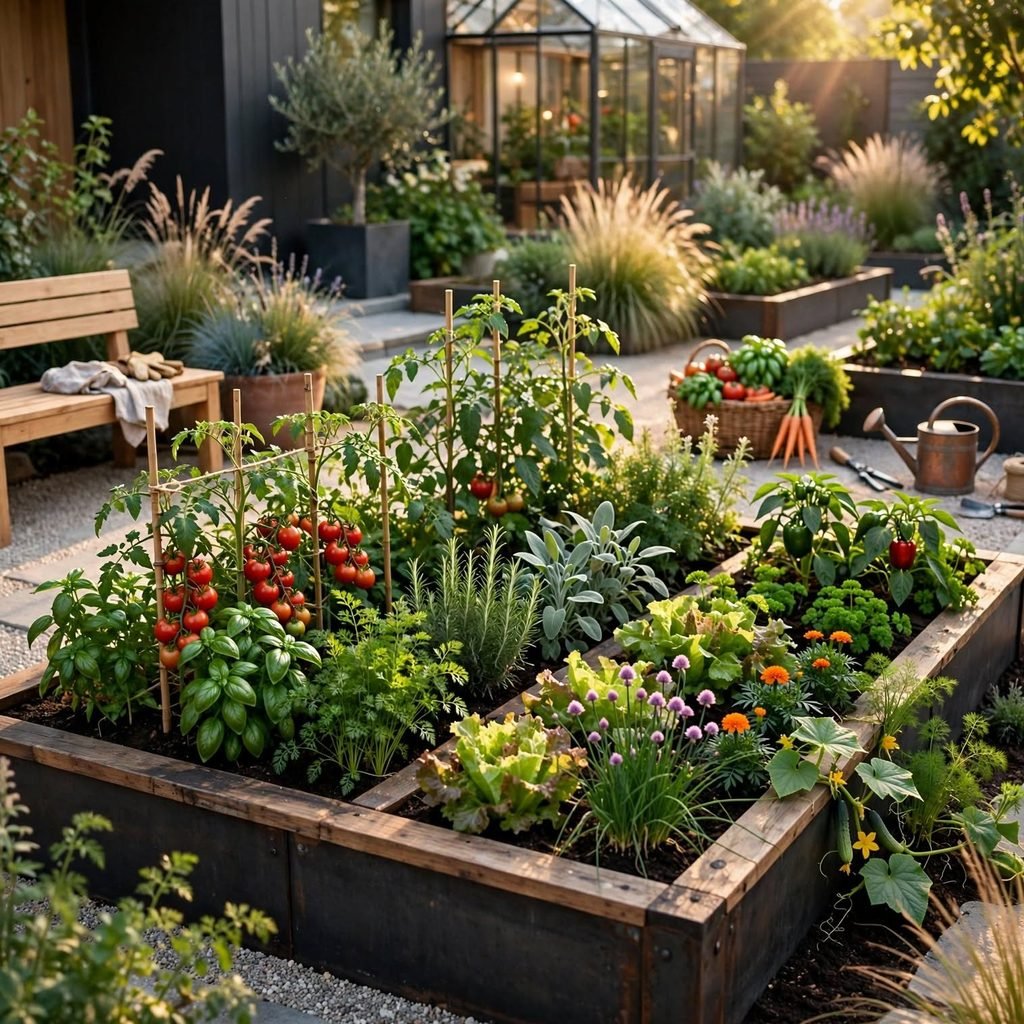
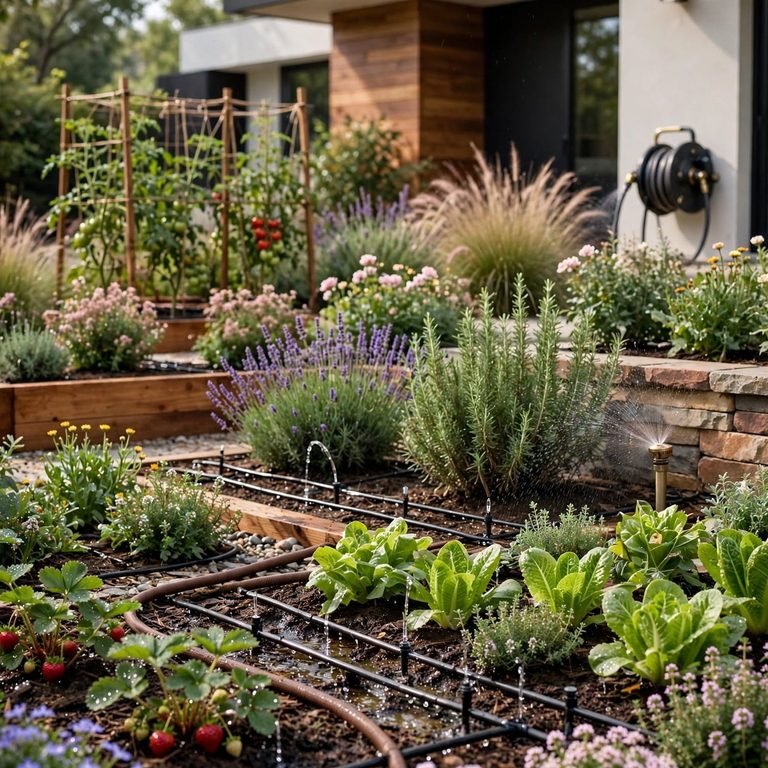
A companion herb and vegetable bed interplants herbs directly among vegetable rows rather than separating them into distinct beds, using pairings known to benefit each other through pest deterrence or pollinator attraction. Basil planted near tomatoes is the most commonly cited pairing, along with dill near cucumbers and chives near carrots, though the exact mechanism behind these pairings is debated more than gardening folklore usually admits. This approach maximizes bed space in a small yard where a separate dedicated herb bed isn’t practical alongside a vegetable garden.
| Herb | Companion Vegetable | Reported Benefit |
| Basil | Tomato | Pest deterrence |
| Dill | Cucumber | Pollinator attraction |
| Chives | Carrot | Pest deterrence |
See our companion planting layout guide for a full bed-by-bed planning chart.
Shop the Look
A few pieces support most of these setups at once. A set of terracotta pots in graduated sizes handles both a windowsill garden and a container grouping without needing separate purchases for each. A simple full-spectrum LED grow light with a built-in timer makes the indoor shelf setup functional without additional wiring or a separate timer purchase. A rail-mounted planter box extends any balcony setup without consuming floor space, and a compact drip irrigation kit with a battery-powered timer keeps a raised bed or vertical wall watered evenly during travel or busy weeks.
Common Mistake to Avoid
The most common mistake in herb garden ideas is treating every herb the same way and planting Mediterranean herbs like rosemary and thyme in the same rich, frequently watered soil that basil and parsley prefer. Rosemary and thyme actually decline in overly rich or consistently moist conditions, developing root rot far more often than they suffer from underwatering. Grouping herbs by their actual moisture and soil preference, rather than by size or how they’re used in the kitchen, prevents the slow decline that otherwise shows up in Mediterranean herbs planted alongside thirstier companions.
Frequently Asked Questions
What herbs are easiest to grow for beginners?
Chives, mint, and basil are the most forgiving herbs for beginners because all three tolerate a wide range of soil and watering conditions without much intervention. Mint in particular grows so readily that the main challenge is containing its spread rather than keeping it alive, which makes a dedicated pot the better choice over an open garden bed. Basil is the least forgiving of the three in cooler climates, since it’s frost-sensitive and needs consistent warmth to thrive outdoors.
Can herbs be grown indoors year-round?
Most culinary herbs can be grown indoors year-round with either a very bright south-facing window or a supplemental grow light, since natural indoor light alone is rarely strong or long enough through fall and winter months. Basil, chives, and mint adapt well to indoor conditions, while rosemary and lavender generally struggle indoors long-term due to lower light intensity and airflow than they get outdoors. A grow-light shelf setup solves the light problem directly and extends reliable indoor growing to nearly any herb variety.
How much sun do herbs need in a garden?
Most Mediterranean herbs like rosemary, thyme, and oregano need a minimum of six hours of direct sun daily to develop their full flavor and essential oil concentration, and they perform noticeably worse in partial shade even if they survive. Herbs like mint, parsley, and chervil tolerate more shade and can perform well with four hours of direct sun or bright indirect light for the rest of the day. Matching herb selection to actual available sun exposure prevents the leggy, weak growth that shows up when sun-loving herbs are planted in too much shade.
What is the best soil for an herb garden?
Most culinary herbs prefer lean, well-drained soil over the rich, heavily amended mix typical vegetable gardens use, since excess nitrogen and moisture reduce the essential oil concentration that gives herbs their flavor and aroma. Mixing coarse sand or perlite into a standard potting mix improves drainage significantly for Mediterranean herbs like rosemary and thyme. Moisture-loving herbs like mint and parsley are the exception and perform better in a standard, richer garden soil without the added drainage amendments.
How do you keep mint from taking over an herb garden?
Planting mint in a buried, bottomless container or a dedicated pot rather than directly in open garden soil is the most reliable way to contain its aggressively spreading root system. Even a buried container needs the rim to sit an inch or two above the surrounding soil line, since mint’s runners will otherwise root over the top edge and escape into the surrounding bed. Once established in the ground without a barrier, mint is notoriously difficult to fully remove and will regrow from even small root fragments left behind.
Conclusion
The strongest herb garden ideas on this list share a common thread: matching each herb’s actual sun, soil, and moisture preference to its placement, rather than treating all herbs as interchangeable. Whether you start with a simple windowsill setup or build up to a full herb spiral with multiple microclimates, grouping herbs by their real growing needs is what keeps a harvest coming steadily rather than watching half the bed decline. Save this post to Pinterest for reference as you plan your own herb garden, or read our related guide to companion planting layouts before you start digging.