15 Effective Living Room Designs That Balance Comfort and Style
Choosing among today’s living room designs can feel overwhelming when every scroll through Pinterest brings a new trend. This guide narrows the noise down to fifteen practical, achievable ideas from curved sectionals to gallery walls that work whether you’re furnishing a rental apartment or redesigning a forever home. Each idea includes real materials, sizing guidance, and styling notes so you can move from inspiration to execution without guesswork or a designer’s budget.
Trend & Background
Living room design has shifted noticeably away from the stark, all-white minimalism that dominated the last decade. Homeowners are now layering texture bouclé upholstery, rattan accents, plaster-finish walls to create rooms that feel lived-in rather than staged. Multi-generational living and remote work have also pushed people to treat the living room as a flexible zone rather than a single-purpose space. Sustainability plays a role too, with reclaimed wood and vintage-sourced pieces appearing more often than fast-furniture replacements.
Key Takeaways
- Living room designs in 2026 favor curved furniture, layered lighting, and natural materials over stark minimalism.
- Zoning a single room into distinct functional areas is one of the most requested layout strategies among homeowners this year.
- Warm neutrals, terracotta, and sage green are replacing all-gray palettes in updated living room designs.
- Small-space solutions like nesting tables and wall-mounted consoles help maximize square footage without sacrificing comfort.
1. Curved Sectional Sofa
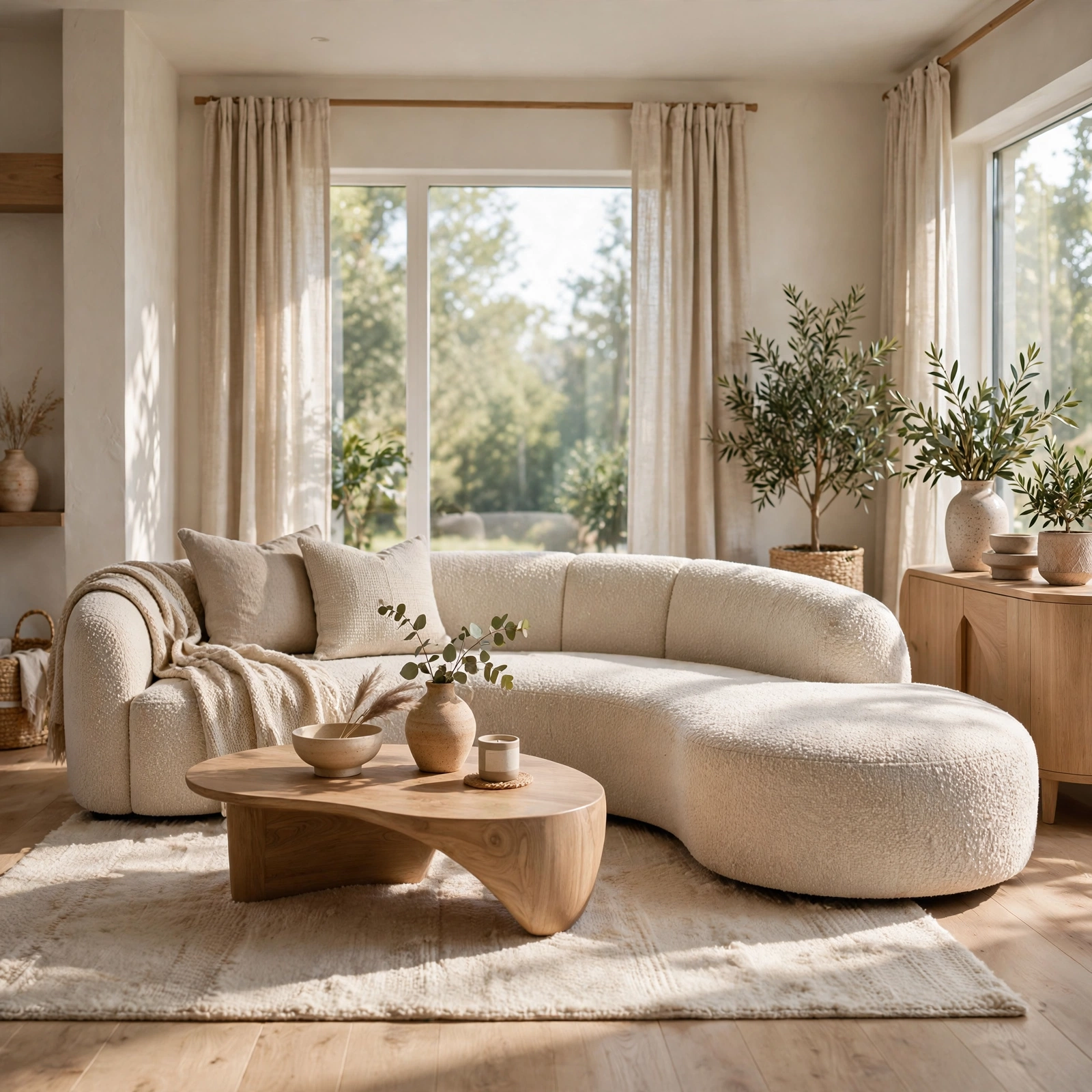
A curved sectional softens the boxy feel that traditional L-shaped sofas often bring to a room. The rounded silhouette works particularly well in open-concept layouts where the sofa needs to define a seating zone without hard edges cutting across sightlines. Look for boucle, chenille, or performance velvet upholstery in warm neutrals like oatmeal or terracotta. Pair it with a round coffee table to continue the curve throughout the space, and leave at least 30 inches of walking clearance around the perimeter.
2. Gallery Wall Arrangement
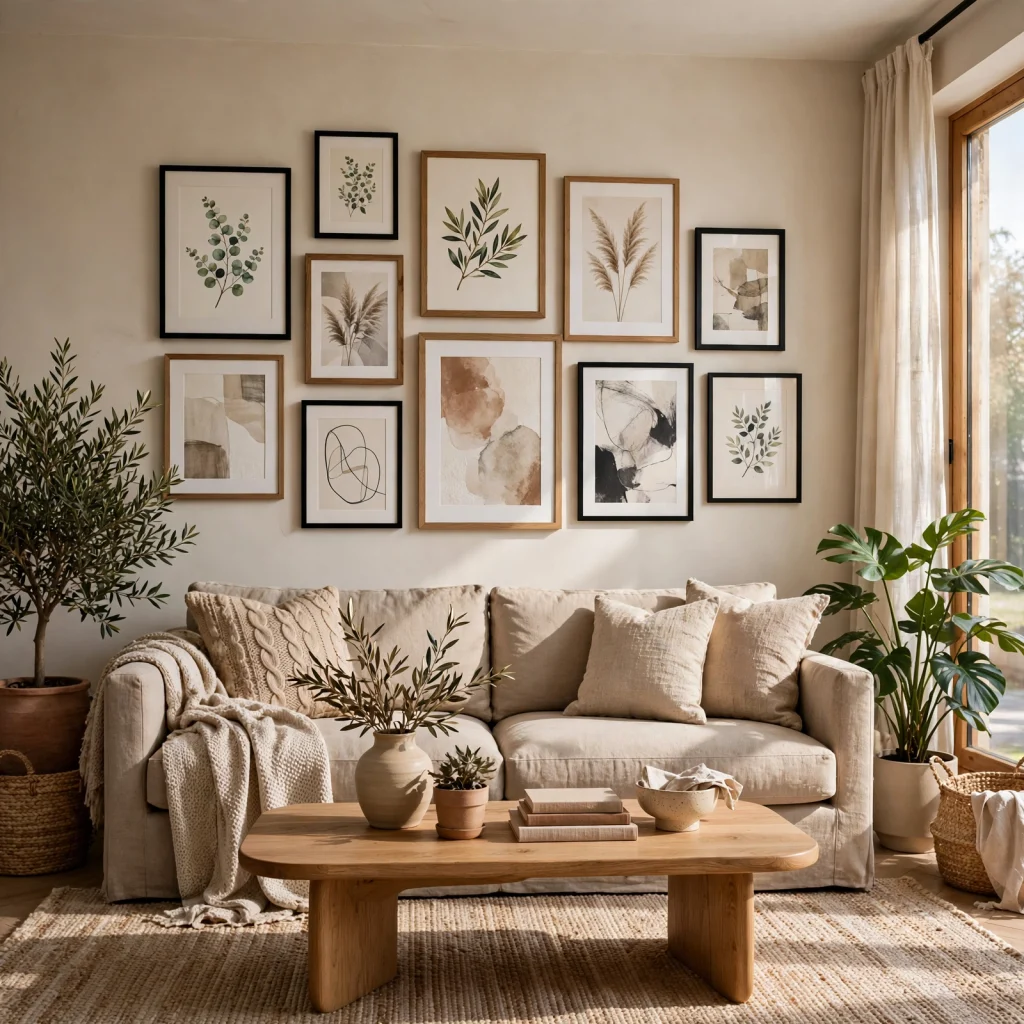
A gallery wall turns an empty stretch above the sofa into a personal focal point using a mix of framed art, mirrors, and photography. Start with a paper template on the floor to test spacing before hammering a single nail, keeping two to three inches between frames for a cohesive but not cramped look. Mixing frame finishes matte black, brushed brass, natural oak adds depth without looking mismatched. This idea works especially well in rooms with 9-foot or taller ceilings where a single piece of art would feel lost.
| Wall Height | Recommended Frame Count | Arrangement Style |
| 8 ft | 5–7 frames | Grid layout |
| 9 ft | 8–10 frames | Salon-style cluster |
| 10 ft+ | 10–14 frames | Asymmetric cluster |
3. Rattan Accent Chair
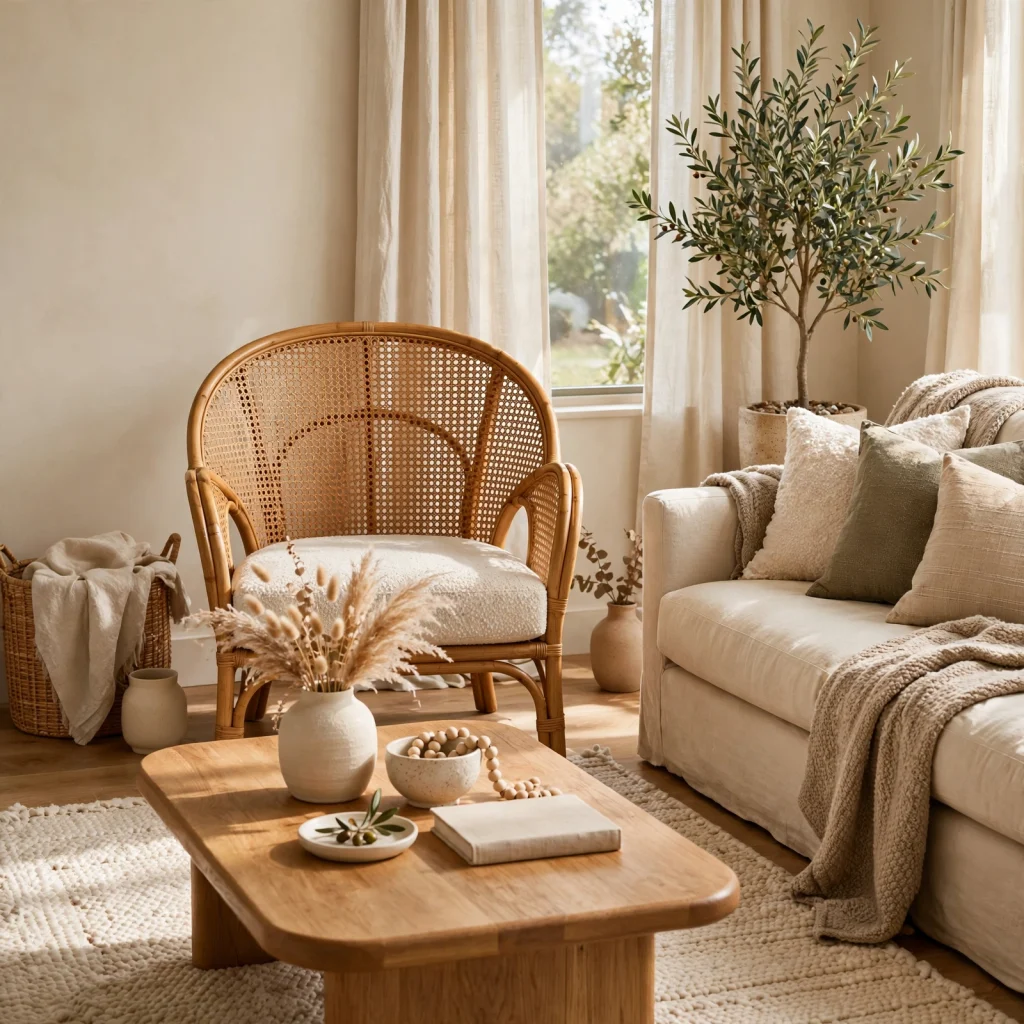
A rattan accent chair introduces natural texture into a living room without committing to a full boho theme. The open weave lets light pass through, which keeps the piece from feeling heavy even in smaller rooms. Pair it with a boucle or linen cushion for comfort, and place it at an angle to the sofa rather than directly across to encourage conversation. Rattan pairs especially well with brass floor lamps and woven jute rugs, both of which reinforce the same organic material palette.
4. Built-In Media Wall
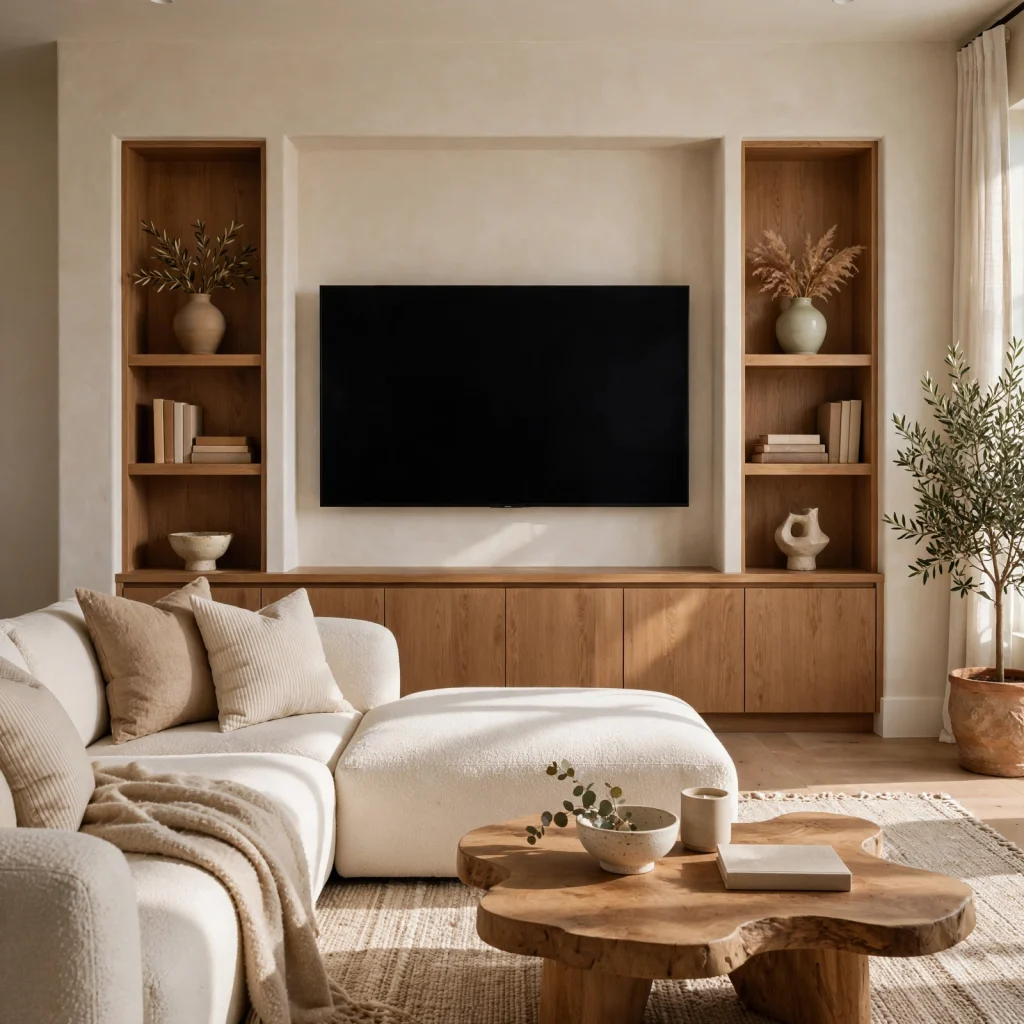
A built-in media wall replaces a freestanding TV stand with custom millwork that runs floor to ceiling, hiding cables and adding storage in the same footprint. Shaker-style cabinet doors on the lower section keep media equipment out of sight, while open shelving above the television breaks up the mass with books and ceramics. This idea is best suited to rooms with at least 12 feet of wall length, since anything narrower can make the cabinetry feel disproportionate to the seating area.
5. Layered Lighting Scheme
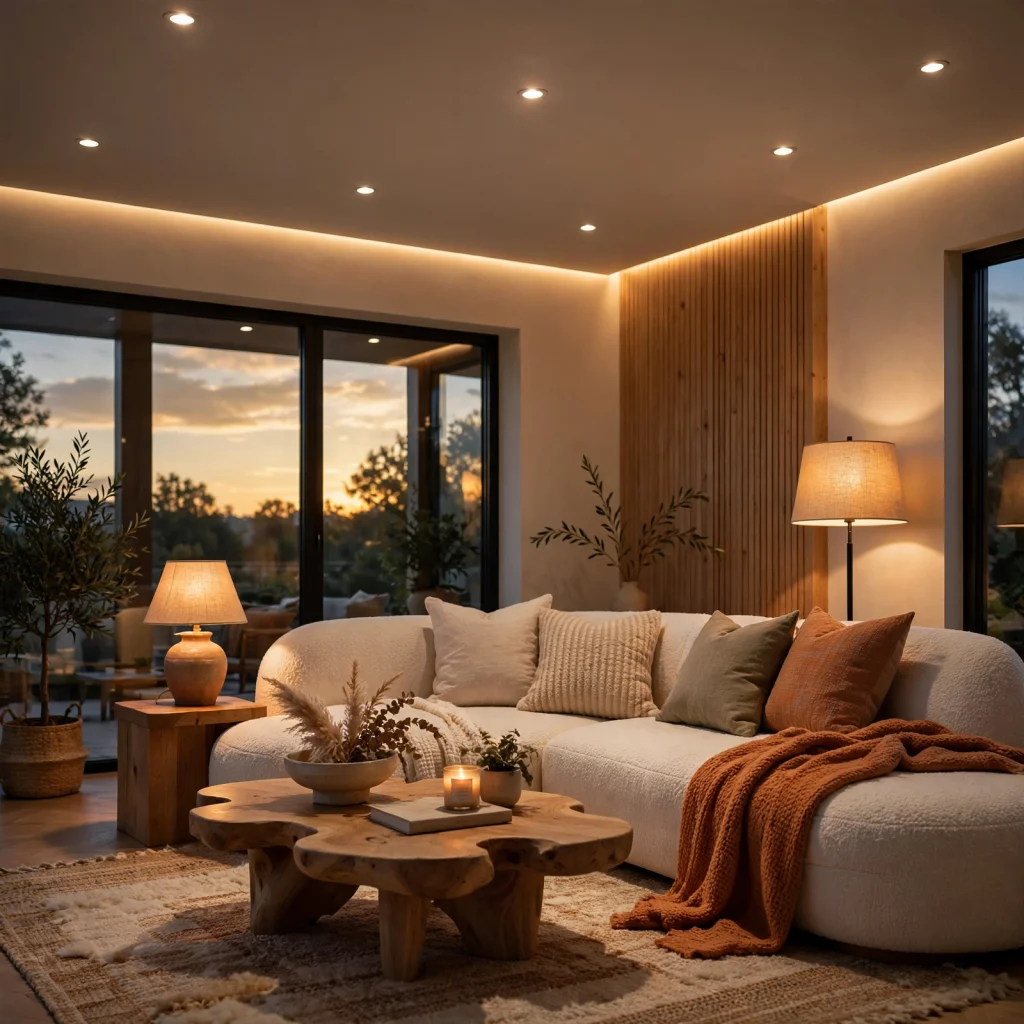
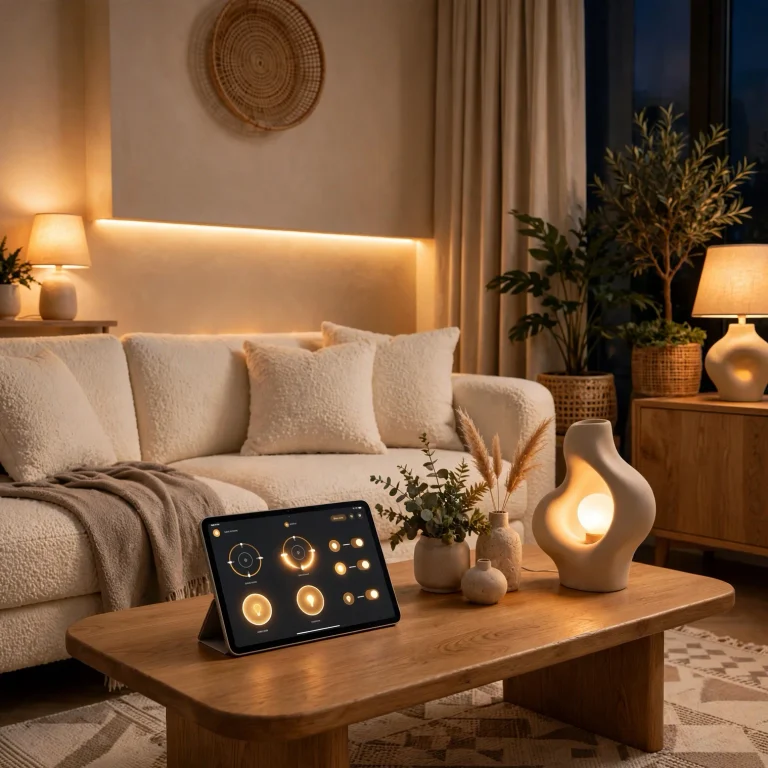
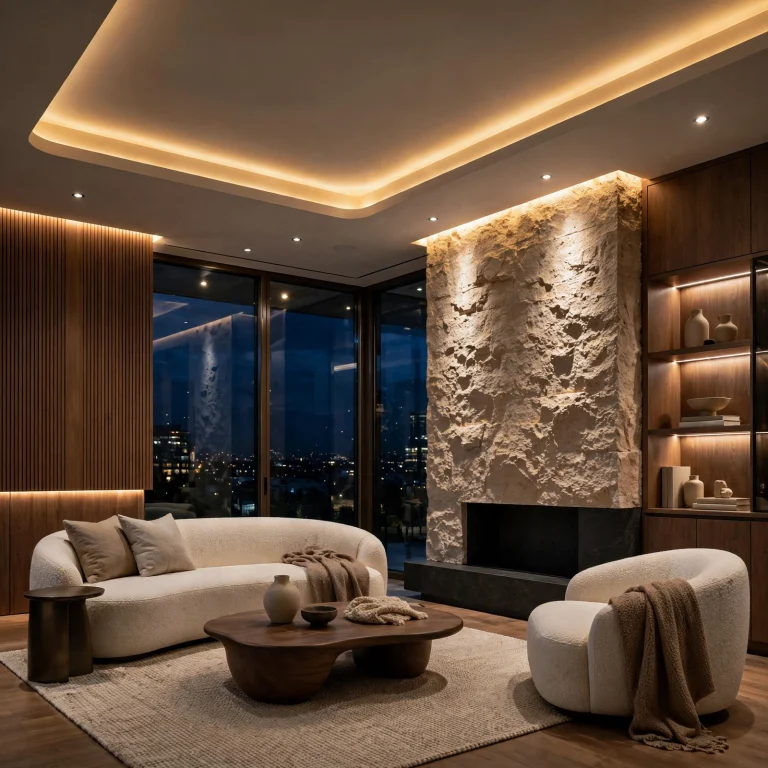
Relying on a single overhead fixture is one of the most common reasons a living room feels flat or clinical. A layered scheme combines ambient lighting from a flush-mount or chandelier, task lighting from a floor lamp near the reading chair, and accent lighting from picture lights or LED strips behind a media console. Dimmers on each layer let the room shift from bright and functional during the day to warm and moody in the evening without buying new fixtures.
Discover our kitchen ideas for stylish, functional, and inspiring designs, including modern layouts, smart storage solutions, beautiful color schemes, and practical decorating tips for every home.
6. Sage Green Accent Wall
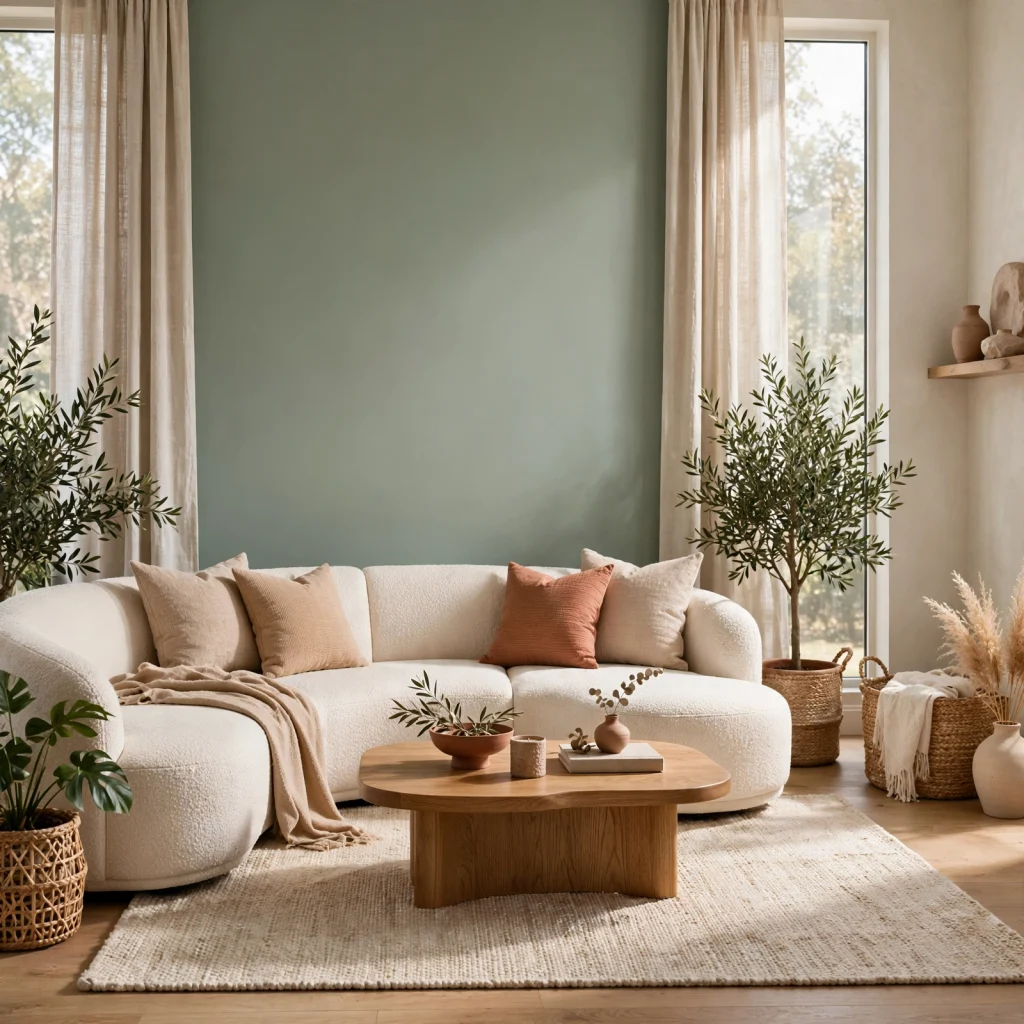
Sage green has become one of the most requested paint colors for living room designs because it reads as calming without leaning cold like gray-blues do. Apply it to a single accent wall typically the one behind the sofa and keep trim and ceiling in a warm white like Benjamin Moore White Dove to avoid a closed-in feeling. Sage pairs naturally with walnut furniture, brass hardware, and terracotta textiles, making it easy to build a full palette around one wall.
7. Nesting Coffee Tables
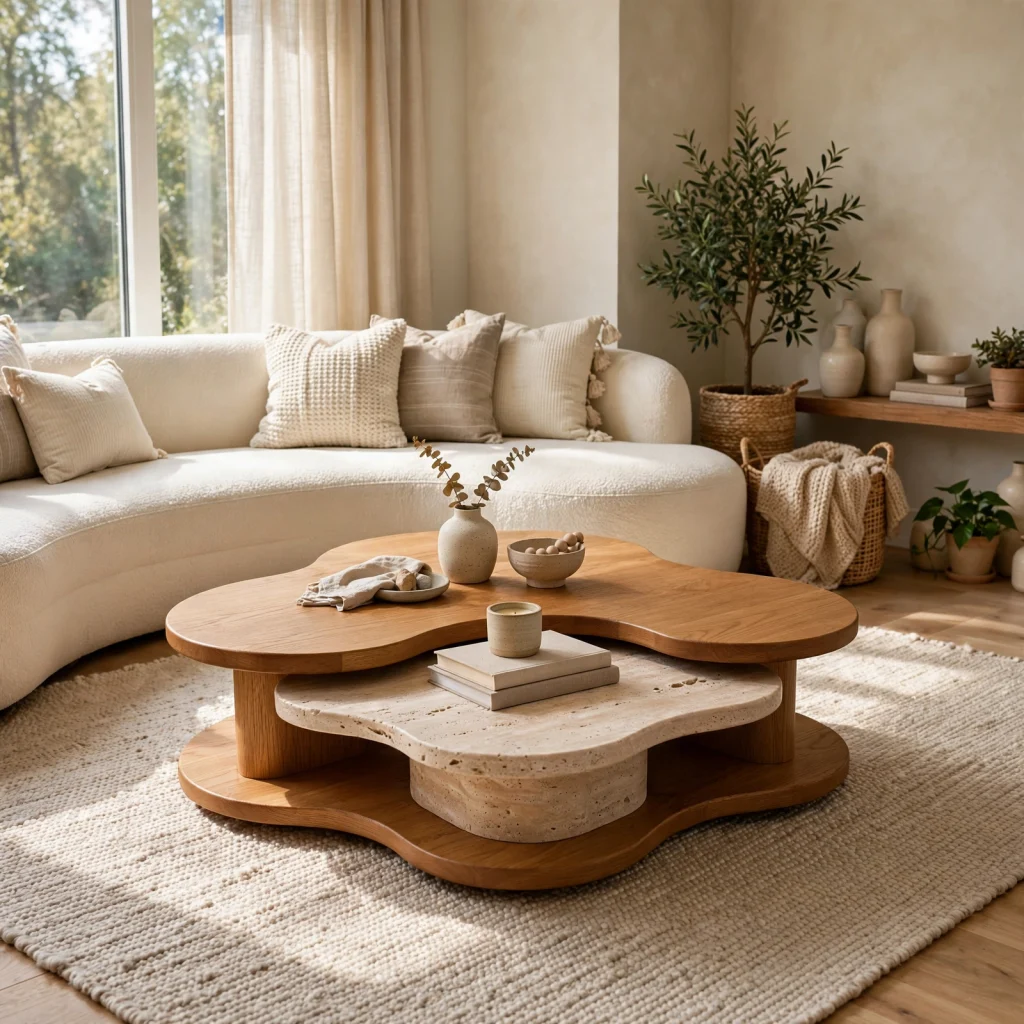
Nesting coffee tables solve the problem of needing surface area for drinks and books without permanently occupying floor space in a smaller living room. Two or three tables of graduated size can be pulled apart for a gathering and tucked back together the rest of the time. Solid wood or travertine tops in varying heights between 16 and 20 inches work well under most sofa arm heights, and mixing materials one wood, one stone keeps the set from looking like a matched showroom trio.
8. Plaster Finish Walls
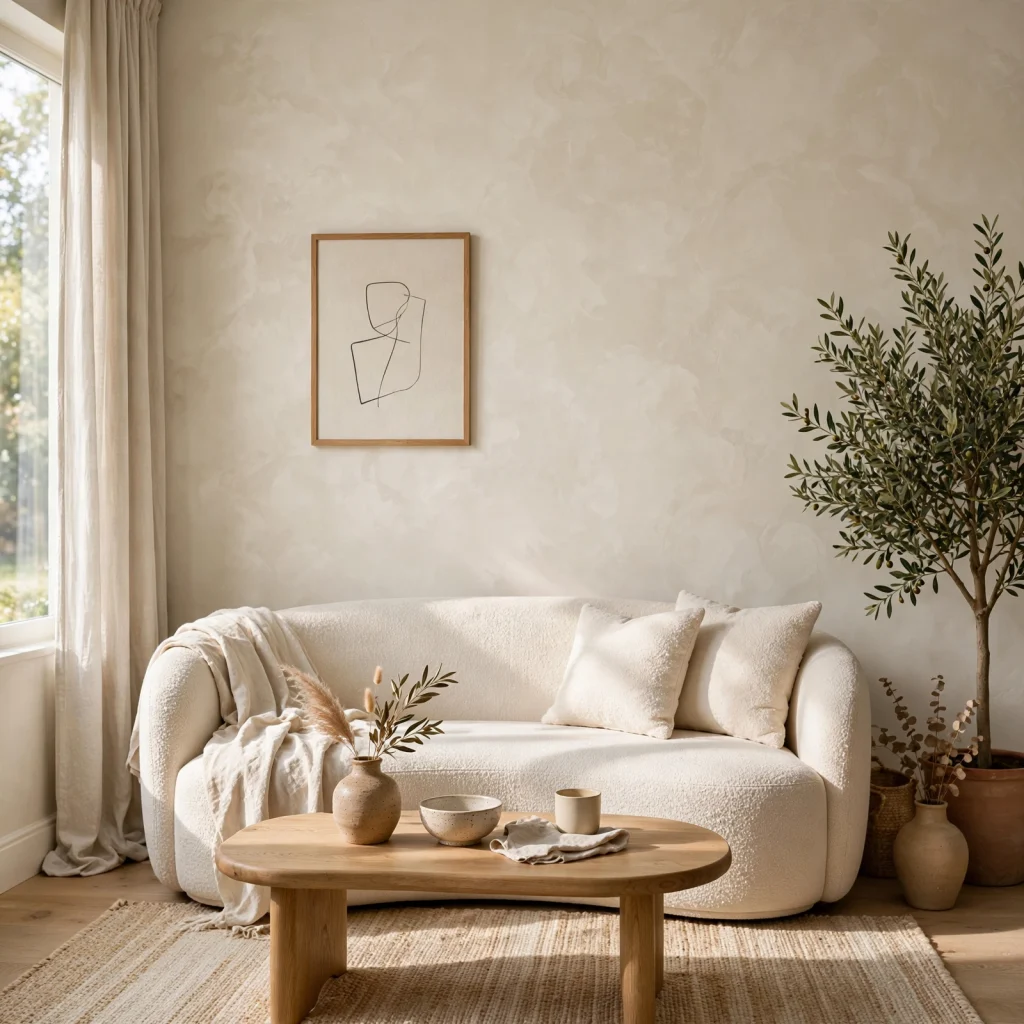
Plaster finish walls bring a soft, hand-troweled texture that flat paint cannot replicate, catching light differently throughout the day and adding visual depth to an otherwise plain room. Venetian plaster or limewash products are applied in thin layers and burnished for a subtle sheen, most often in warm off-white or clay tones. This treatment works best as a feature on one wall rather than the entire room, since full coverage can drive up both material cost and application time significantly.
9. Vintage Persian Rug
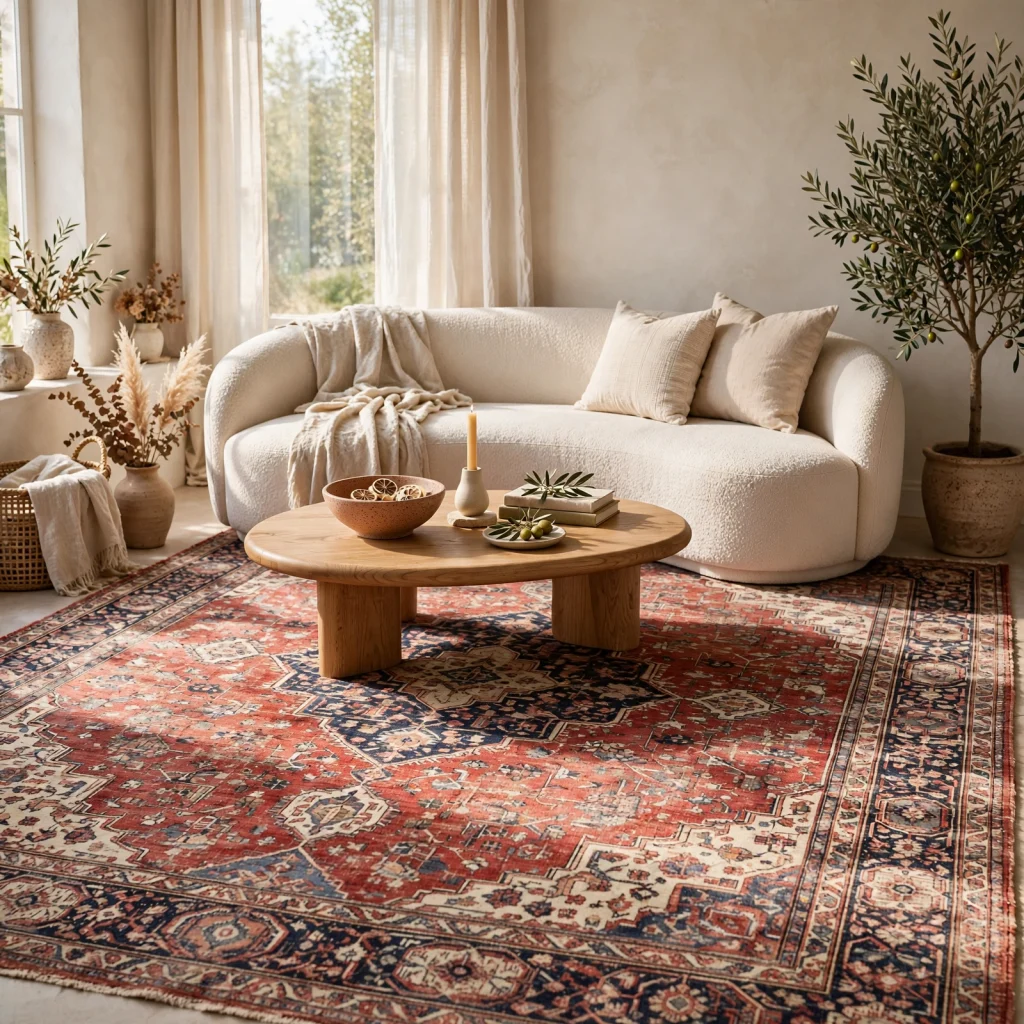
A vintage Persian or Oushak rug anchors a seating arrangement with pattern and history that a new machine-made rug rarely matches. Faded, muted colorways in rust, indigo, or camel tend to work better in contemporary rooms than bold jewel tones, since the worn patina reads as intentional rather than mismatched. Size the rug so at least the front two legs of every sofa and chair sit on it, which visually unifies the seating group instead of leaving furniture floating around the edges.
| Room Size | Recommended Rug Size | Placement Rule |
| Small (10×10 ft) | 6×9 ft | Front legs on rug |
| Medium (12×14 ft) | 8×10 ft | All legs on rug |
| Large (16×18 ft) | 9×12 ft or larger | Full furniture group on rug |
10. Floating Wall Shelves
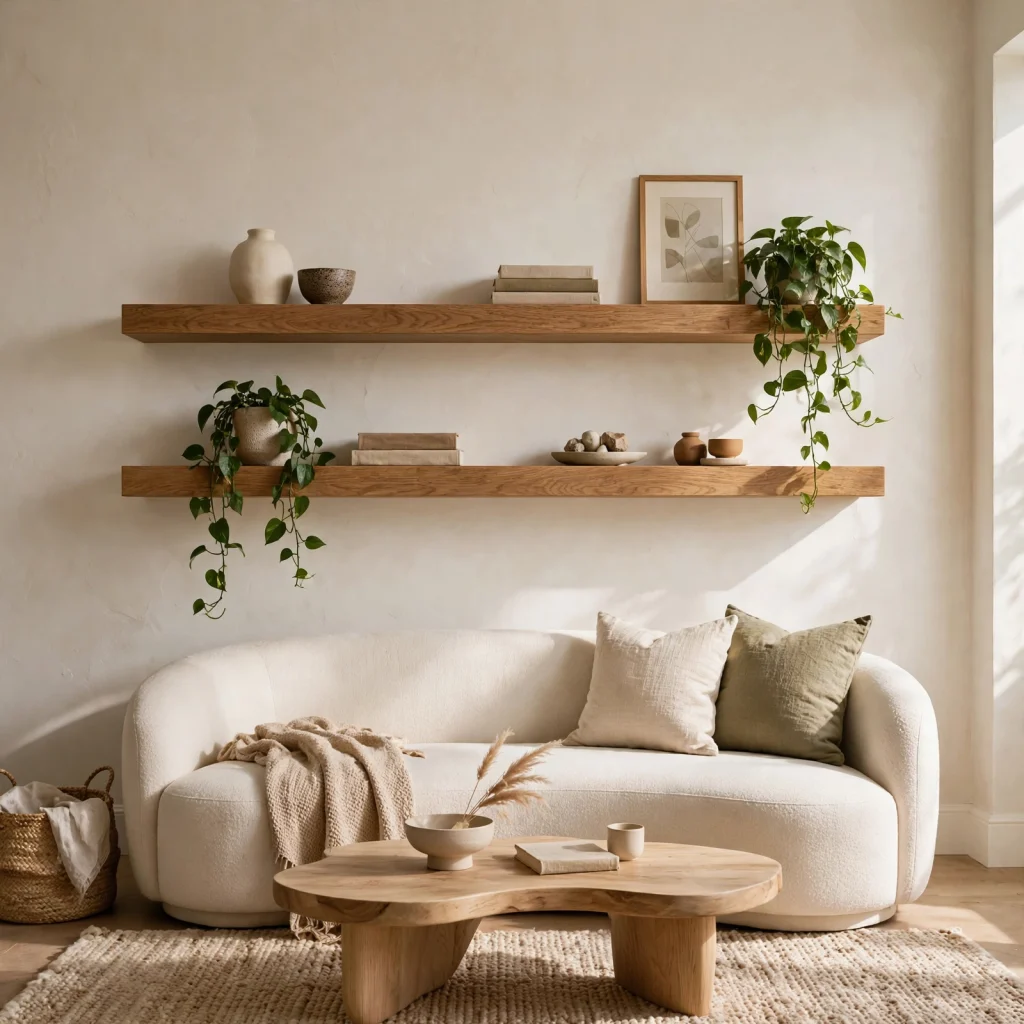
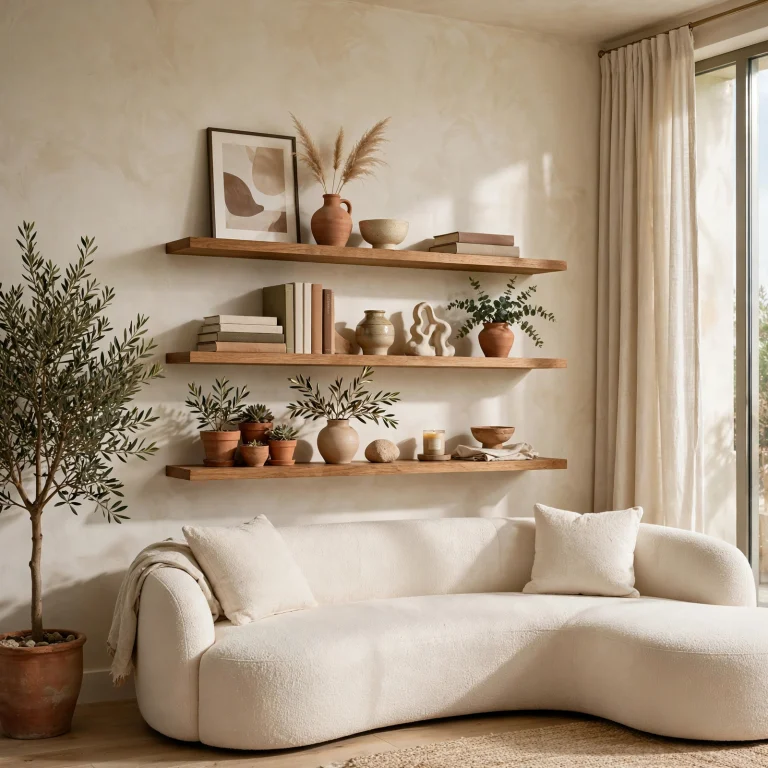
Floating wall shelves give a living room extra display space without the visual bulk of a bookcase, which matters most in rooms under 200 square feet. Install them in staggered pairs rather than a single long row, using oak or walnut brackets to match existing wood tones in the room. Style each shelf with a mix of books stacked both vertically and horizontally, a small plant, and one ceramic object, leaving roughly a third of each shelf empty so the arrangement doesn’t look cluttered.
11. Conversation Pit Layout
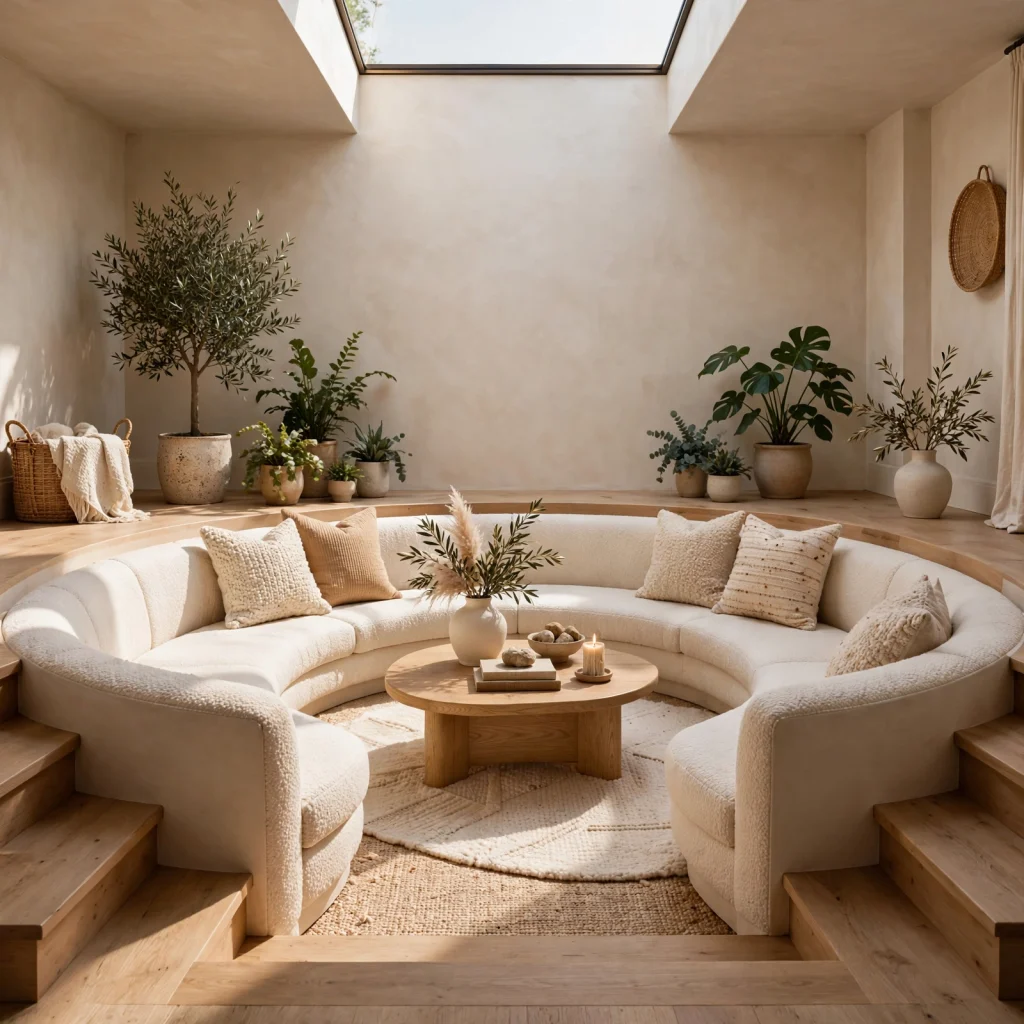
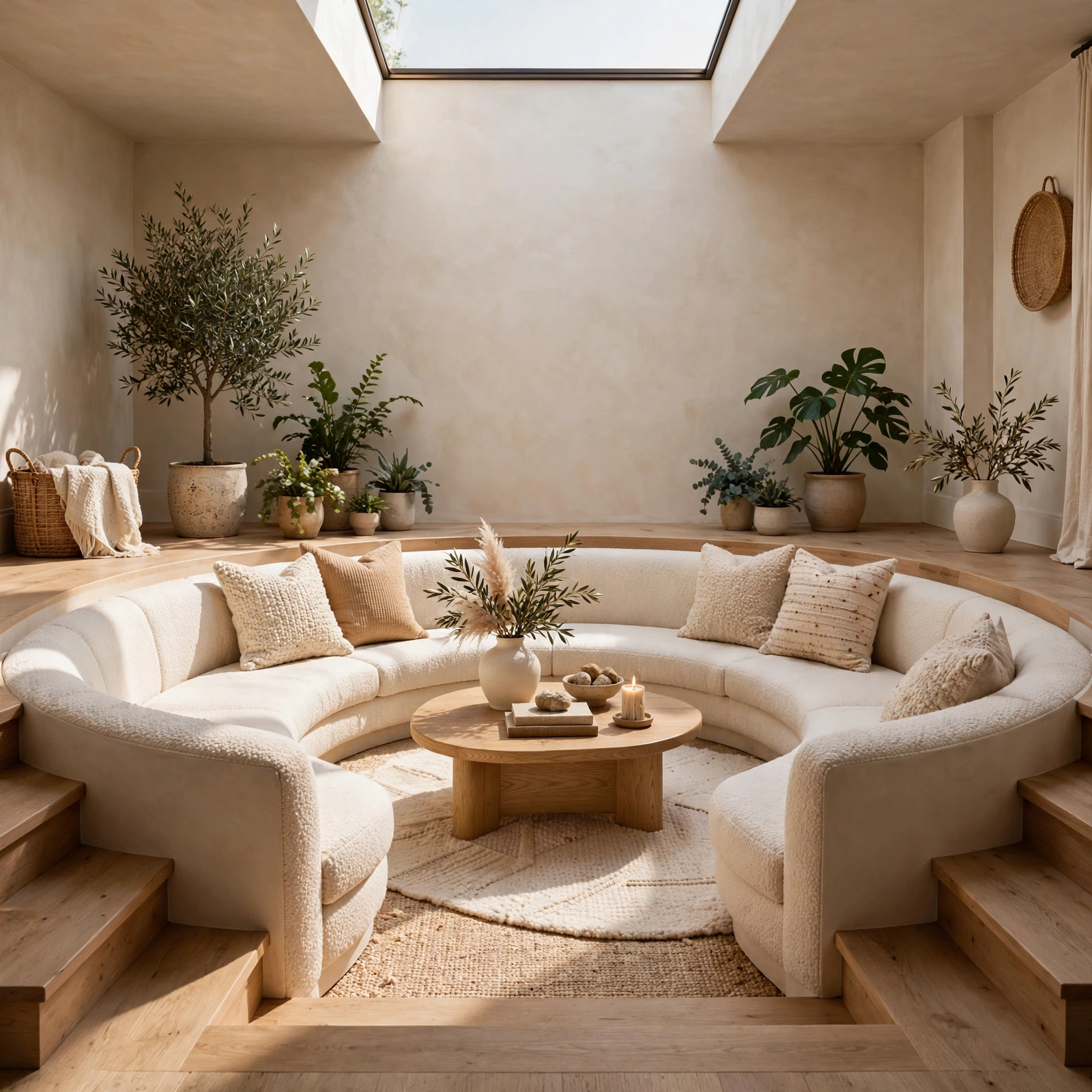
The conversation pit layout, a sunken or level seating arrangement facing inward rather than toward a television, is resurfacing in living room designs for households that prioritize gathering over screen time. A modern version doesn’t require actual construction — simply arrange two facing sofas or a sectional with an armchair opposite it, centered around a round or oval coffee table. This layout works particularly well in larger rooms where a wall-facing arrangement would otherwise leave the center of the room feeling empty.
12. Terracotta Textile Accents
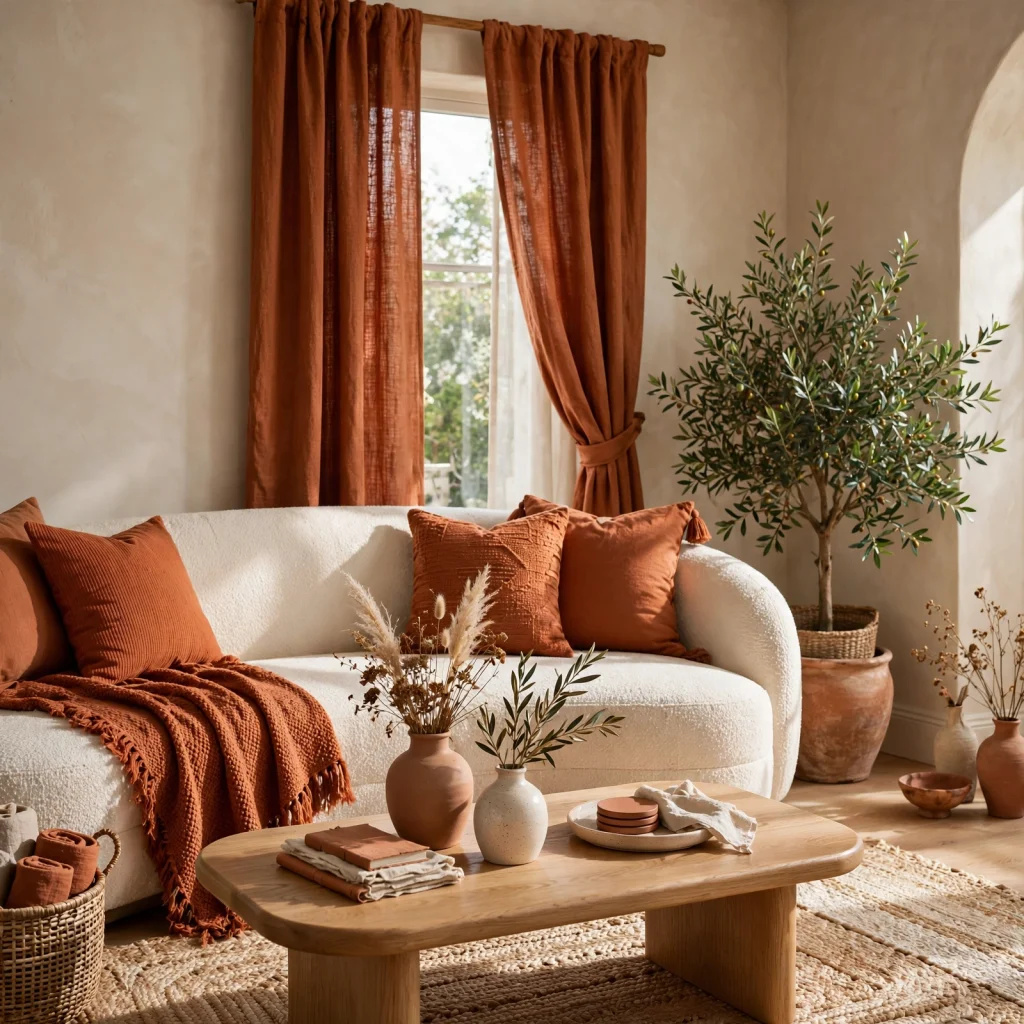
Terracotta throw pillows, blankets, and window treatments introduce warmth into a living room without the commitment of paint or wallpaper. The earthy orange-red tone pairs naturally with sage green, cream boucle, and natural wood, making it an easy accent to rotate seasonally. Linen or heavyweight cotton in terracotta holds color better than synthetic blends and softens with washing rather than pilling, which matters in a high-traffic room where textiles get regular use.
13. Wall-Mounted Console
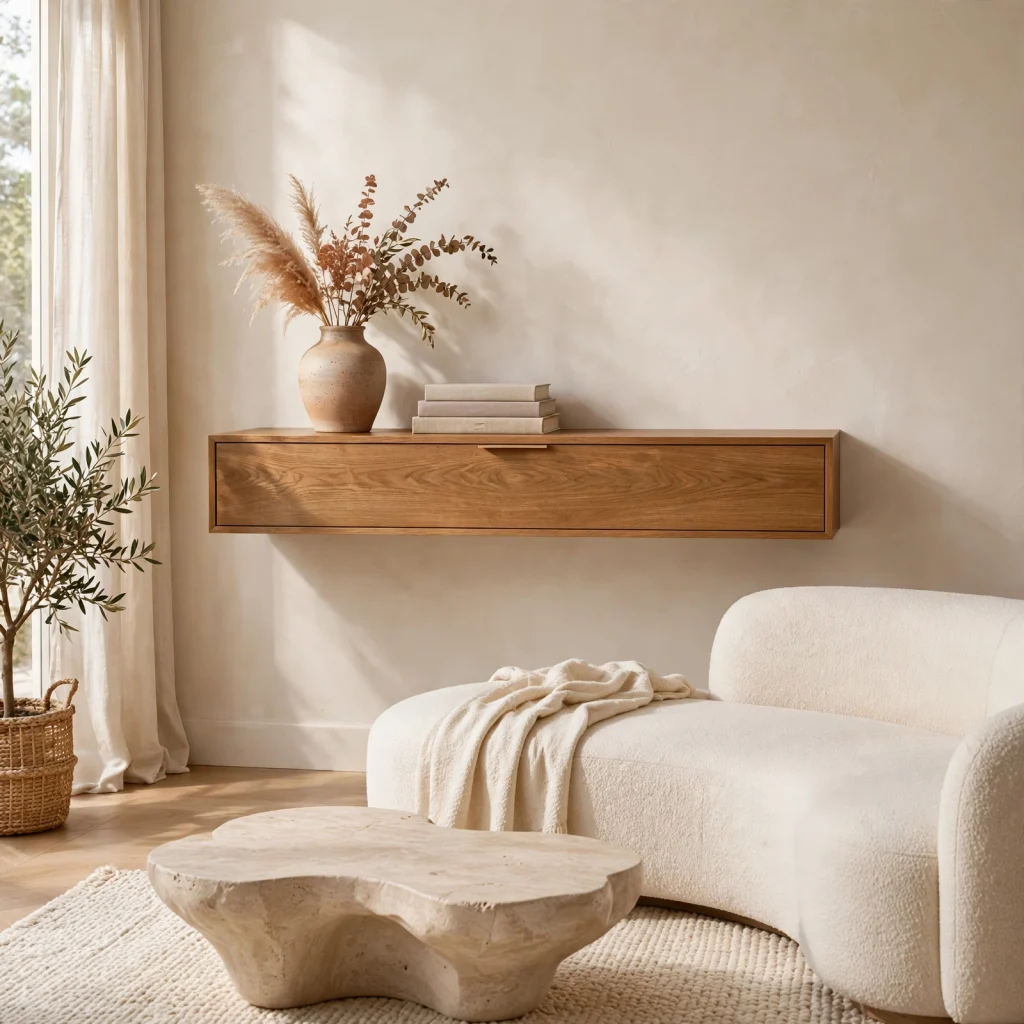
A wall-mounted console frees up floor space along a narrow wall by eliminating the legs a traditional console table would need. Choose a floating design rated for at least 50 pounds of static weight if it will hold a television or stack of books, and mount it 18 to 20 inches above the baseboard for comfortable use from a nearby sofa. This idea suits studio apartments and open-concept living rooms where every inch of visible floor affects how large the space feels.
14. Boucle Upholstered Ottoman
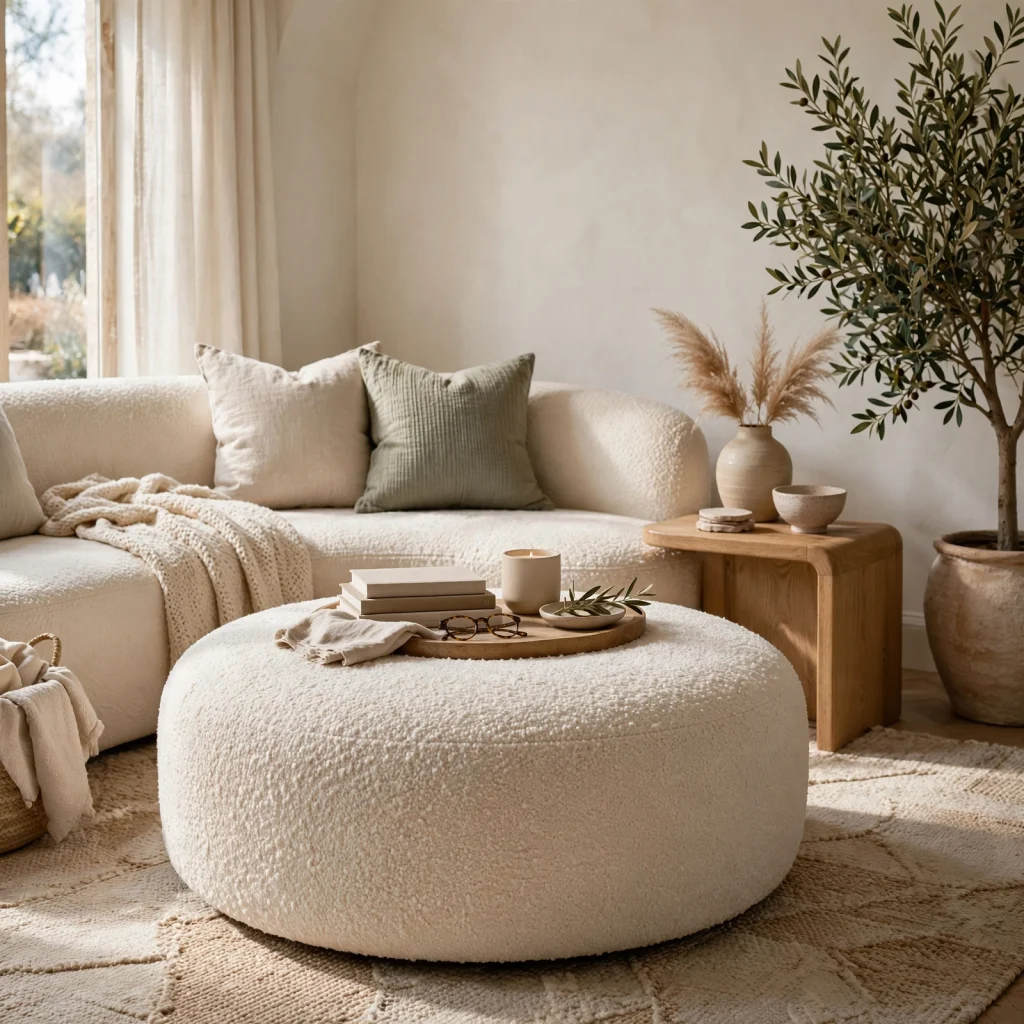
A boucle-upholstered ottoman doubles as a coffee table, extra seating, and footrest, which makes it one of the more versatile pieces in small or multi-use living rooms. Choose a large square or round shape at least 36 inches across so it can comfortably seat two people or hold a full tray of drinks. Boucle’s looped texture hides everyday wear better than smooth velvet, and cream or oatmeal shades keep the piece from competing with a patterned rug or accent wall.
15. Indoor Olive Tree
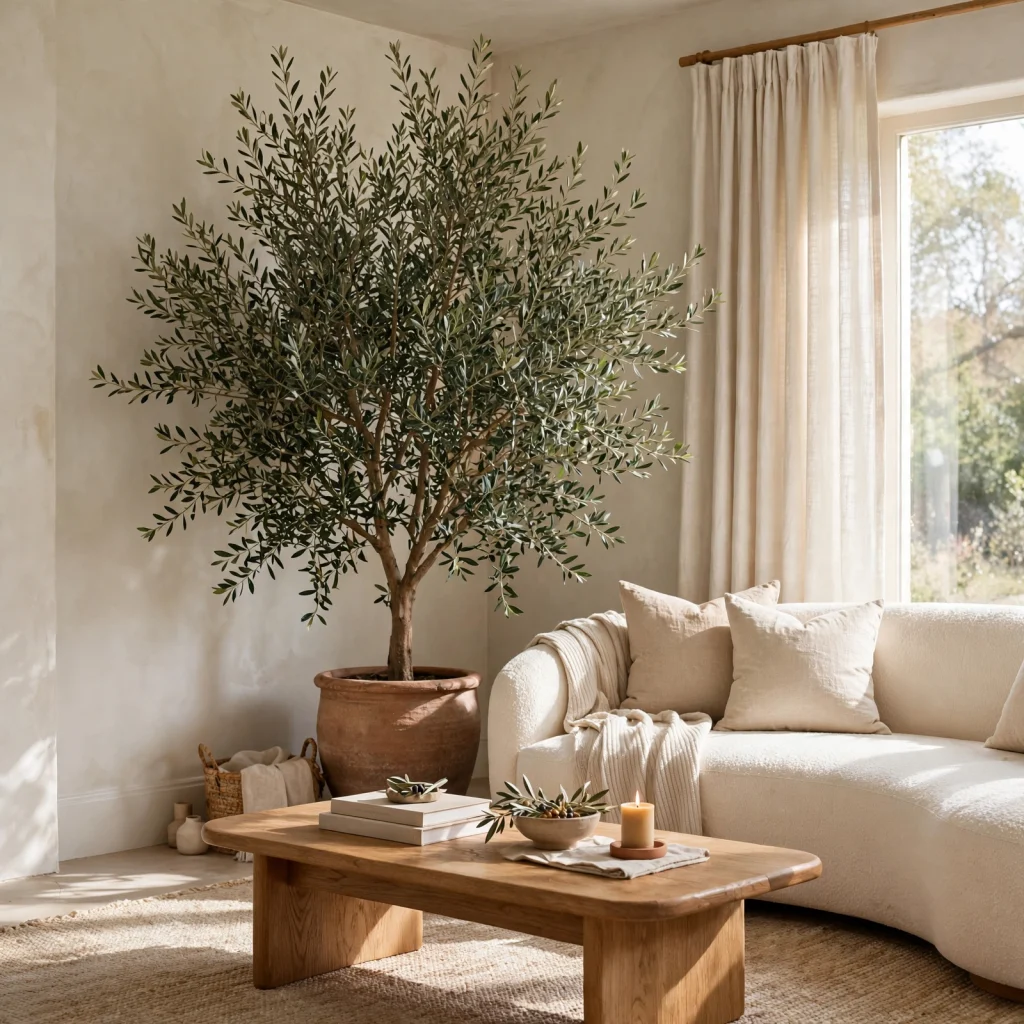
An indoor olive tree adds height and a soft, silvery-green texture that most living room plants can’t match, filling an empty corner without blocking sightlines the way a bushier plant would. It needs bright, indirect light and a pot with drainage, positioned near a south- or west-facing window whenever possible. A woven basket planter in natural fiber continues the room’s organic material palette, tying the plant visually to rattan or jute pieces used elsewhere in the space.
Shop the Look
For a room built around these ideas, start with a boucle curved sectional in oatmeal, a solid walnut round coffee table, and a hand-knotted wool rug in a faded rust colorway. Add a rattan swivel accent chair with a linen cushion, a set of brass-finished nesting tables, and a floor lamp with a linen drum shade for layered evening light. Finish with a woven jute basket for the olive tree and two ceramic table lamps in a matte cream glaze to tie the lighting scheme together.
Common Mistake to Avoid
The most common mistake in living room designs is pushing every piece of furniture flush against the walls, which leaves a large, awkward void in the center of the room and forces conversation across too much distance. Floating the sofa a few feet off the wall, even in a smaller room, creates a defined seating zone and often makes the space feel larger, not smaller. Adding a console table behind a floated sofa also reclaims that gap as usable surface space rather than dead air.
FAQs
What is the most popular living room design trend right now?
Curved furniture paired with warm, textured materials like boucle and rattan is currently the most requested combination in living room designs. It replaces the sharp-edged, all-gray minimalism that was dominant a few years ago with softer silhouettes and richer color palettes. Homeowners are also asking for layered lighting and zoned layouts that support both relaxing and working from home, which reflects how living rooms are being used differently than they were even five years ago.
How do I make a small living room look bigger?
Floating furniture slightly off the walls, using a large rug that anchors the full seating group, and choosing pieces with visible legs rather than skirted bases all help a small living room read as more open. Mirrors placed opposite a window bounce natural light deeper into the room, and keeping the color palette limited to two or three tones prevents visual clutter. Wall-mounted shelving and consoles also free up floor space that heavier furniture would otherwise occupy.
What colors are trending for living rooms in 2026?
Warm neutrals like oatmeal and clay are trending alongside deeper accent tones such as sage green and terracotta, replacing the cool grays that dominated the previous decade. These colors pair well with natural materials like rattan, walnut, and linen, which are also seeing increased use. Bold jewel tones are appearing in smaller doses, typically through accent pillows or a single piece of art rather than full walls or large furniture pieces.
Should a coffee table match the sofa style?
A coffee table doesn’t need to match the sofa’s exact style, but it should relate to it through material or shape to avoid looking disconnected. A curved sofa pairs naturally with a round or oval table, while a sofa with straight lines suits a rectangular table better. Mixing eras, such as a vintage wood table with a contemporary sofa, generally works well as long as one shared element, like tone or finish, ties the two pieces together visually.
How many throw pillows should a sofa have?
Most living room designs use two to three pillows per sofa cushion section, which usually totals four to six pillows on a standard three-seat sofa without overcrowding it. Mixing two or three coordinating patterns or textures, such as a solid boucle paired with a woven stripe, adds visual interest without looking chaotic. Removing one pillow from each pair before final styling often prevents the arrangement from looking overly symmetrical or store-displayed.
Conclusion
These fifteen living room designs prove that a comfortable, well-styled space doesn’t require a full renovation budget or a designer on retainer. Whether it’s a single sage green accent wall or a full curved-sectional overhaul, small, intentional changes compound into a room that feels finished. Save this guide to Pinterest for later, and check out our related post on small-space furniture layouts for more room-specific idea.